

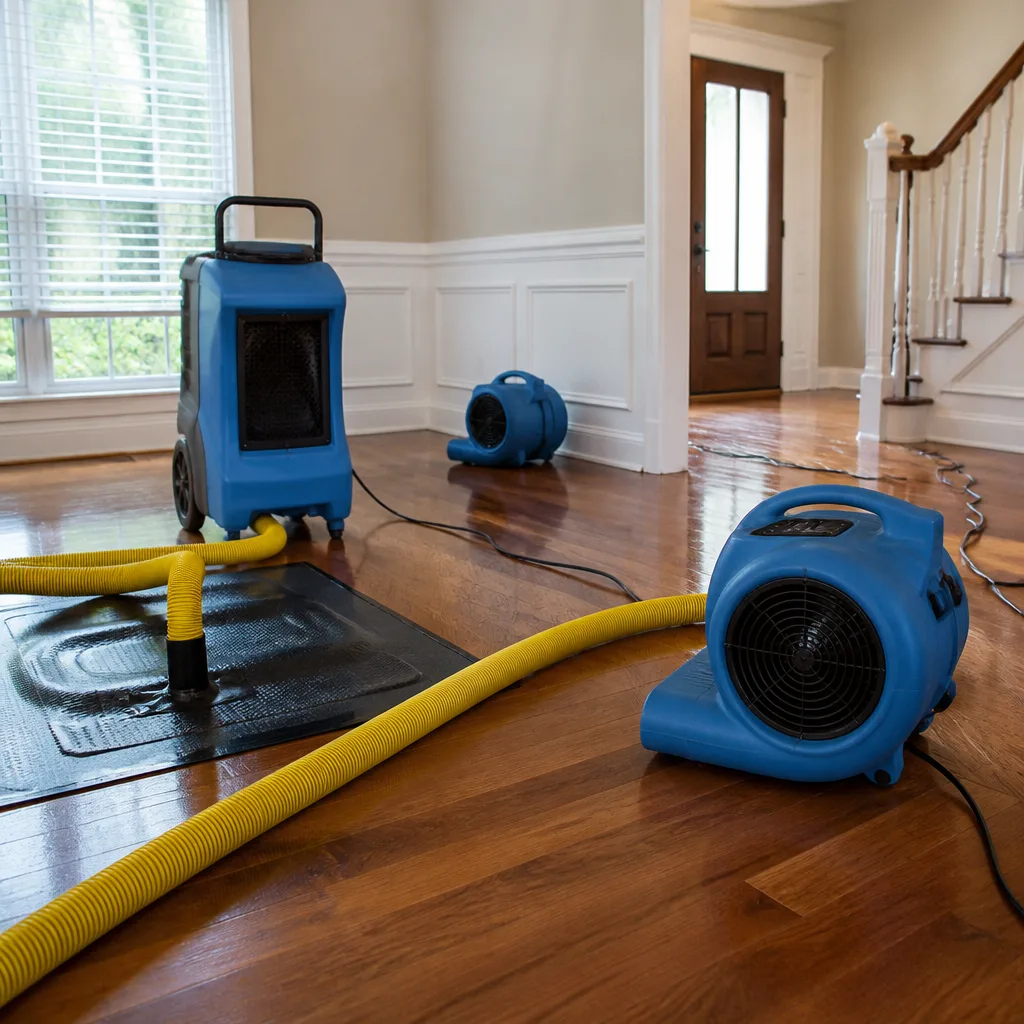
 Water damage drying
 Fire & smoke cleanup
 Mold remediation
 Storm response
 Sewage cleanup
 Reconstruction
Free visual inspection and a written scope of work before any mitigation begins - photos, moisture readings, and drying logs go in your claim file
The scope we write is the scope we bill. Anything new gets shown to you, in writing, before we touch it.
Get your free estimateFast, Reliable Water Damage Restoration Across Bay Hill
Water damage in a Bay Hill estate home rarely announces itself politely. It starts as a watermark on a tray ceiling, a soft spot near a window, or the faint smell of wet drywall behind custom millwork. Within 48 hours in Bay Hill’s subtropical humidity, that small intrusion becomes a mold risk and a structural liability. Dryden Restoration Orlando responds to Bay Hill homes with water extraction and drying crews who know exactly where wind-driven rain enters a flat tile roof, how it travels along trusses, and what it takes to save the finishes you’ve spent decades curating. Call (850) 786-4472 any hour. A live person answers.
Why Dryden Restoration Orlando Is Bay Hill’s Preferred Water Damage Restoration Company
Bay Hill homeowners tend to ask the same questions before we set foot inside: Who’s actually showing up? Will the price change once you’re in the house? What happens if the repair fails in six months? Those questions are fair. We answer them the same way every time.
Every technician who arrives in Bay Hill is background-checked and uniformed, so you know exactly who you’re letting through the door. Before any tool is touched, you receive a written price. It does not change at the door. And every repair carries our 365-Day Done Right Promise in writing: if a covered repair fails within a year, we return and make it right at no charge. That’s the Kingswell Way, the set of practices our independently owned and operated Kingswell company has followed since 2005.
Bay Hill’s estate homes demand a different level of care than a standard suburban build. Carl Brandt, who leads our restoration teams, has built his crew around that difference. We train our technicians to read the specific failure points of Mediterranean and Spanish Colonial construction, the stucco water paths, the tray ceilings, the golf course and lakefront lot drainage patterns. That local knowledge means we start in the right place, not the most obvious one.
We are not the cheapest crew in the region, and we don’t try to be. We are the crew that gives you a written scope before work starts, shows up in the arrival window we committed to, and stands behind the result in writing. For a home on the Butler Chain of Lakes corridor, that’s the only kind of restoration that makes sense.
Restoration work we handle
Water Extraction in Bay Hill
Water extraction is the first and most urgent step after any flooding event in a Bay Hill home. It means removing standing water from floors, carpets, and hard surfaces before it spreads into wall cavities, subflooring, and the custom casework that defines so many of the estate homes here. In Bay Hill, extraction typically runs $400 to $1,200 depending on the affected square footage and how long the water has been sitting. On a saturated great room carpet over marble in a Masters Boulevard estate, that number lands toward the higher end because of the drying time involved.
What Extraction Actually Involves
Our crews bring truck-mounted and portable extraction units into the home, removing water in gallons per minute rather than gallons per hour. For a post-storm intrusion off the Arnold Palmer Invitational course, that speed is the difference between saving a wood floor and replacing it. We extract first, then immediately place drying equipment.
Why Bay Hill Homes Need It Fast
Bay Hill’s high humidity means standing water doesn’t just sit. It wicks up drywall, saturates stucco from the inside, and feeds mold in as little as two days. Extraction buys you the window to actually dry the structure. Skip it, or do it partially, and you’ll be tearing out millwork that could have been saved.
Emergency Water Removal in Bay Hill
Emergency water removal in Bay Hill is the same-day response that stops a burst pipe, a failed water heater, or a storm intrusion from turning a single room into a full floor loss. Emergency removal in Bay Hill typically costs $600 to $1,800, with the range driven by water volume, accessibility, and whether the source is still active when we arrive. A burst supply line in a golf course estate near Bay Hill Boulevard that floods a kitchen and adjacent hallway will fall in the middle of that range.
Live Dispatch to Bay Hill, Day or Night
When water is actively moving, every minute matters. Our emergency line is answered by a live person 24 hours a day, seven days a week. Not a voicemail. Not a callback queue. We give you a named arrival window when you call, and the crew shows up in that window. Scheduling for Bay Hill runs through our South Florida dispatch office, with crews positioned to serve the area locally.
What We Do In the First Hour
The first hour on an emergency call is about control: stop the source, remove the standing water, map the moisture, and place professional-grade drying equipment. We use Dri-Eaz dehumidifiers and XPOWER air movers, the same machines large commercial restoration firms run, and we explain exactly what each unit is doing in plain English. You should never wonder why a machine is running in your living room.
Trusted Brands We Service in Bay Hill
Bay Hill homeowners run a range of systems in the home, from high-end tankless water heaters to whole-home filtration setups and irrigation feeds that can fail spectacularly during a pressure surge. Our crews work on residential plumbing and appliance configurations across the board, and we stock common parts for the brands most frequently installed in Bay Hill’s custom builds. The benefit is simple: less waiting on a specialty part to ship when a fitting fails, and faster restoration work because we already know the plumbing and drainage layout patterns common to 1970s through 2000s estate construction in this area.
Common Water Damage Restoration Problems We See in Bay Hill Homes
- Wind-driven rain through flat and low-slope tile roofs: Bay Hill’s original tile roofs were built for aesthetics and drainage, not for the wind angles of a summer squall line. Water gets pushed under tiles, runs along trusses, and shows up ten feet from the actual entry point.
- Stucco acting as a sponge in high humidity: Once water penetrates stucco from the interior or exterior, Bay Hill’s subtropical humidity keeps it wet. That moisture migrates into framing and insulation, hidden until the damage is extensive.
- Custom millwork and tray ceilings trapping moisture: The millwork that makes Bay Hill homes distinctive is also what makes them harder to dry. Water hides behind crown molding, inside coffered ceiling channels, and under built-in cabinetry, where standard drying approaches miss it.
- Failed weather stripping and impact-rated glass seals: Not every storm leak starts at the roof. Compromised window and door seals on estate homes channel water behind stucco and into wall cavities, often before the interior shows a single stain.
See the difference
 Before
 After
After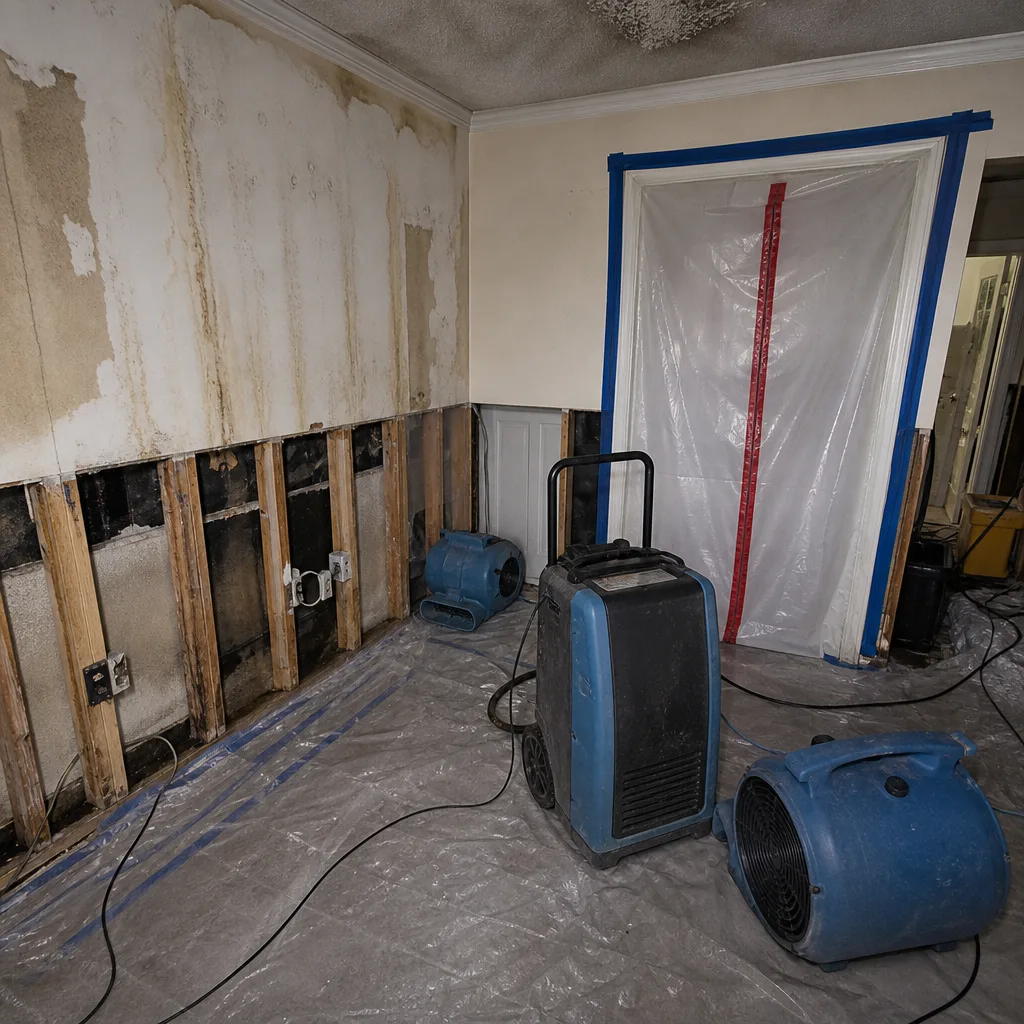 Before
 After
After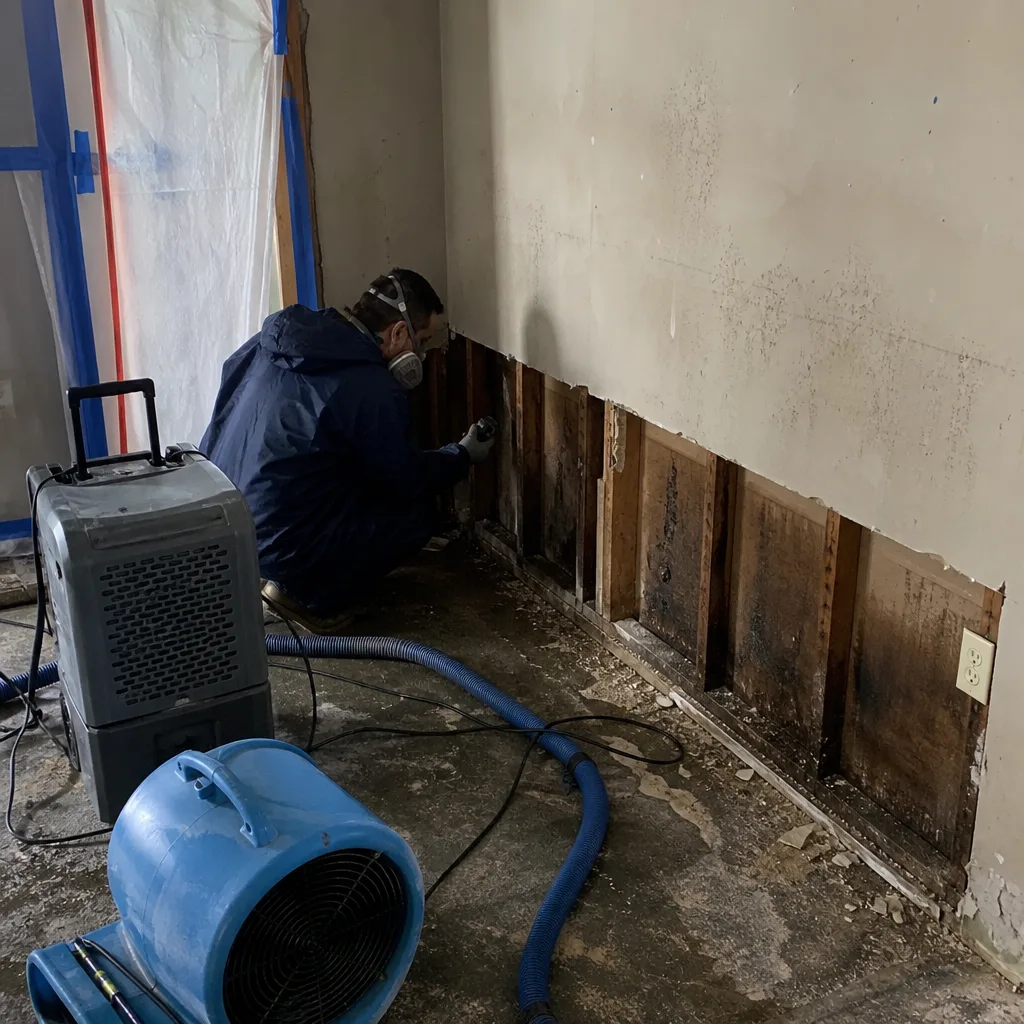 Before
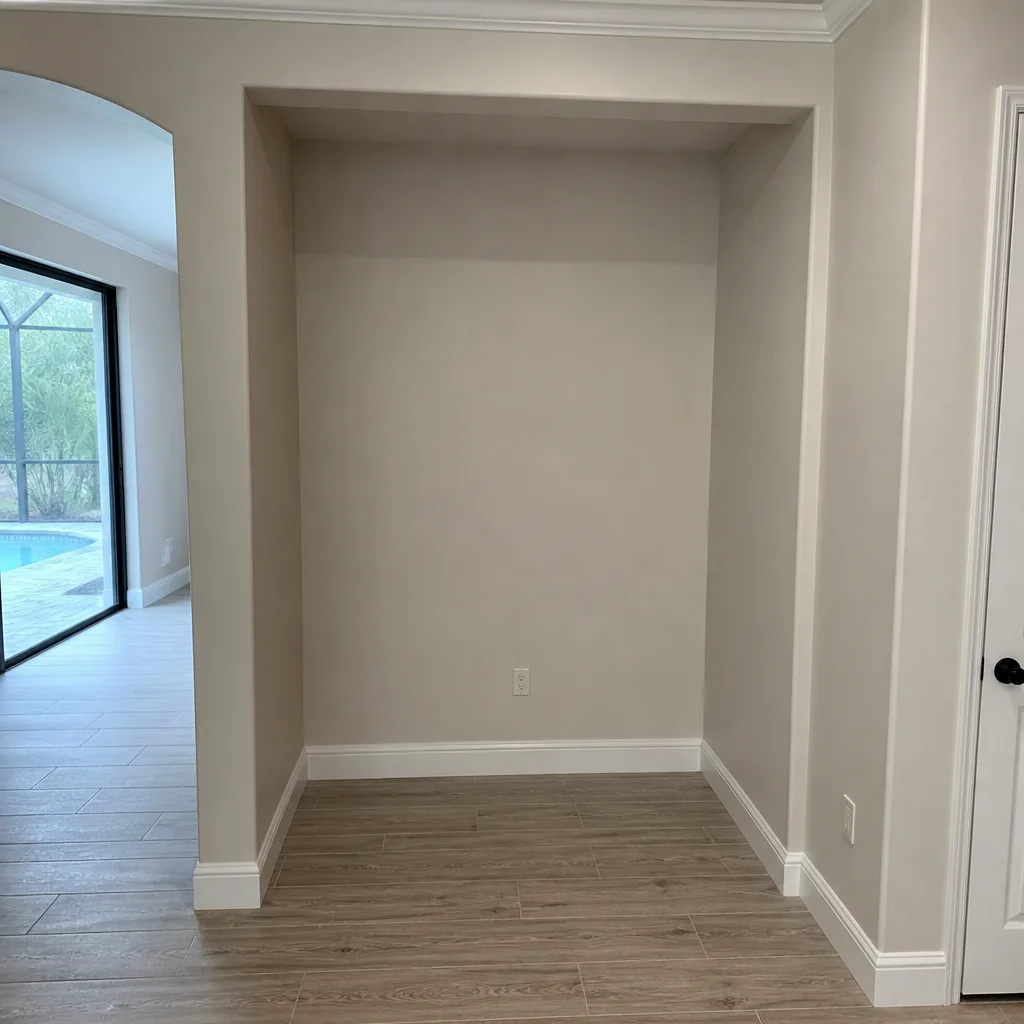 After
AfterThe Wind-Rain Problem Bay Hill Homeowners Know Too Well
Bay Hill’s estate homes, many built between the 1970s and 2000s with original flat or low-slope tile roofs, are uniquely vulnerable to wind-driven rain intrusion during summer storms. The same architectural lines that give these Mediterranean and Spanish Colonial homes their presence also create a recurring water damage pattern: wind drives rain sideways under the tile laps, water travels along the roof trusses, and it pools where the roof deck meets the ceiling plane. By the time a homeowner sees a watermark on a tray ceiling, the adjacent wall cavities are often already saturated. Our crews know to check that path first, before broader structural drying even begins.
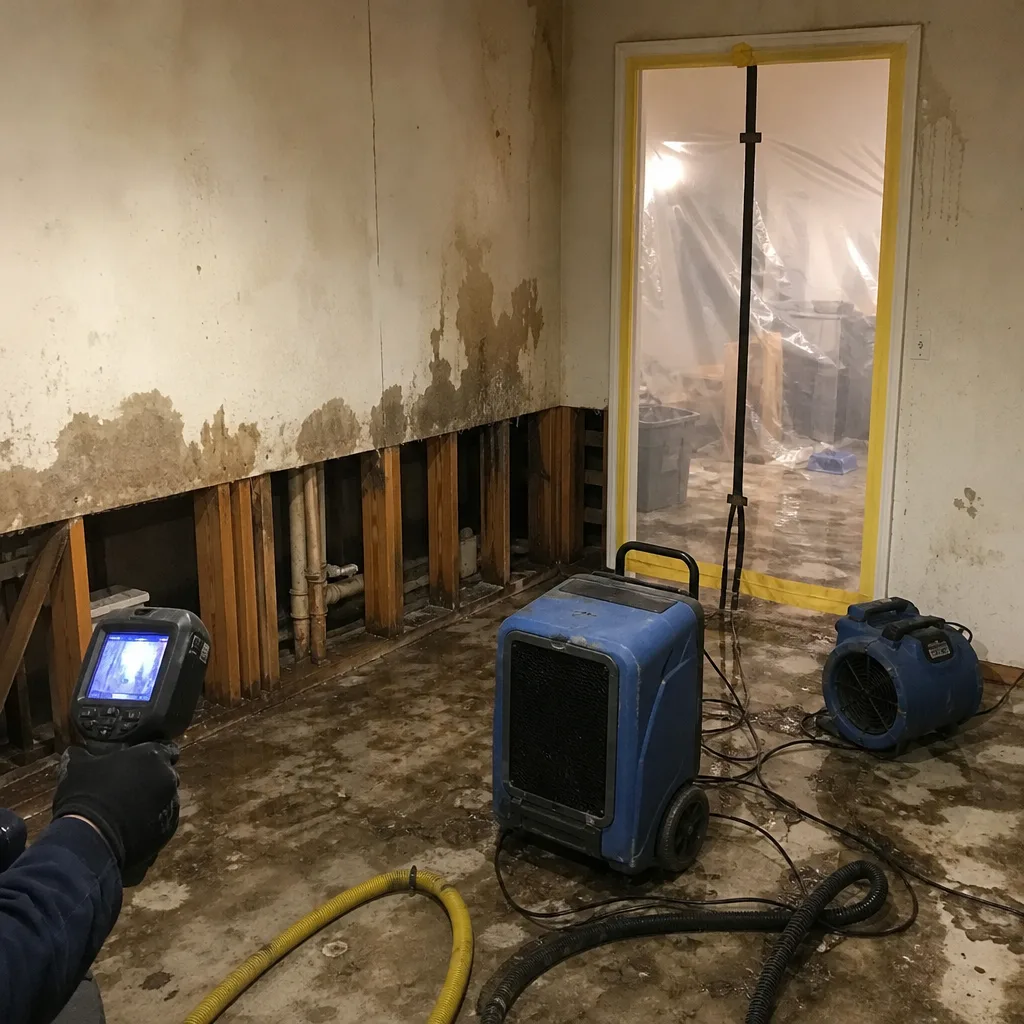
We saw this exact pattern on a custom-built estate off Masters Boulevard, near the Arnold Palmer Invitational course. A post-storm call came in for a ceiling stain in the great room. Wind-driven rain had penetrated a low-slope tile roof and soaked the tray ceiling overhead. Our techs set up containment, ran Dri-Eaz LGR dehumidifiers and XPOWER air movers, and logged moisture readings every 12 hours until the structural framing returned to pre-loss condition. The custom millwork and stucco walls were saved from tear-out. That’s what an hour of correct, targeted response buys you: the difference between drying a home and rebuilding part of it.
There’s a lesson in that call that applies to any Bay Hill estate: a storm leak is almost never isolated to the stain you can see. Wind-driven rain travels. If a restoration crew doesn’t moisture-map the adjacent wall cavities, they’ll dry the visible spot and leave the real problem hidden. By the time it shows up again, you’re dealing with mold behind custom casework, and that’s a much larger project.
For the work itself, we follow IICRC and RIA standards, the industry’s recognized benchmarks for water damage restoration. That means our drying logs, our moisture readings, and our equipment placement follow a documented process, not a guess. And because Bay Hill homes demand a higher standard of finish care, we explain what we’re doing in plain English at every step. You should know why a dehumidifier is running in your foyer, what the target RH (relative humidity, the amount of moisture in the air) is, and how long we expect the drying process to take.
Pricing for Water Damage Restoration in Bay Hill, FL
Water damage restoration in Bay Hill runs a real range, and you deserve to see it before you call. Water extraction alone lands between $400 and $1,200. Emergency water removal, which includes extraction plus initial drying setup, runs $600 to $1,800. Full structural drying with dehumidification and monitoring adds $1,000 to $3,000 depending on the affected area. A ceiling and wall repair after a roof leak typically runs $800 to $2,500 per affected room. These are Bay Hill market ranges, not national averages, and your written estimate reflects the actual square footage, the materials involved, and how long the water has been present. Estimates are free. Call (850) 786-4472 and we’ll schedule a walk-through.
We Also Serve Cities Near Bay Hill
Our crews serve all of Bay Hill and the surrounding communities, including Orlando, Apopka, St. Cloud, and Deltona. If you’re outside Bay Hill proper but still in the greater Orlando area, we can help. You can learn more about our broader coverage on our Water Damage Restoration in Bay Hill city page or explore the full scope of our Water Damage Restoration services.
Serving Bay Hill, FL - Our Local Coverage Area
We’re based in the Bay Hill area and know this community well. Use the map below to see our service coverage - if you’re nearby, we can almost certainly help.
FAQs About Water Damage Restoration in Bay Hill
During Bay Hill’s summer storm season, we typically have a crew on-site within 60 to 90 minutes of your call, depending on traffic and whether multiple storm calls are active across the area. Emergency water removal is always prioritized, and we give you a named arrival window when you call. If water is actively entering the home, call (850) 786-4472 immediately and we’ll start the dispatch process while you’re still on the phone.
We check the roof-to-wall transitions first, because that’s where wind-driven rain most often enters on Bay Hill’s flat and low-slope tile roofs. Water pushed sideways under tile laps travels along trusses and typically shows up far from the actual entry point, so we moisture-map the adjacent wall cavities and ceiling planes before assuming we’ve found the full extent of the intrusion. Then we trace the stucco exterior for hidden water paths.
Yes, we classify the water source on every Bay Hill job into one of three categories: clean water from a supply line, gray water with some contamination, or black water carrying sewage or floodwater. Bay Hill storm intrusions through roofs are usually clean or gray, but a flooded bathroom or a backed-up drain can shift that classification. The answer determines how we handle extraction, what PPE our techs wear, and what materials need removal versus drying.
Most of the time, yes. Bay Hill’s custom millwork, tray ceilings, and stucco walls can often be dried in place using psychrometric drying, which is the science of controlling temperature, airflow, and humidity to pull water out of building materials without removing them. We use Dri-Eaz dehumidifiers, XPOWER air movers, and targeted Injectidry systems for hard-to-reach cavities. Tear-out is only recommended when the material has been saturated long enough that drying would leave structural weakness or a mold risk larger than the replacement cost.
Wind-driven rain damage from a named storm falls under the wind portion of most Florida homeowners policies, but coverage depends on your specific policy language, your hurricane deductible, and whether the leak is classified as storm damage or a maintenance issue. Bay Hill homeowners should document the damage with photos immediately, then call (850) 786-4472. We provide photo-documented assessments and can coordinate directly with your adjuster to make sure the written scope reflects the actual moisture findings, not just the visible stain.
Written by Carl Brandt, Owner at Dryden Restoration Orlando, serving Bay Hill, FL.