

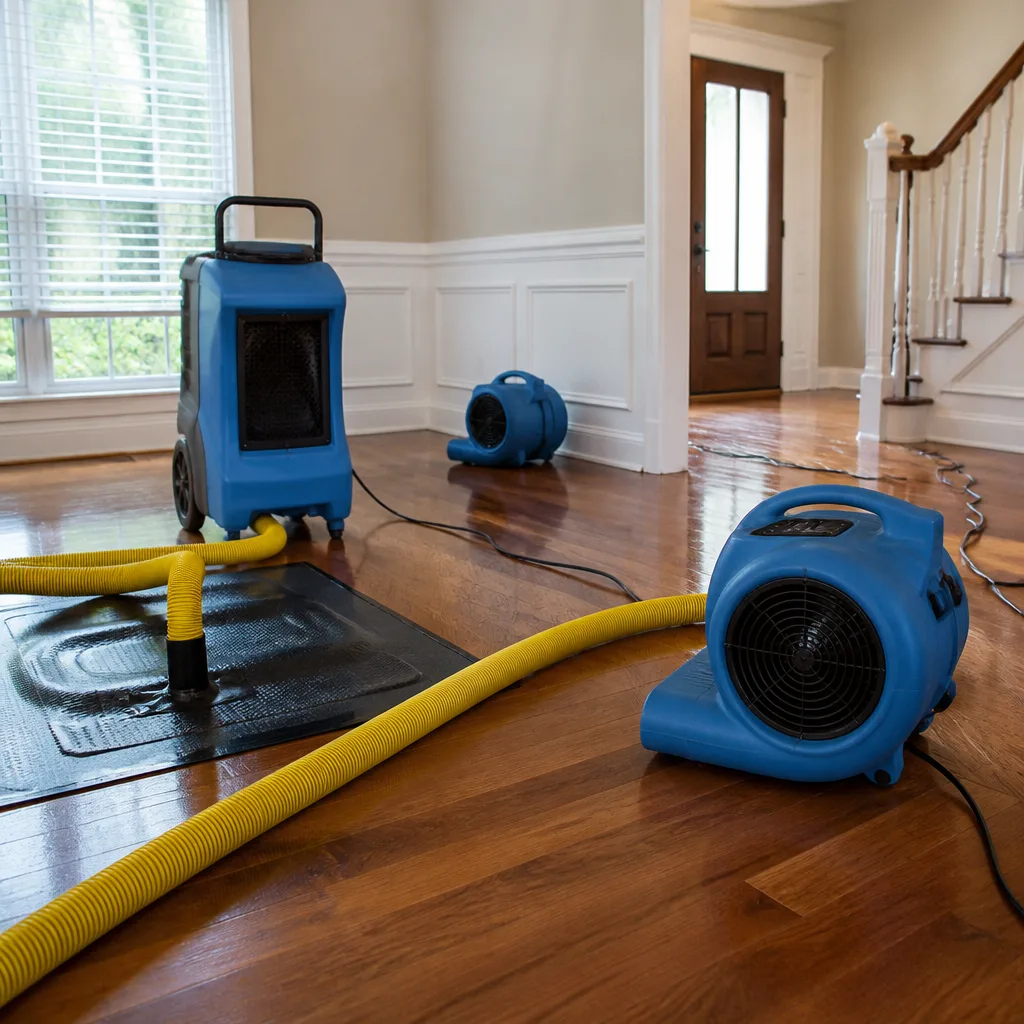
 Water damage drying
 Fire & smoke cleanup
 Mold remediation
 Storm response
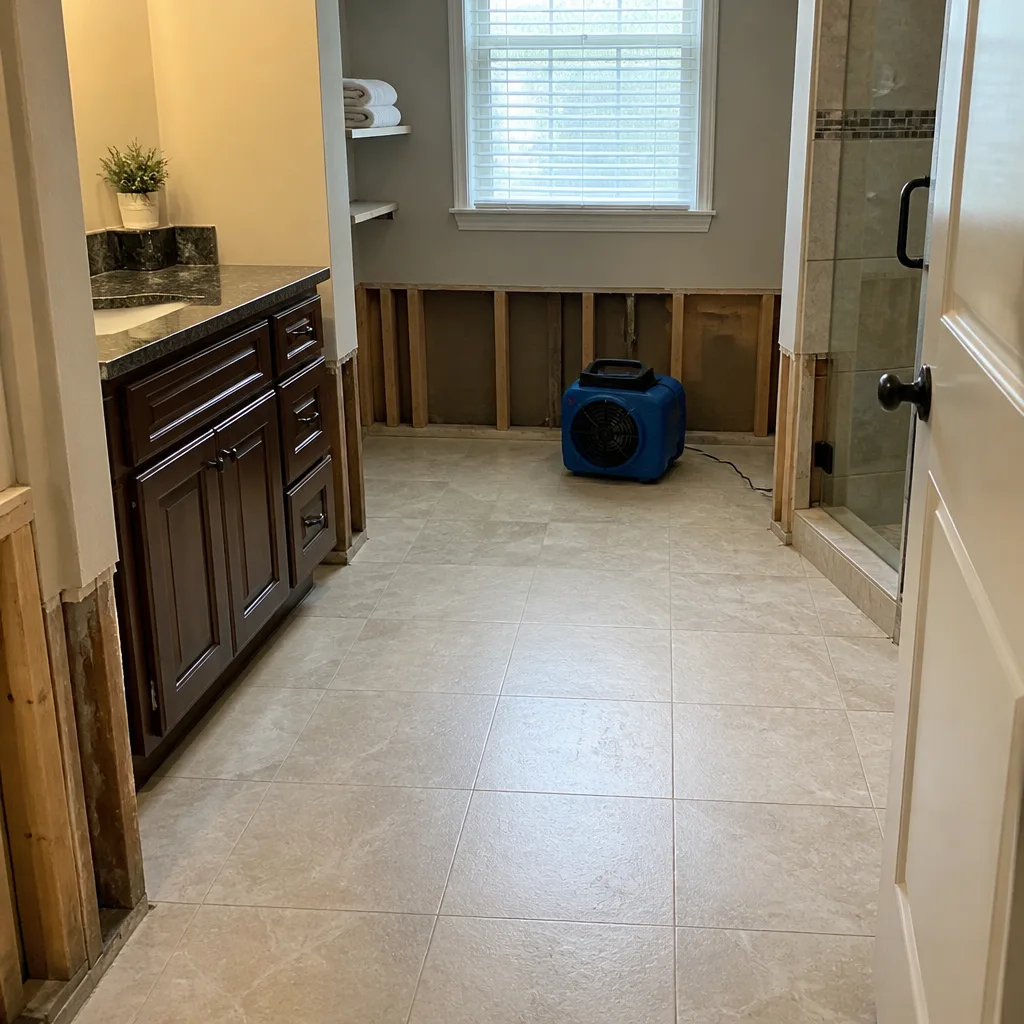 Sewage cleanup
 Reconstruction
Free visual inspection and a written scope of work before any mitigation begins - photos, moisture readings, and drying logs go in your claim file
The scope we write is the scope we bill. Anything new gets shown to you, in writing, before we touch it.
Get your free estimateFast, Reliable Fire Damage Restoration Across Hunters Creek
Fire damage restoration in Hunters Creek typically runs $1,900 – $6,400 depending on what burned, how far smoke traveled, and whether stormwater got inside before board-up. Most Hunters Creek jobs we handle involve smoke and soot removal, structural repair, and odor treatment. Our crews know the subdivisions around Hunters Creek Golf Course, Eagles Mere Drive, and the lake-and-canal corridors where drainage issues complicate fire losses. If you’re standing in a smoke-damaged home right now, call (850) 786-4472. A live person answers, and we’ll give you a straight answer about what comes next.
Fire damage restoration in Hunters Creek is rarely just a fire. It’s a fire followed by wind, rain, and standing water in a slab-on-grade house. That combination changes what we do on day one. Carl Brandt, who leads our crew, has walked enough of these jobs to know the sequence that saves a house: board it up, stop the water, map the moisture, then remove what the fire actually damaged. We’ve been at this since 2005 as part of the Kingswell family of independently owned restoration businesses.
Why Dryden Restoration Orlando Is Hunters Creek’s Preferred Fire Damage Restoration Company
Hunters Creek homeowners call us because we show up. Not a call center, not a subcontracted crew from two counties away. Our technicians are background-checked, uniformed, and they know the streets they’re driving through. When someone off Town Center Boulevard has smoke pushing through the attic, we can read the house before we open the door: tile roof, stucco exterior, slab foundation, and probably a garage that already smells like rain runoff. That familiarity saves hours.
Every job starts with a written price. Before a tool is touched, you know what the scope is and what it costs. That number doesn’t change at the door. And every repair carries our 365-Day Done Right Promise: if the repair fails within a year, we come back and make it right at no charge. It’s in writing, on every job. The Kingswell Way is simple: say the price before the work, show up in the window we gave, leave the place cleaner than we found it, put the guarantee in writing, and come back if it fails. That’s how we’ve kept our reputation in Hunters Creek intact.
Restoration work we handle
Fire and Water Damage Restoration in Hunters Creek
Fire and Water Damage Restoration in Hunters Creek almost always means a single job with two causes. A lightning strike hits the roofline, the fire chars framing and smokes out the bedrooms. Then the afternoon thunderstorms that roll through from June through September dump water through the hole the fire made. Now you’ve got a fire loss on top of a water intrusion, and the slab is wicking moisture while soot is still settling on every surface. We treat it as one loss, not two line items. You get one scope, one crew, one written price.
What a Hunters Creek homeowner needs here is speed and moisture control together. Board-up and tarping come first, because an exposed roof in a Hunters Creek summer storm turns a $3,000 fire cleanup into a $9,000 rebuild within days. Then we run HEPA air scrubbers while our techs pull charred drywall and check moisture readings behind it. Dri-Eaz air movers and dehumidifiers pull the humidity out of the open wall cavity before antimicrobial treatment goes on the framing. This isn’t extra work; it’s the standard sequence if you don’t want Mold Remediation in Hunters Creek on top of the fire.
The Storm-Fire Sequence
In Hunters Creek, we see a specific pattern: water gets in through aging roof flashing during a storm, finds an electrical connection, and the short ignites insulation or framing. The fire smolders inside a wall where stucco hides it. By the time the homeowner smells smoke, water has already traveled down to the slab. If a crew only cleans soot and doesn’t map the moisture path, the smell comes back in three weeks. We find the water path first, even when the smoke is what got us the call.
The Garage and Ground-Floor Risk
Ground-floor rooms and garages are where Hunters Creek fire losses get worse fast. The storm drains east of the golf course are undersized for the drainage basin, so after a heavy downpour, standing water in garages is common. Add a fire in an attached garage and you have charred wall cavities sitting in water. That’s when category 3 water becomes the controlling factor: it’s contaminated, it’s moving, and it changes what we remove versus what we restore. We check moisture levels in the slab before we ever write the final scope. If the slab is wicking stormwater, the fire restoration plan includes drying for both losses.
Soot Removal in Hunters Creek
Soot Removal in Hunters Creek homes requires more than wiping walls. Soot from protein fires, electrical fires, and synthetic-material fires behaves differently. Synthetic soot, common when carpet and furniture foam burn, is oily and clings to every surface. Protein soot, from burned food or insulation, looks faint but carries a stubborn odor that lives in walls for months. On a recent job off Eagles Mere Drive, a lightning strike flashed through the panel and smoldered insulation in an interior wall. The fire stayed hidden behind stucco until we cut in. What looked like a small scorch mark had pumped smoke through the wall cavity into three rooms.
We set containment in the garage, ran HEPA air scrubbers while our techs pulled charred drywall, and used Dri-Eaz air movers to manage the humidity from the open wall cavity before applying antimicrobial treatment to the exposed framing. Our moisture readings showed the slab was wicking stormwater at the same time, so drying equipment ran for both the fire loss and the water intrusion before final scope was written. That’s what soot removal actually looks like in Hunters Creek: it’s never just wiping black marks off a ceiling.
Soot Traps in Slab-on-Grade Homes
Soot settles in places a homeowner doesn’t see: behind baseboards, inside electrical boxes, under the lip of tile countertops, between the drywall and the block wall. On slab foundations, smoke also moves under doors and through wall penetrations into the garage, where humidity makes it stick harder. XPOWER air movers push air across every surface to find lingering soot, and our techs use dry-chem sponges before any liquid cleaner. We don’t paint over soot stains. We remove them or the stain bleeds through in a year.
Why DIY Soot Removal Keeps Failing
Store-bought cleaners smear synthetic soot instead of lifting it. They push the oil deeper into the drywall. By the time a homeowner calls us after trying it, the job costs more because the soot has been pressed into porous surfaces that now need replacement. The right sequence is dry-chem sponge first, HEPA vacuum second, then wet cleanup on what remains. Skip step one and you’re just moving the problem around.
Trusted Brands We Service in Hunters Creek
We service and supply the brands Hunters Creek homeowners already have in their homes: Carrier, Trane, Rheem, Goodman, Lennox, and York. Our trucks carry common parts for these systems, so when a fire damages an HVAC unit or smoke gets pulled into the ductwork, we can often replace components same-day without ordering from a distributor across the state. We also stock parts for newer inverter systems that many Hunters Creek homes installed in the last decade. Fast turnaround matters here, because smoke inside a duct system recirculates through the house until it’s cleaned or sealed. We don’t guess at ductwork; we inspect it, photograph it, and show you what needs cleaning versus what needs replacement before we write the price.
See the difference
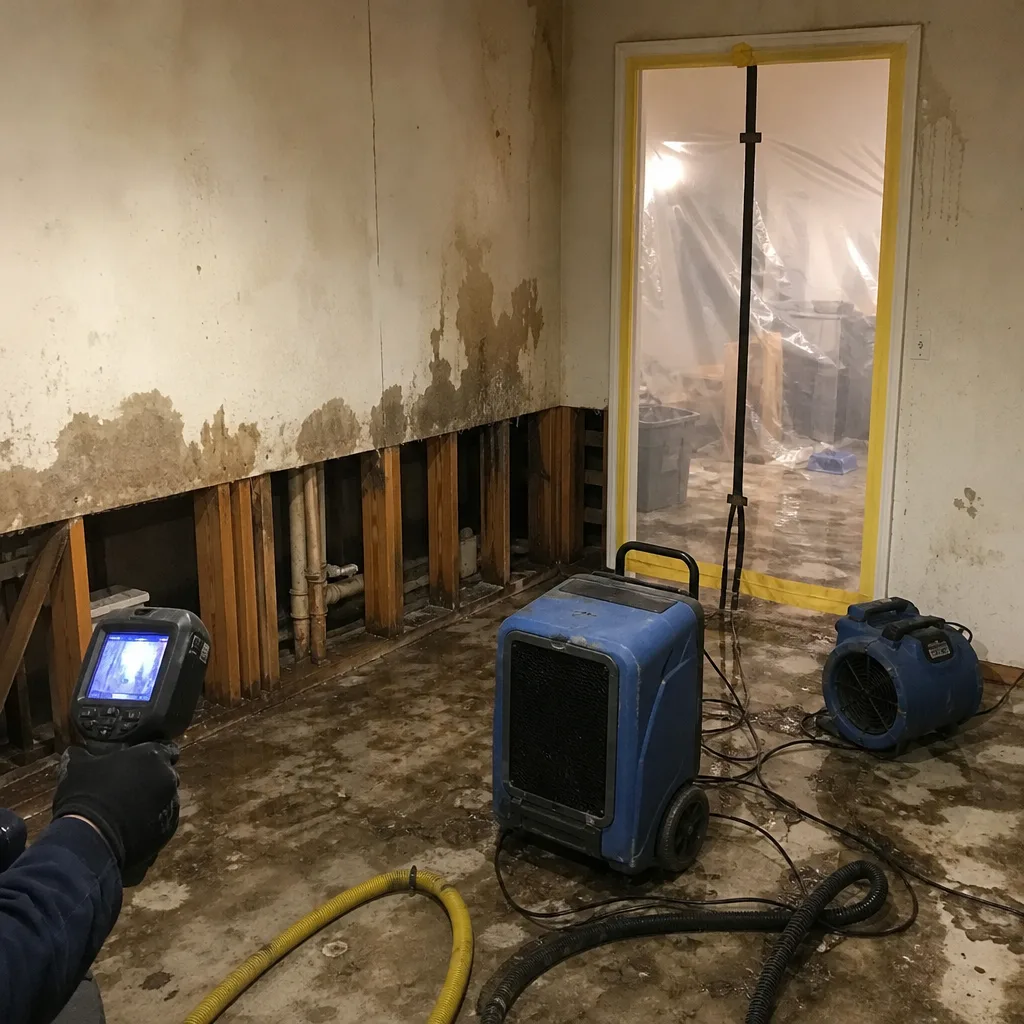 Before
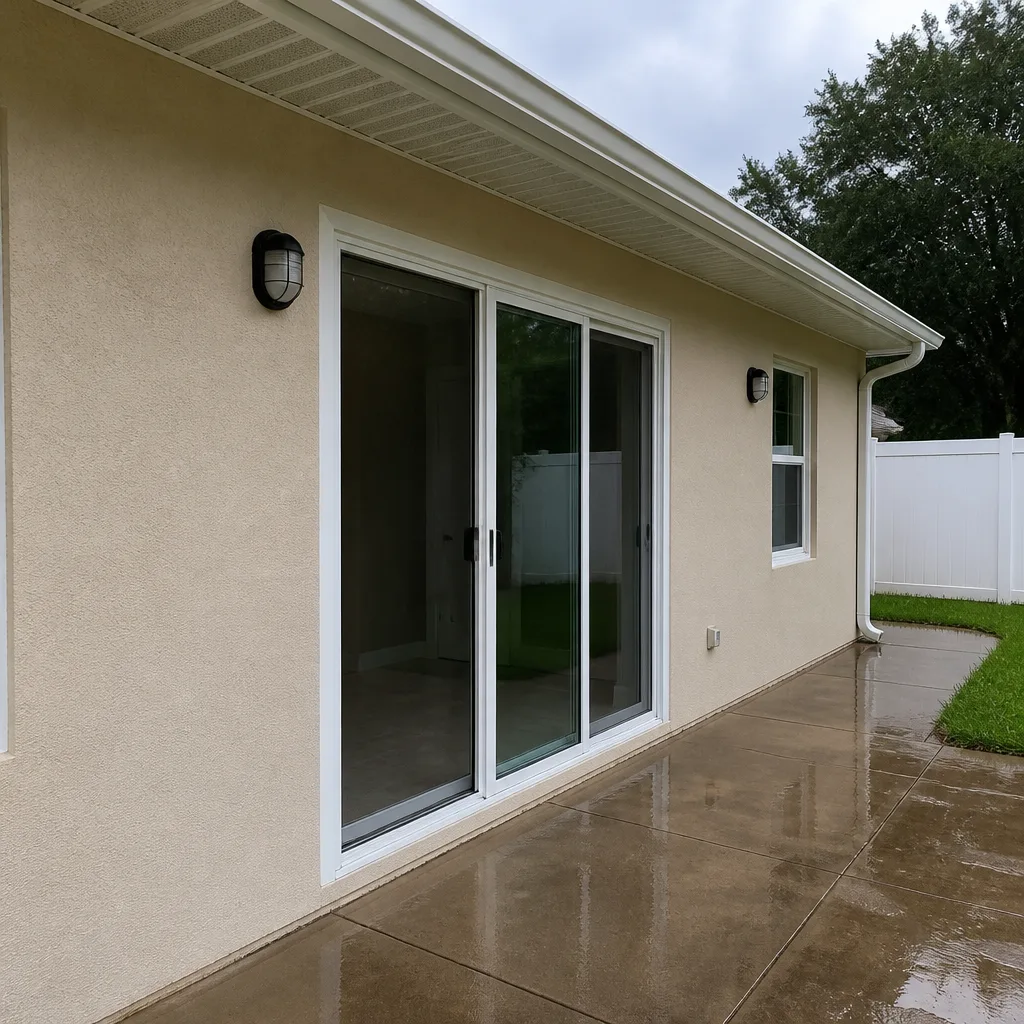 After
After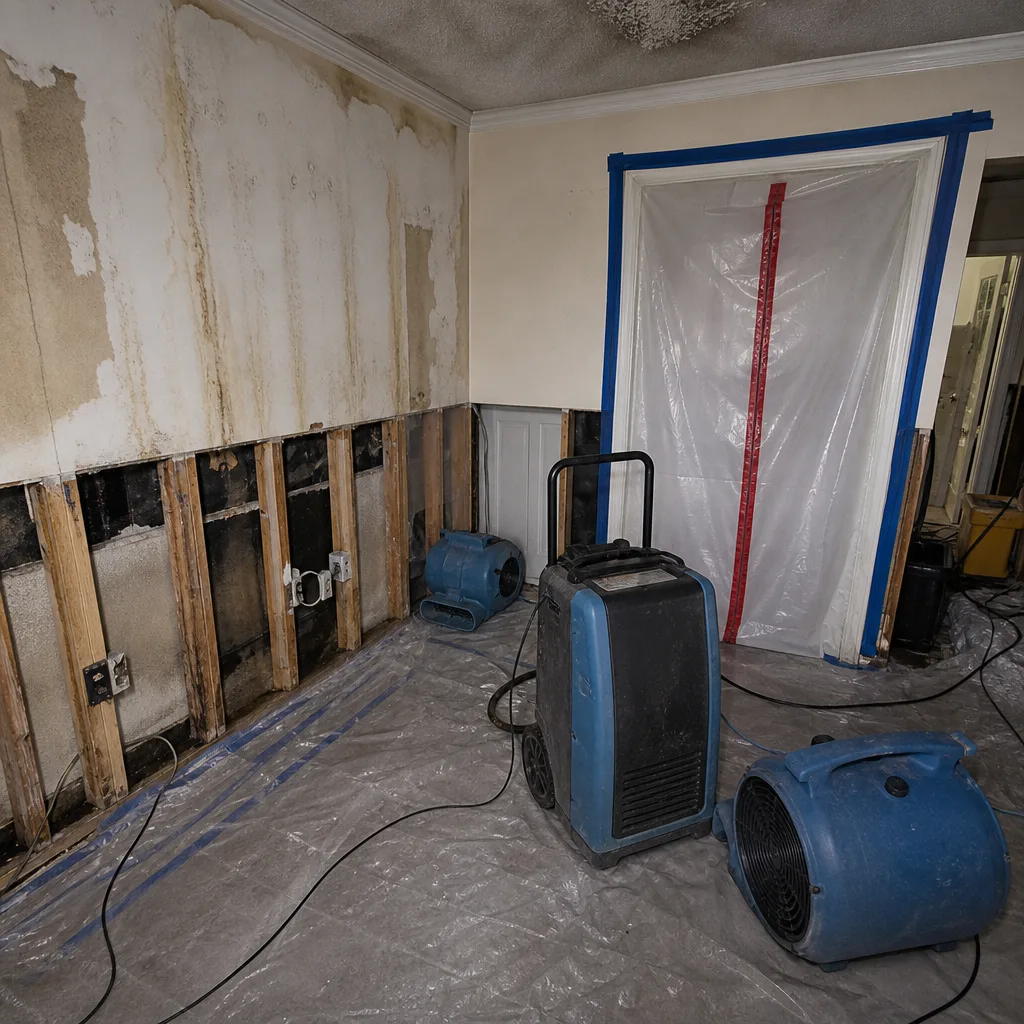 Before
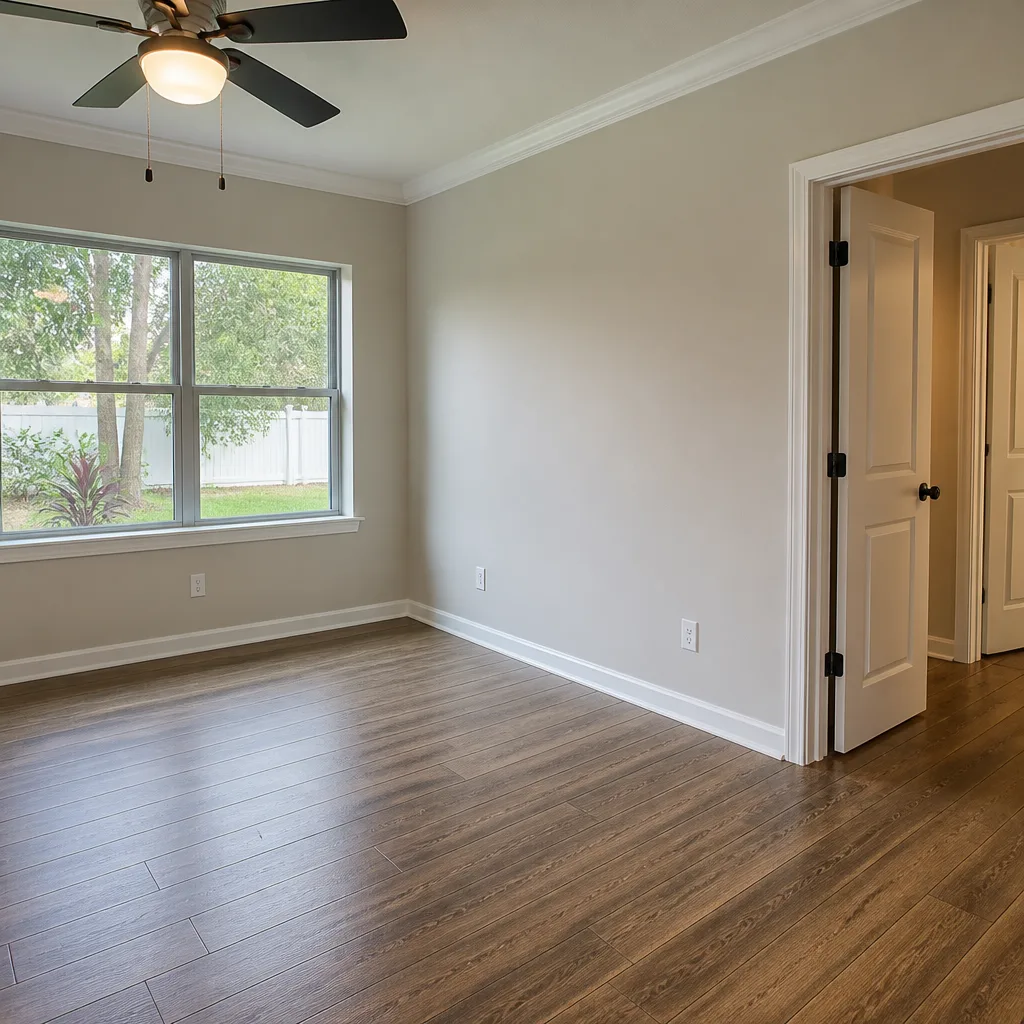 After
After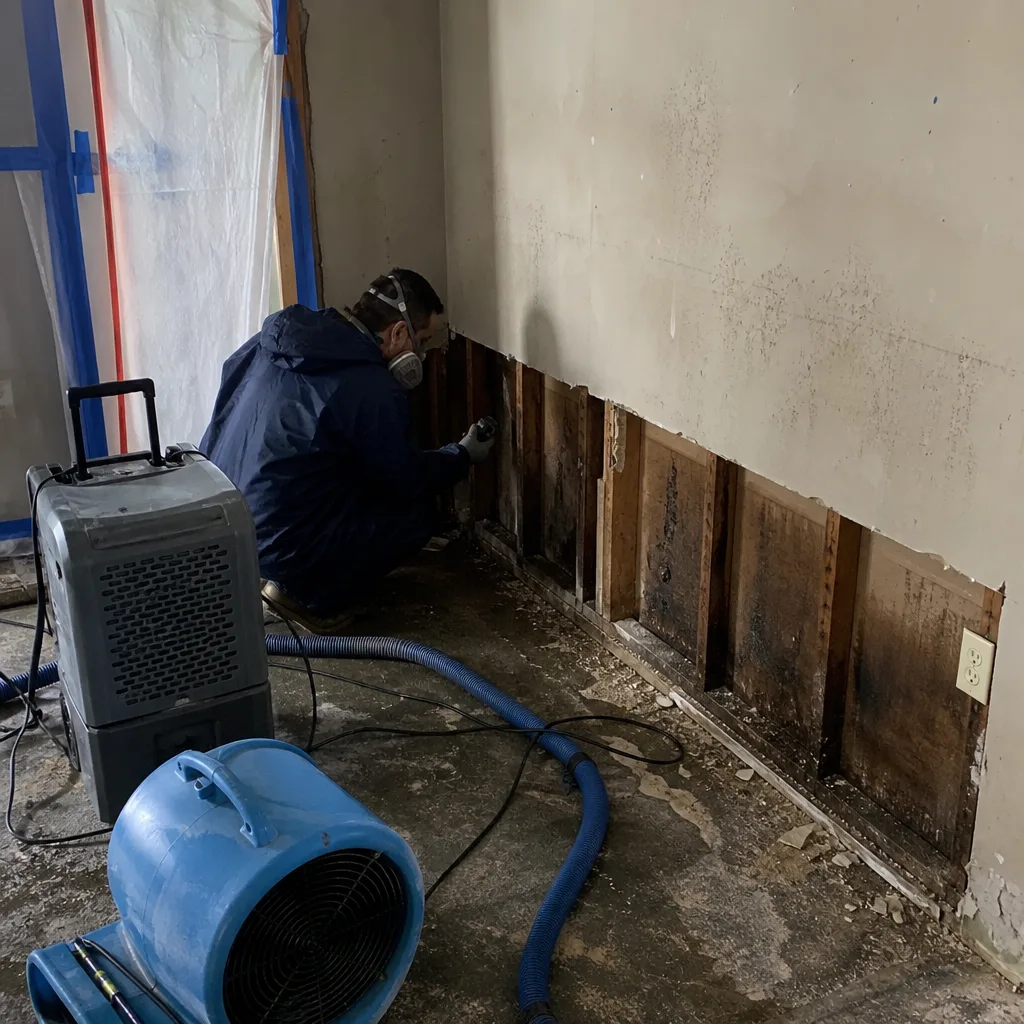 Before
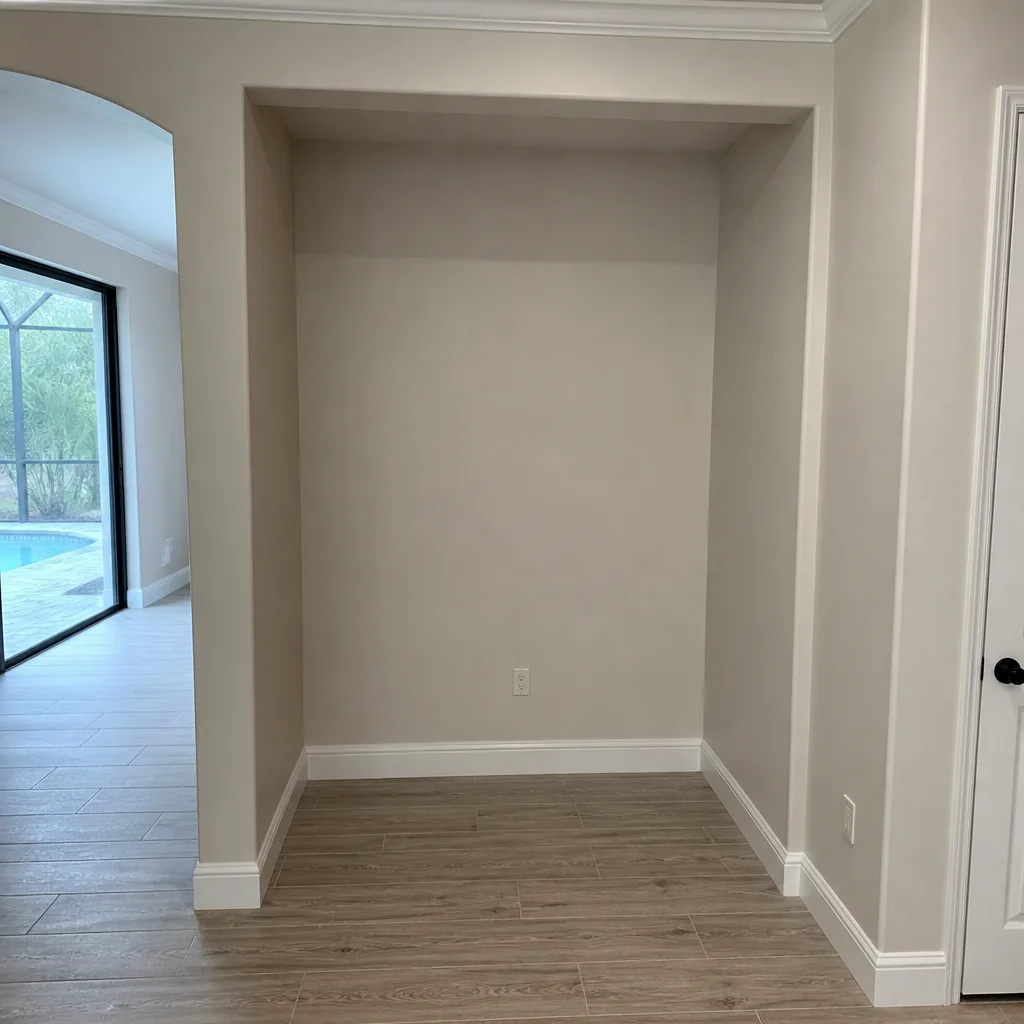 After
AfterCommon Fire Damage Restoration Problems We See in Hunters Creek Homes
- Delayed board-up turning fire into flood. A fire burns through the roof, and before a tarp goes on, the afternoon thunderstorm arrives. Water pours through the burned opening, saturates insulation, and pools on the slab. What started as a $2,500 cleanup becomes a full reconstruction because the delay allowed a category 3 water intrusion.
- Storm water hidden behind charred drywall. In homes east of the Hunters Creek Golf Course, storm drains overflow and standing water sits against the foundation. If a garage fire happens during the same weather event, water hides behind charred drywall and mold develops within 48 hours. We moisture-map every fire loss, not just the burned areas.
- Wind-load damage missed before the fire. When a fire starts with an electrical short from water intrusion through aging roof flashing, the initial cause is the storm, not the wiring. A crew that only cleans soot will miss the ongoing water path. The smoke odor comes back because the leak is still feeding moisture into the wall cavity.
- Smoke odor in garages that won’t clear. Ground-floor garages in Hunters Creek hold humidity from standing water and the slab itself. Smoke molecules bind to moisture and concrete, so a garage still smells like smoke weeks after the fire. That means the slab and wall cavities weren’t dried and treated. Dehumidification is part of every fire job we do here.
Pricing for Fire Damage Restoration in Hunters Creek, FL
Fire damage restoration in Hunters Creek runs from about $1,900 for a contained kitchen fire with light smoke to $6,400 or more for whole-home smoke damage with structural repair and stormwater intrusion. Soot removal alone typically costs $900 – $2,800 depending on square footage and how many rooms were affected. Emergency board-up and tarping runs $450 – $1,200, and it’s usually needed the same day. Water mitigation from storm intrusion alongside a fire adds $1,500 – $4,000. These are the ranges we work within, and your written quote tells you exactly where your job falls. Call (850) 786-4472 for a free estimate; we’ll walk the house and give you the number in writing before any work starts.
What moves the price is the water. A fire that stayed dry is a cheaper job. A fire that got rained on, where the slab is saturated and the drywall is wicking water, means more demolition, more drying equipment, and more time. We show you the moisture readings and explain what they mean before we quote the work. You won’t find a surprise line item later. The Kingswell Guarantee is a written price before work begins, a committed arrival window, and a clean job site. The price on the estimate is the price. Full stop.
We Also Serve Cities Near Hunters Creek
Our crews cover Hunters Creek and the surrounding area, including Orlando, Apopka, St. Cloud, and Deltona. If you’re in a neighboring community and dealing with fire or water damage, the same team and the same Fire Damage Restoration process apply. We coordinate scheduling for the whole region, and our techs know these streets. If you live in Hunters Creek or just outside it, call (850) 786-4472 and we’ll get a crew headed your way.
Serving Hunters Creek, FL - Our Local Coverage Area
We’re based in the Hunters Creek area and know this community well. Use the map below to see our service coverage - if you’re nearby, we can almost certainly help.
FAQs About Fire Damage Restoration in Hunters Creek
Mold can germinate within 48 to 72 hours when stormwater sits behind charred drywall or wicks into the slab. In Hunters Creek, where summer humidity runs high and afternoon thunderstorms are routine, that window shortens. If a fire loss is followed by rain before board-up, assume the water is already traveling through wall cavities and the slab. We set drying equipment on the same visit as the board-up. Don’t wait to see visible mold; by then, the colony is already behind the drywall. Call (850) 786-4472 the day the fire happens, even if it’s raining.
Because the water doesn’t stop when the fire does. Hunters Creek’s subtropical climate means the air is already heavy with moisture. Open a wall cavity after a fire and that humidity rushes in, gets pulled into charred framing, and feeds mold. The slab under a ground-floor room wicks moisture from the soil itself, and a storm before or after the fire compounds it. We run dehumidifiers and air movers to get the structure dry before we seal it back up. If we skip that step, the smoke odor lingers and the repair fails within months, not years. That’s what the 365-Day Done Right Promise means: we do it right the first time, and if it fails anyway, we come back free.
Category 3 water is grossly contaminated, typically from storm runoff, sewage, or water that has sat with burned material. In Hunters Creek, storm drain overflows east of the golf course bring standing water into garages and ground-floor rooms. When that water meets fire debris, it’s category 3 by definition. That changes the removal line: saturated porous materials like insulation, carpet pad, and some drywall get cut out rather than dried in place. We follow IICRC standards on what’s restorable and what’s removal, and we show you the moisture readings that drive the decision before we cut anything.
Yes, if the fire damaged framing around an opening or the storm that came with the fire compromised a door or window’s seal. Hunters Creek’s building code reflects the area’s wind exposure, especially for exterior openings. A garage door warped by heat may no longer meet wind-load rating. A window frame charred around the edges may not seal against water intrusion. We check exterior openings on every fire job, and if a replacement is warranted, we scope it in the written estimate. Some repairs require a permit, and we handle that process. For more on this, see our Fire Damage Restoration service details.
The garage slab and the wall cavities are holding smoke. Concrete is porous, and smoke molecules bind to it, especially when moisture from stormwater or humidity is present. The smell comes back every time the air warms up. Cleaning the surfaces won’t fix it if the slab wasn’t dried and the drywall wasn’t treated or removed. We run dehumidifiers specific to the garage, pull baseboards to check the wall cavity, and treat the exposed concrete. Some garages need the first four feet of drywall cut out and the slab sealed before the odor stops returning. Call (850) 786-4472 for an inspection, and we’ll tell you exactly what’s causing the smell in your Hunters Creek home.
If you’re dealing with fire damage, smoke, soot, or stormwater in your Hunters Creek home, call (850) 786-4472 now. We answer live, we come out fast, and we put the price in writing before the first tool leaves the truck. Carl Brandt heads our crew; he’s walked Hunters Creek homes for years, and he’ll tell you straight what the job needs. The 365-Day Done Right Promise applies to every repair we make. If it fails, we return and make it right. No charge. No argument. That’s the way it should have always worked.
Written by Carl Brandt, Owner at Dryden Restoration Orlando, serving Hunters Creek since 2005.