
 Water damage drying
 Fire & smoke cleanup
 Mold remediation
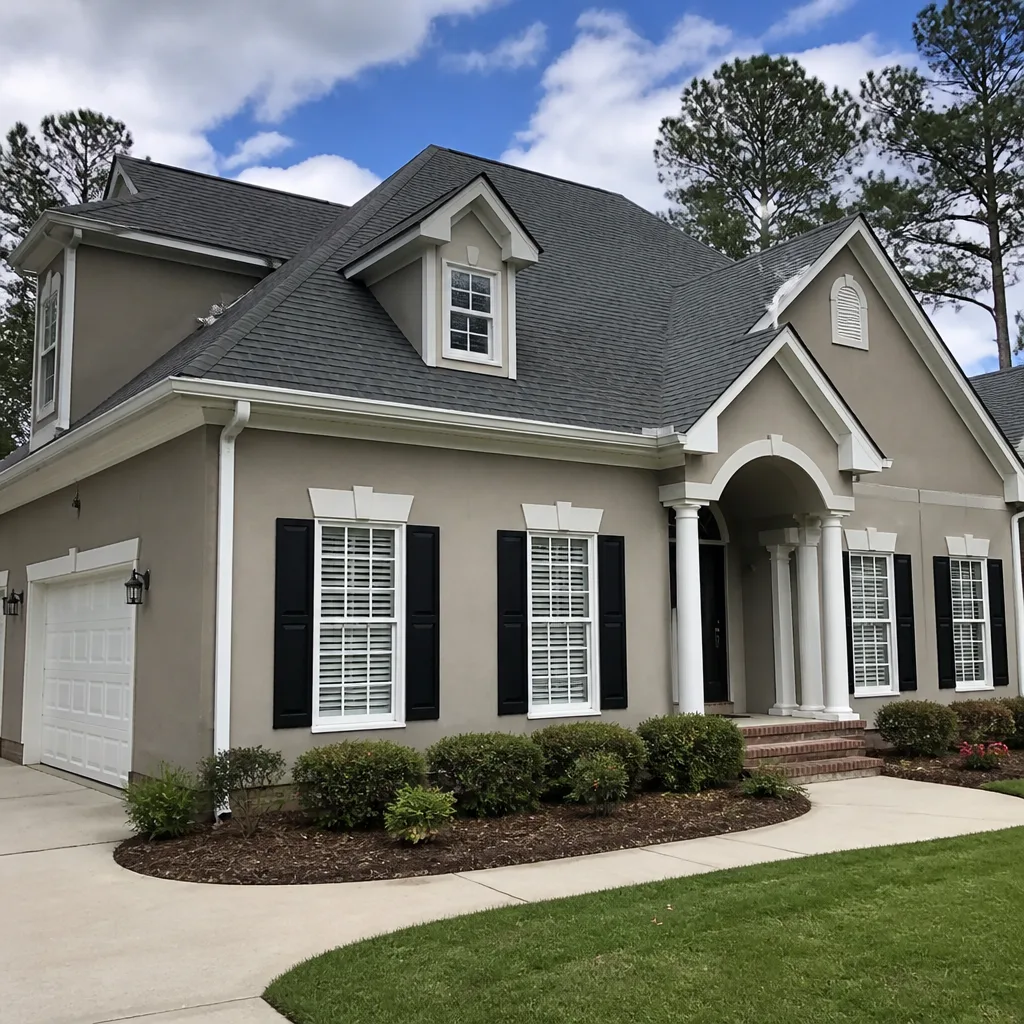 Storm response
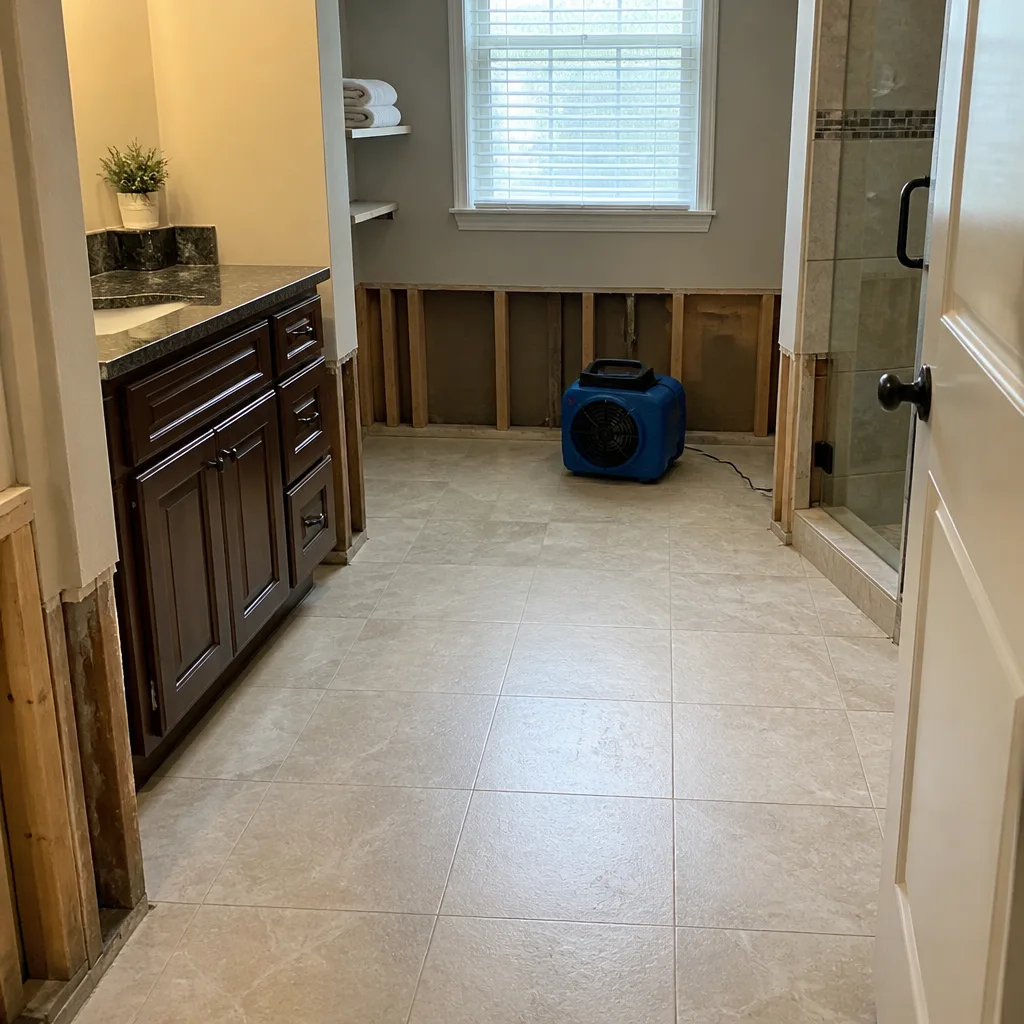 Sewage cleanup
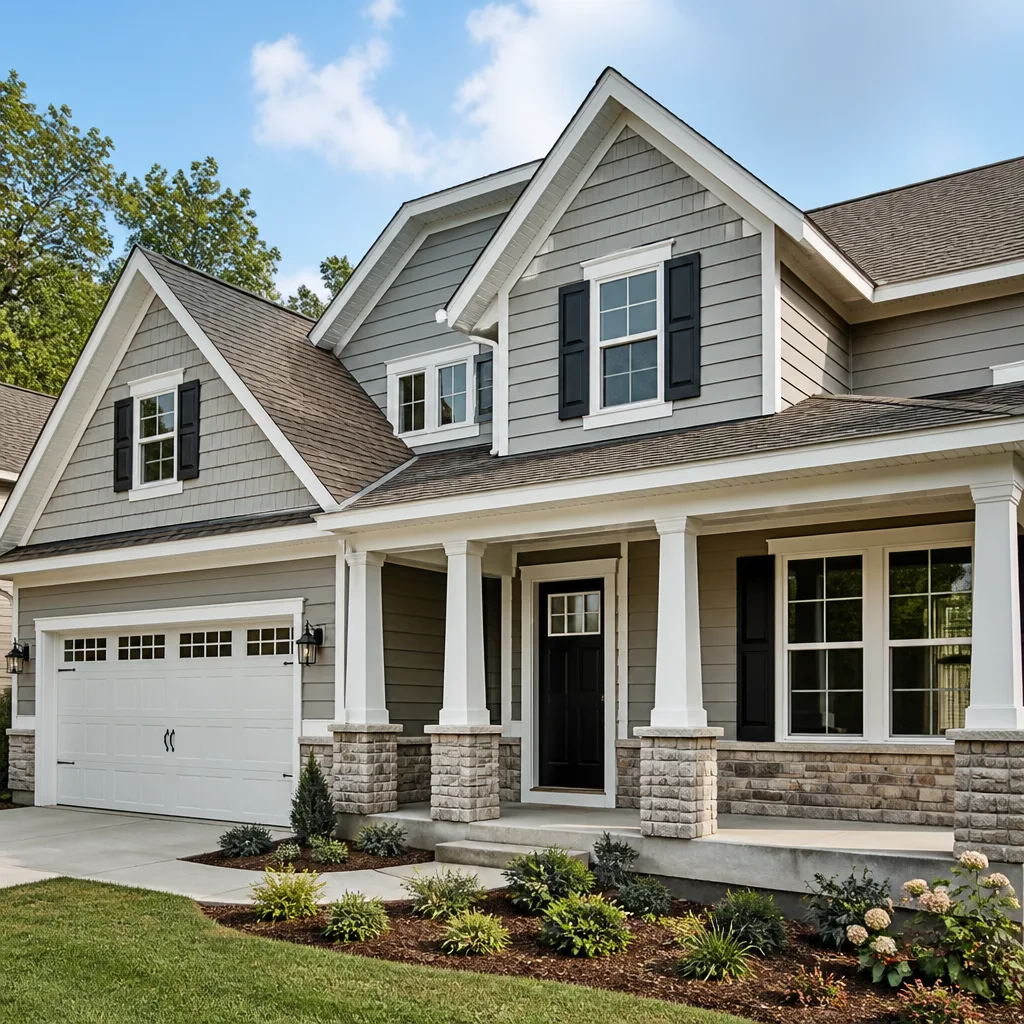 Reconstruction
Free visual inspection and a written scope of work before any mitigation begins - photos, moisture readings, and drying logs go in your claim file
The scope we write is the scope we bill. Anything new gets shown to you, in writing, before we touch it.
Get your free estimateFast, Reliable Fire Damage Restoration Across St. Cloud
Fire damage restoration in St. Cloud typically costs between $3,200 and $38,000 depending on what burned, how far smoke traveled, and how much water the fire department left behind. Most St. Cloud homeowners we work with call us within hours of the fire because they’re standing in a kitchen or garage that’s still wet, still smoking, and starting to smell worse by the minute. We answer live, 24 hours a day, and we can usually have a crew at your door in St. Cloud within 90 minutes of your call. If you need us right now, call (850) 786-4472.
Why Dryden Restoration Orlando Is St. Cloud’s Preferred Fire Damage Restoration Company
St. Cloud homeowners tell us the same thing after every fire: the fire was terrifying, but the water and smoke left behind feel like a second disaster waiting to happen. We’ve worked enough fires in St. Cloud to know that the first 48 hours decide whether you’ll have a restoration or a rebuild. Our Fire Damage Restoration team treats every St. Cloud job like it’s our own house: we show up in the window we gave you, we explain what we’re doing in plain English, and we put the price in writing before we touch a tool.
Carl Brandt, who leads our St. Cloud crews, has walked hundreds of fire-damaged homes in this area. He knows the difference between a 2004 stucco-clad slab house east of Narcoossee Road and a 1940s wood-frame bungalow near downtown, and he plans the drying and smoke work accordingly. Homeowners in St. Cloud appreciate that we’re an independently owned Kingswell company, not a franchise with a rotating cast of subcontractors. The people who show up are background-checked, uniformed, and trained to IICRC, RIA, and IFA standards.
We’ve built our reputation in St. Cloud on showing up when we say we will. Not eventually. Not after three more calls. When a kitchen fire at 7pm leaves your family in a hotel and your house open to the elements, a live person answers our phone and a named crew is dispatched. That’s not marketing language. That’s the way we’ve run jobs in St. Cloud for years, and it’s why our customers refer us to neighbors.
Restoration work we handle
Smoke Odor Removal in St. Cloud
Smoke odor removal in St. Cloud homes is often the most stubborn part of fire restoration, especially in 1990s and 2000s concrete block houses with open floor plans where smoke traveled through the entire structure before anyone noticed. The smoke doesn’t just sit on surfaces; it gets pulled into drywall, carpet fibers, cabinet interiors, and HVAC ductwork. In St. Cloud’s humid climate, those smoke particles bond with moisture in the air and sink deeper into porous materials. A homeowner who just sprays air freshener is masking the problem, not fixing it. Full smoke odor removal in St. Cloud typically runs $900 to $5,800 depending on square footage and whether the HVAC system needs cleaning. Our crews use hydroxyl generators, thermal fogging, and HEPA air scrubbers, plus we clean or replace ductwork when smoke has circulated through the system.
Thermal Fogging and HVAC Cleaning
Thermal fogging is one of the most effective tools for smoke odor in St. Cloud slab homes. It works by heating a deodorizing agent into a fog that penetrates the same pores smoke entered. When smoke has been pulled through the HVAC system, we also clean the ductwork, coils, and returns, because running the AC in a St. Cloud summer can recirculate trapped smoke particles for months. We’ll tell you plainly whether your ducts need cleaning or replacing, and we’ll show you photos before and after.
When Air Fresheners Can’t Fix It
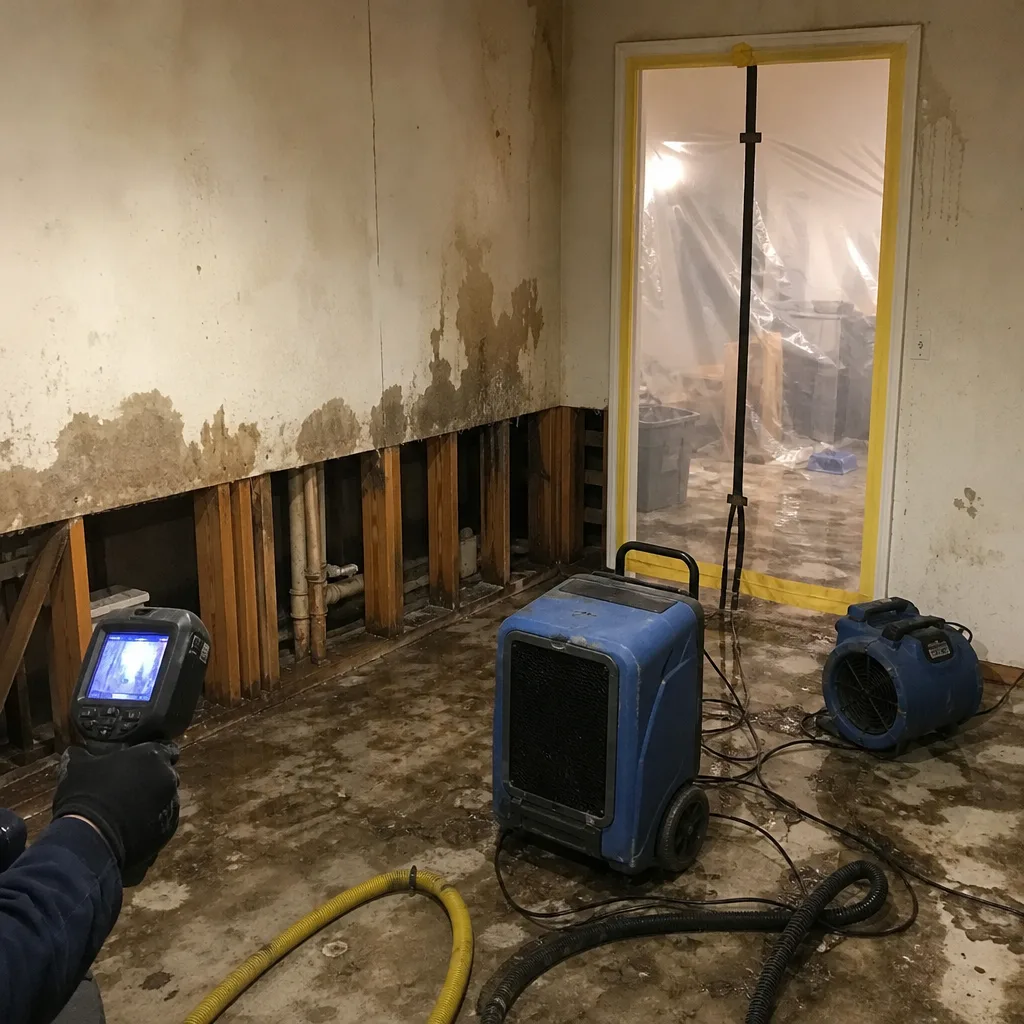
If you’re still smelling smoke a week after a small fire, the odor has soaked into something structural. Common culprits in St. Cloud homes include drywall behind the stove, insulation in the attic, and carpet pad on the slab. We find those hidden reservoirs with a thermal camera and a moisture meter, then we treat them at the source. No amount of candles or Febreze will fix smoke that’s trapped under your flooring.
Fire and Water Damage Restoration in St. Cloud
Fire and water damage restoration in St. Cloud is almost always a two-front job: the flames did the visible damage, but the fire department’s water did the hidden damage. Every St. Cloud house fire we’ve handled has involved hundreds or thousands of gallons of water sprayed into rooms, and that water sits on slab floors where it has nowhere to drain. In slab-on-grade homes, firefighting water seeps under cabinets, behind baseboards, and into wall cavities, then starts wicking up through drywall. We handle both sides of the job: structural drying for the water, and smoke sealing, demo, and rebuild for the fire. Combined fire and water restoration in St. Cloud commonly runs $4,800 to $26,000 depending on severity. Every job includes moisture mapping before we start, drying logs throughout, and a written scope of work so you know exactly what’s being done and what it costs.
Structural Drying After Firefighting
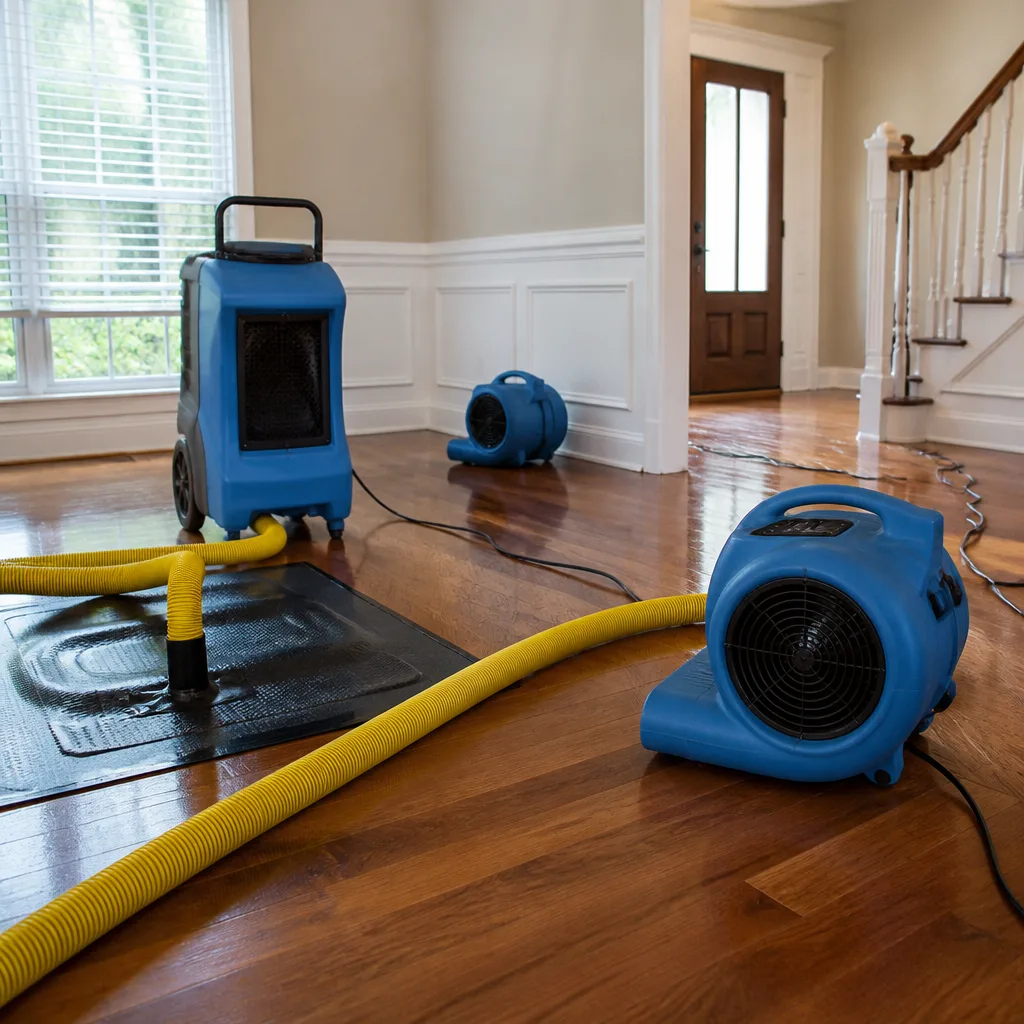
After a fire in a St. Cloud slab home, we set containment, remove standing water, and run professional-grade drying equipment: Dri-Eaz dehumidifiers, Phoenix air movers, and Injectidry systems for hard-to-reach cavities under cabinets and behind walls. We track relative humidity and moisture content daily until readings match the pre-loss condition of each room. That’s the only way to confirm the slab and framing are actually dry, not just dry to the touch.
When Water Damage Becomes Mold Damage
In St. Cloud’s summer humidity, firefighting water left in a slab home for more than 24 to 48 hours can grow mold. It starts in the dark, damp spots: under cabinets, inside wall cavities, beneath vinyl plank flooring. That’s why we prioritize water extraction and drying at the same time as fire cleanup. If we find mold, we’ll tell you, show you photos, and handle the remediation as part of the restoration scope, not as a surprise line item later.
Trusted Brands We Service in St. Cloud
Our St. Cloud crews work with professional-grade equipment and materials that are standard in the restoration industry, not rental-store machines that underperform. We run Dri-Eaz and Phoenix dehumidifiers and air movers for structural drying, B-Air for high-volume air movement in open floor plans, and Injectidry systems for tight cavities like under-cabinet spaces and wall interiors. Our technicians are trained to IICRC and RIA standards, so the equipment is used correctly, sized properly, and monitored every day of the job. We keep replacement filters, HEPA cartridges, drying logs, and antimicrobial treatments stocked for St. Cloud jobs, which means we’re not waiting on parts from Orlando when your home needs help now.
See the difference
 Before
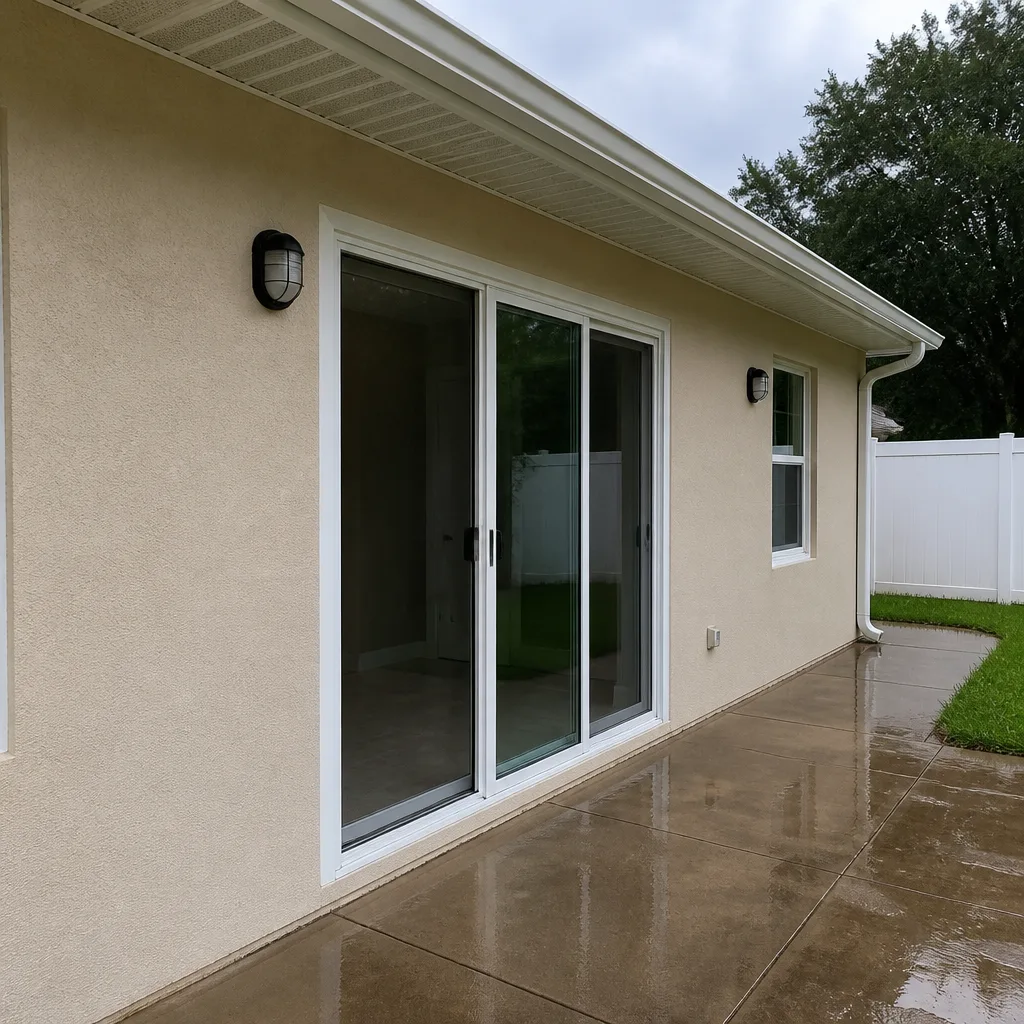 After
After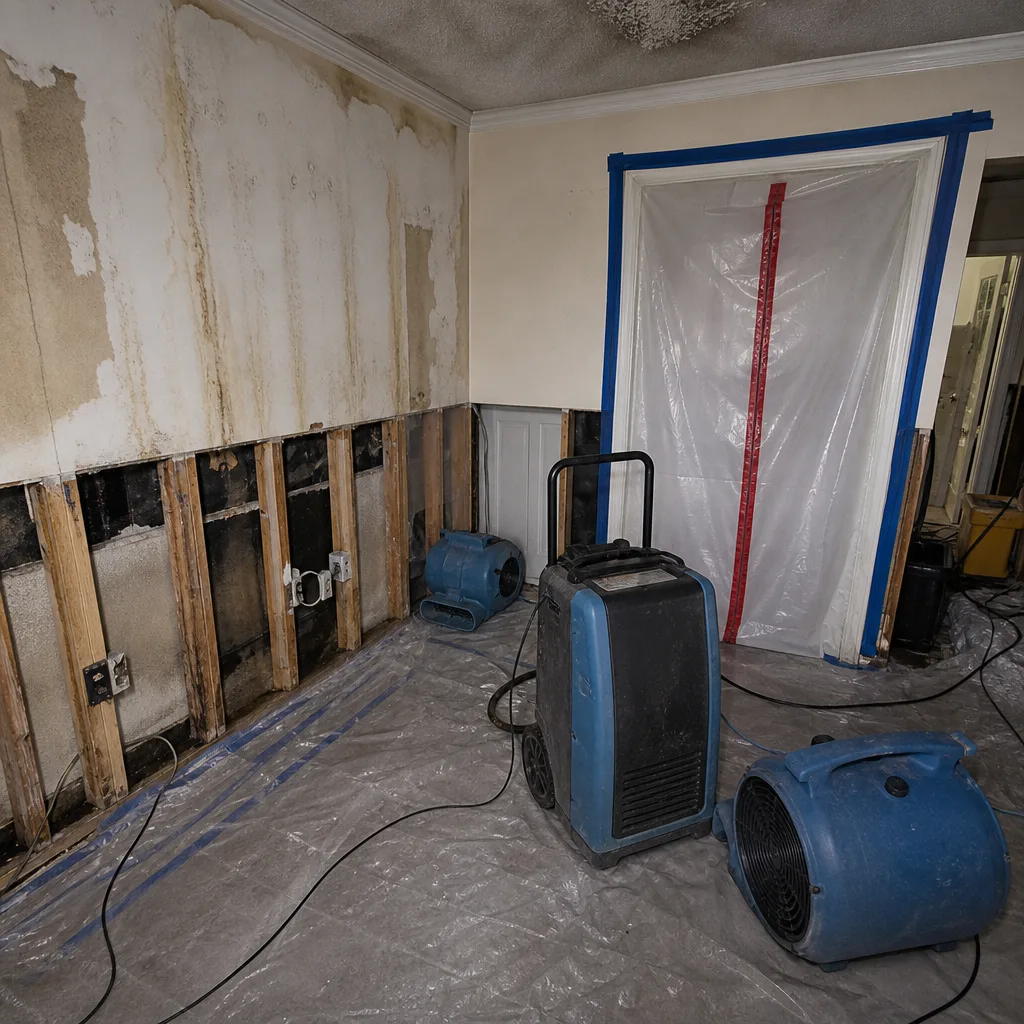 Before
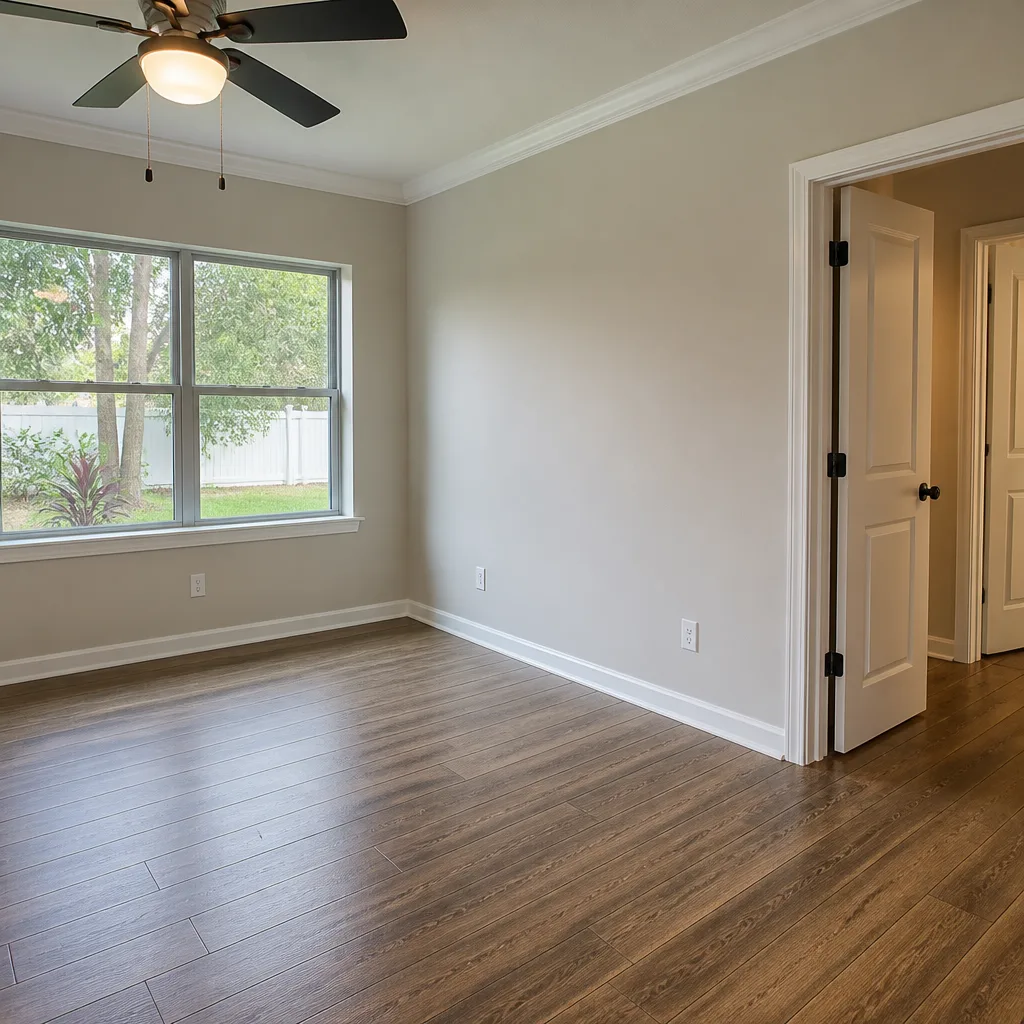 After
After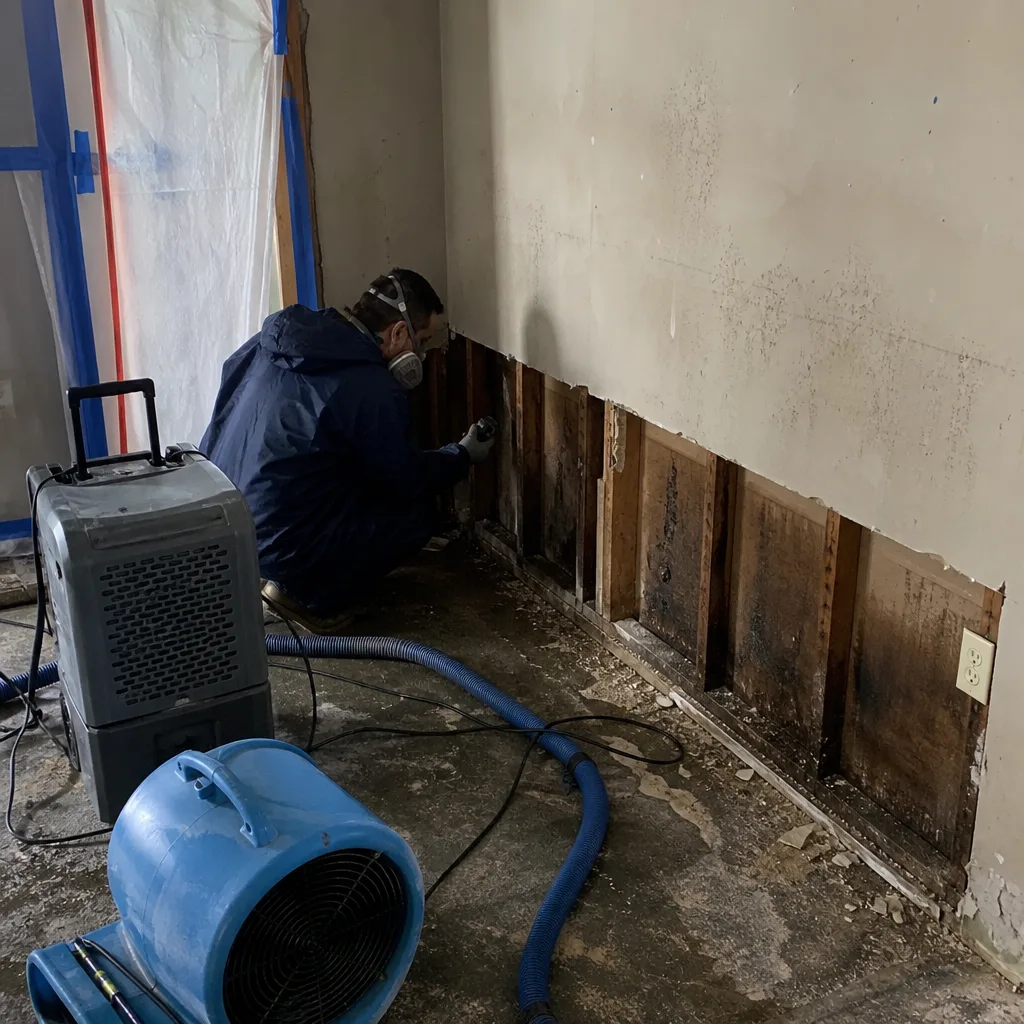 Before
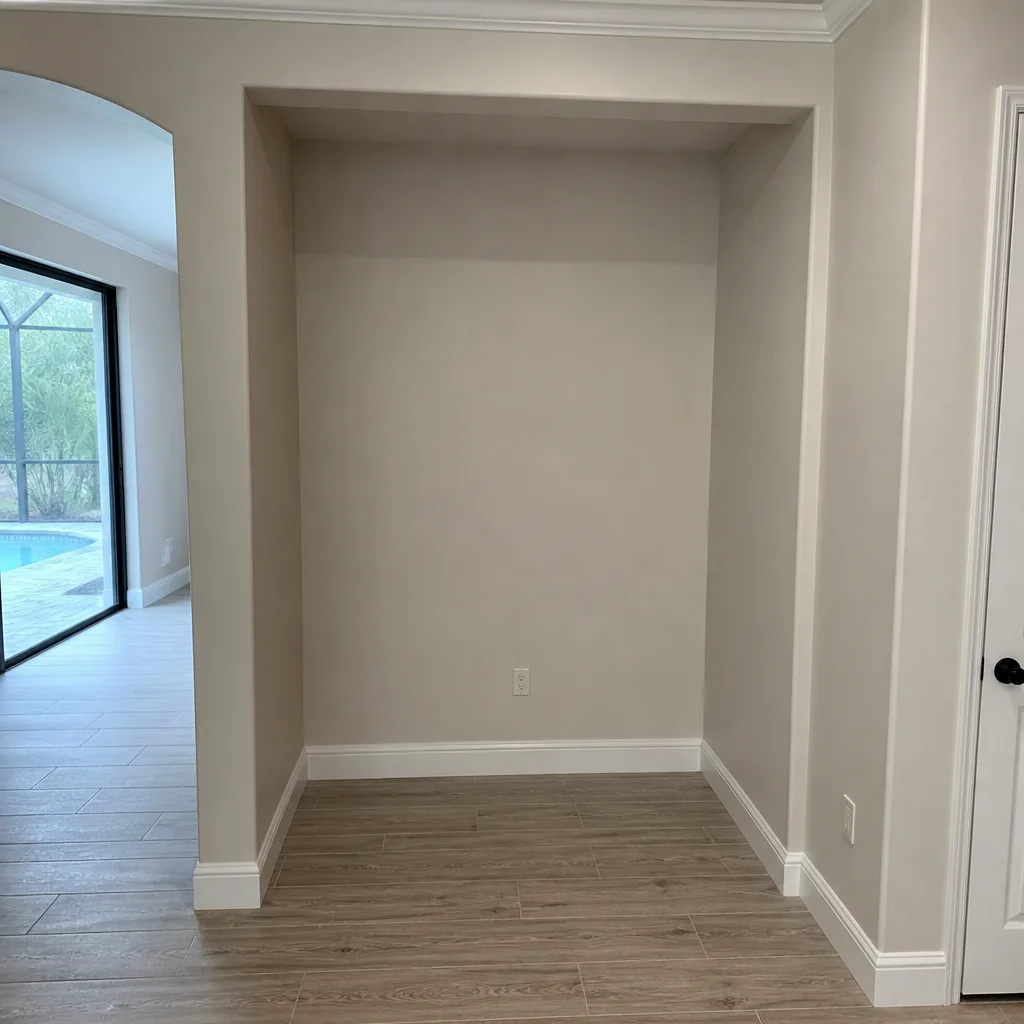 After
AfterCommon Fire Damage Restoration Problems We See in St. Cloud Homes
- Polybutylene supply lines bursting during fire suppression. Homes built in the early 2000s east of Narcoossee Road often have polybutylene pipes. They can fail under the pressure changes of firefighting water, creating a flood inside a fire. We check every line before, during, and after fire restoration in these neighborhoods.
- Water trapped under slab flooring after firefighting. St. Cloud’s slab-on-grade construction means firefighting water sits on concrete and wicks up into flooring, baseboards, and drywall. If it’s not extracted and dried properly, mold follows within 24 to 48 hours. Our crews carry moisture meters and thermal cameras specifically for this.
- Smoke odor soaked into open-plan interiors. St. Cloud’s 1990s and 2000s concrete block homes often have large open floor plans, which means smoke traveled through the whole house before the fire was out. Odor removal has to address every room, not just the burn site.
- High humidity stalling structural drying. St. Cloud summer thunderstorms keep relative humidity high, which slows drying in fire-damaged homes. We size dehumidifiers for the actual load in each room and monitor RH daily until the numbers come down. Guessing is not part of the plan.
Pricing for Fire Damage Restoration in St. Cloud, FL
St. Cloud fire damage restoration costs start around $3,200 for a small, contained kitchen fire with moderate smoke and climb to $38,000 or more for a large fire that involves structural repair, full smoke remediation, and water restoration across multiple rooms. Smoke odor removal alone in St. Cloud typically runs $900 to $5,800. Emergency board-up usually costs $150 to $750 depending on window and door openings. Structural fire repair, including drywall, framing, and finish work, often falls between $4,000 and $22,000. Every St. Cloud job starts with a written estimate that lists the scope, the equipment we’ll use, and the price. That number does not change at the door. Call (850) 786-4472 for a free estimate, and we’ll give you a real number, not a guess.
We Also Serve Cities Near St. Cloud
Our Fire Damage Restoration in St. Cloud crews also cover neighboring communities throughout the region. If you’re in Orlando, Apopka, Deltona, or Winter Garden, we can dispatch the same background-checked, uniformed technicians to your home with the same written price guarantee. Fire damage doesn’t care about city limits, and neither do we.
Serving St. Cloud, FL - Our Local Coverage Area
We’re based in the St. Cloud area and know this community well. Use the map below to see our service coverage - if you’re nearby, we can almost certainly help.
FAQs About Fire Damage Restoration in St. Cloud
St. Cloud’s expansive clay soils and high water tables mean slab-on-grade homes can move slightly over time, opening hairline cracks where firefighting water seeps in. That water then wicks upward through the slab, flooring, and drywall. We account for this by moisture-mapping the entire slab perimeter, not just the obvious wet areas, and by running Injectidry systems in cracks and voids that would otherwise stay wet for weeks. If your floor has shifted or cracked from clay movement, we’ll tell you before we set equipment, because drying a cracked slab takes longer than drying an intact one. Call (850) 786-4472 and we’ll assess your slab properly.
Yes. Homes built in the early 2000s east of Narcoossee Road often have polybutylene supply lines, and those pipes can fail during fire suppression when water pressure fluctuates. We check every accessible polybutylene line as part of our post-fire inspection in St. Cloud. If a line has failed, the water damage is often Category 1 initially but becomes Category 2 within hours if not extracted. Our fire restoration scope includes pipe inspection and water extraction so one problem doesn’t create a second one. Phone us at (850) 786-4472 for a post-fire plumbing check.
Concrete block homes from the 1990s often have open floor plans and central HVAC systems that distribute smoke throughout the entire structure, plus high interior humidity that helps smoke particles bond with drywall and insulation. The block itself doesn’t absorb much smoke, but the drywall, ceiling texture, carpet, and ductwork do. We treat the whole envelope: thermal fogging for porous surfaces, HEPA air scrubbing, and HVAC cleaning or replacement when needed. If your St. Cloud home still smells like smoke a week after a fire, the odor is hiding in materials you can’t see. Call (850) 786-4472 and we’ll find it.
Call a restoration company before you touch anything, because older wood-frame bungalows near downtown St. Cloud absorb water and smoke differently than newer concrete block homes. The wood framing and plaster or drywall in these 1920s to 1950s homes soaks up firefighting water quickly, and that moisture can cause rot and warping within days. We recommend emergency board-up first to secure the home, then immediate water extraction and structural drying. Wood-frame homes also hold smoke in wall cavities and attics that newer homes don’t have. Our team at (850) 786-4472 can be there today and will walk you through every step.
In most cases, yes. St. Cloud’s concrete slab foundations rarely need to be torn out after a kitchen fire. We can typically remove damaged flooring, dry the slab surface with dehumidifiers and air movement, treat it with antimicrobial agents if needed, and then replace flooring and cabinets without touching the structural concrete. The exception is when extreme heat or long-term water exposure has caused the slab to crack or spall. We’ll tell you exactly what your slab needs after we inspect it, and we’ll put that assessment in writing before we start. Call (850) 786-4472 for a free inspection and a straight answer.
If your St. Cloud home has fire, smoke, or water damage, call (850) 786-4472 right now. A live person answers, day or night, and we’ll send a uniformed, background-checked crew to your door with a written price before any work begins. You’ll get the 365-Day Done Right Promise in writing: if any covered repair fails within a year, we come back and fix it at no charge. No voicemail. No call-back queue. No guessing. Just a straight answer and a plan.
Written by Carl Brandt, Owner at Dryden Restoration Orlando, serving St. Cloud and surrounding communities since 2005.