

 Water damage drying
 Fire & smoke cleanup
 Mold remediation
 Storm response
 Sewage cleanup
 Reconstruction
Free visual inspection and a written scope of work before any mitigation begins - photos, moisture readings, and drying logs go in your claim file
The scope we write is the scope we bill. Anything new gets shown to you, in writing, before we touch it.
Get your free estimateFast, Reliable Water Damage Restoration Across Winter Garden
Water damage restoration in Winter Garden typically costs $1,800 – $4,600 for a standard Category 2 cleanup, with emergency extraction alone running $450 – $1,200. The real variable is time: in our humidity, a small leak becomes a mold problem within 48 – 72 hours. We answer live at (850) 786-4472, twenty-four hours a day, and we get a crew to your neighborhood with a named arrival window, not a vague “sometime this afternoon.” Our Water Damage Restoration team knows the difference between a pier-and-beam bungalow off Plant Street and a 2016 stucco build in the Fountains at Stonebridge, because they dry differently and they fail differently.
Why Dryden Restoration Orlando Is Winter Garden’s Preferred Water Damage Restoration Company
We’ve worked Winter Garden long enough to know its two very different housing stocks. The historic grid around Plant Street and Dillard Street is full of 1920s – 1950s wood-framed bungalows with plaster and lath walls, original cast iron supply lines, and pier foundations that breathe but also trap moisture. The west and south sides are a different story: post-2000 concrete block homes on slab, with builder-grade pex lines and vinyl plank flooring that hides water until it’s already wicked up the drywall. One drying approach doesn’t fit both. That’s local knowledge you can’t get from a national franchise call center.
Every Dryden technician who steps into a Winter Garden home is background-checked, uniformed, and trained to IICRC standards. We run Dri-Eaz, Phoenix, and XPOWER equipment, the same professional-grade machines large commercial crews use. And before any tool is touched, you get a written price. The number doesn’t change at the door. That’s The Kingswell Way, and it’s been our operating rule since 2005.
Carl Brandt, who leads our restoration crews, puts it plainly: a homeowner who’s been burned once by a no-show or a ballooning quote deserves a company that commits in writing. So we do. Named arrival window. Written scope. A 365-Day Done Right Promise that says if the repair fails within a year, we return and make it right at no charge. In writing, on every job.
Restoration work we handle
Water Damage Repair in Winter Garden
Water Damage Repair in Winter Garden means restoring a home after the source is stopped and the area is dried. That’s where materials get replaced: drywall cuts, baseboard, insulation, flooring, cabinet toe-kicks. In the historic district, repair often involves careful plaster patching rather than full drywall replacement, because original plaster walls hold sentimental and architectural value and crumbling them out is the last thing a homeowner wants. Repair in newer slab homes usually centers on vinyl plank flooring, builder-grade trim, and water-warped door casings.
A typical water damage repair in Winter Garden runs $1,200 – $3,800 depending on how many rooms are involved and whether original materials like heart pine or cypress need salvage. Repairs can’t begin until moisture readings are consistently below 16%, or you’re sealing moisture into the wall cavity and guaranteeing a callback. We log moisture readings on every job and show you the numbers.
Burst Pipe Repair and Restoration
Winter Garden’s west side deals with shifting clay soils that stress rigid cast iron and galvanized lines under older homes. When a pipe lets go, water travels fast through a crawlspace, wicking up into subfloor and plaster. We isolate the affected plumbing, extract, dry, and repair the collateral damage, coordinating with a licensed plumber if you don’t already have one.
Ceiling and Roof Leak Restoration
Flat and aging asphalt roofs on 1920s bungalows are a recurring story in the historic grid. A summer storm drops 1.5 inches in an hour, and the ceiling stain appears the next morning. We remove the wet insulation, dry the joist bays, and repair the ceiling after the roofer addresses the source. If the roof isn’t repaired first, no amount of interior drying solves the problem.
Water Mitigation in Winter Garden
Water Mitigation in Winter Garden is the emergency phase: stopping the spread, extracting standing water, and starting structural drying before mold can take hold. In a pier-and-beam bungalow with plaster walls, that means setting containment, pulling saturated air from wall cavities, and monitoring moisture behind the lathe, where hidden pockets stay above 20% for weeks if you only run a fan. In a slab home, mitigation means getting under the vinyl plank before Category 2 water warps the flooring and wicks into the baseboards.
Mitigation in Winter Garden typically runs $800 – $2,400, depending on square footage, water category, and how long the water sat before we arrived. We use psychrometric drying, which is the science of controlling temperature, airflow, and relative humidity (RH) to force moisture out of building materials as fast as physically possible. It’s not “point a fan at it.” It’s measured, logged, and adjusted hourly.
Emergency Water Extraction
Standing water in a Winter Garden living room off Dillard Street needs extraction now, not in three hours. We arrive with truck-mounted and portable extraction units, pull the bulk water, then map moisture in floors, walls, and substrate. The faster extraction starts, the less material you lose.
Structural Drying and Dehumidification
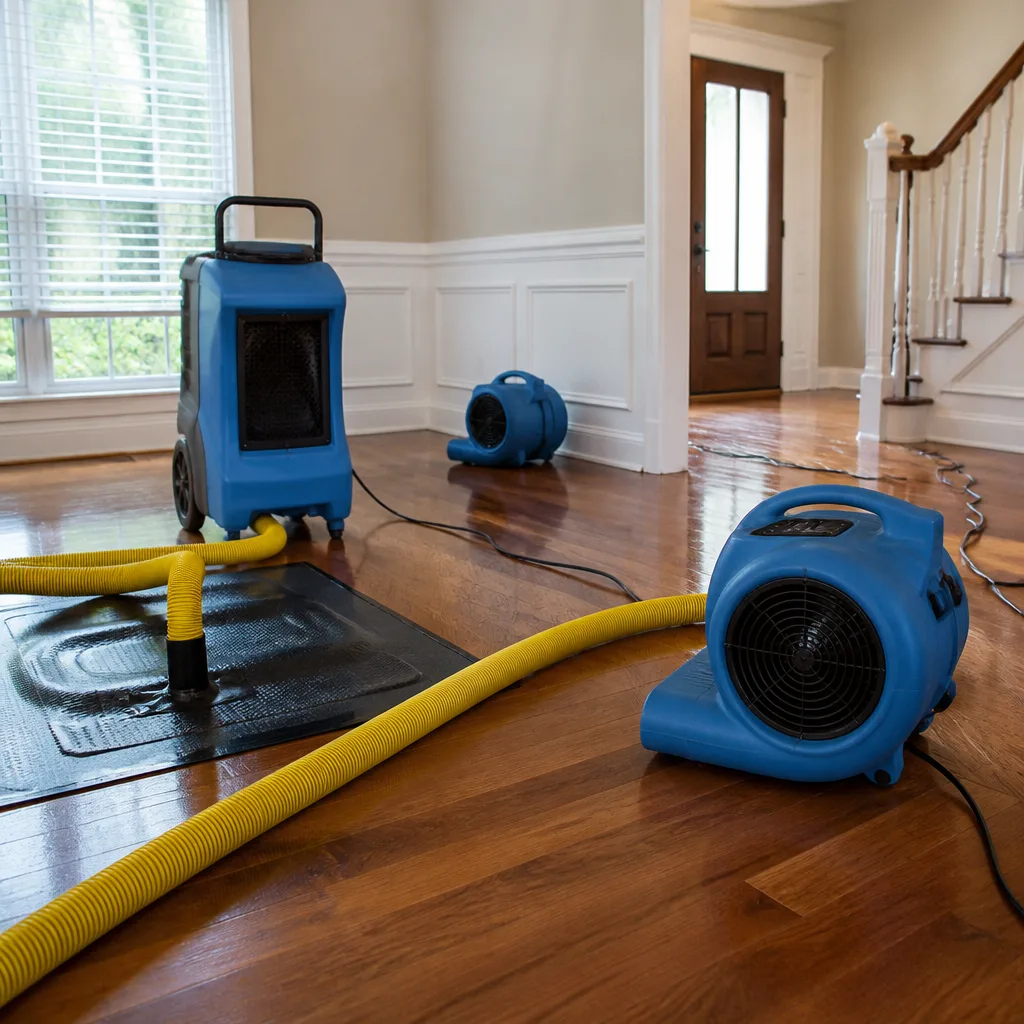
High ambient humidity in Central Florida means water doesn’t evaporate on a useful timeline without mechanical help. We set XPOWER air movers and Phoenix dehumidifiers in a calculated layout, seal the area with containment, and log readings until materials hit their drying goal. For older plaster, that goal is conservative, because over-drying causes cracking.
Trusted Brands We Service in Winter Garden
Winter Garden homeowners run the full range of water-damage sources: AquaPro plumbing fixtures, Delta faucets, Rheem and Bradford White water heaters, Whirlpool and LG washing machines, and older galvanized supply risers in the historic core. We don’t sell any of those brands, which means our recommendation on whether to repair around them or replace them is straightforward. We carry replacement parts for common local hardware and have fast turnaround through local distributors, so we’re not waiting on a shipment from out of state when your tankless unit floods a utility room at 2 a.m.
See the difference
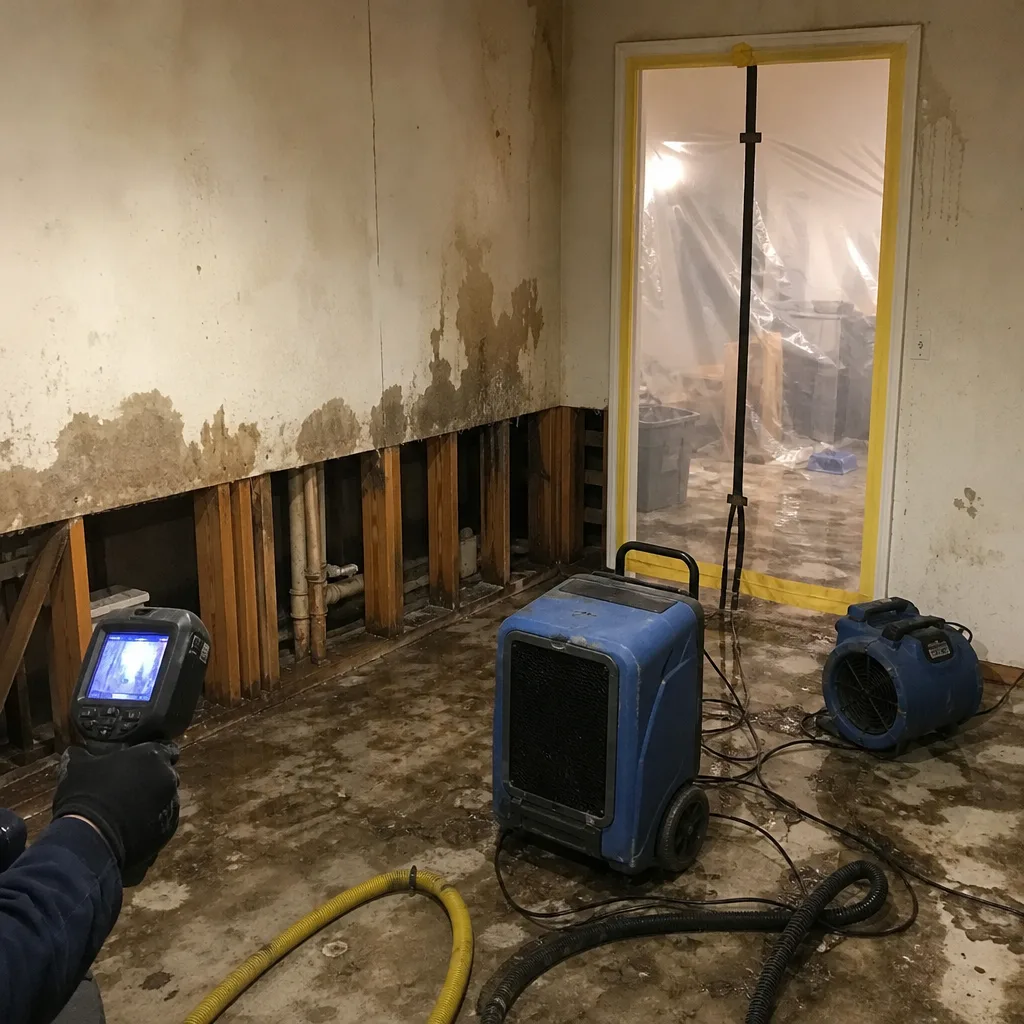 Before
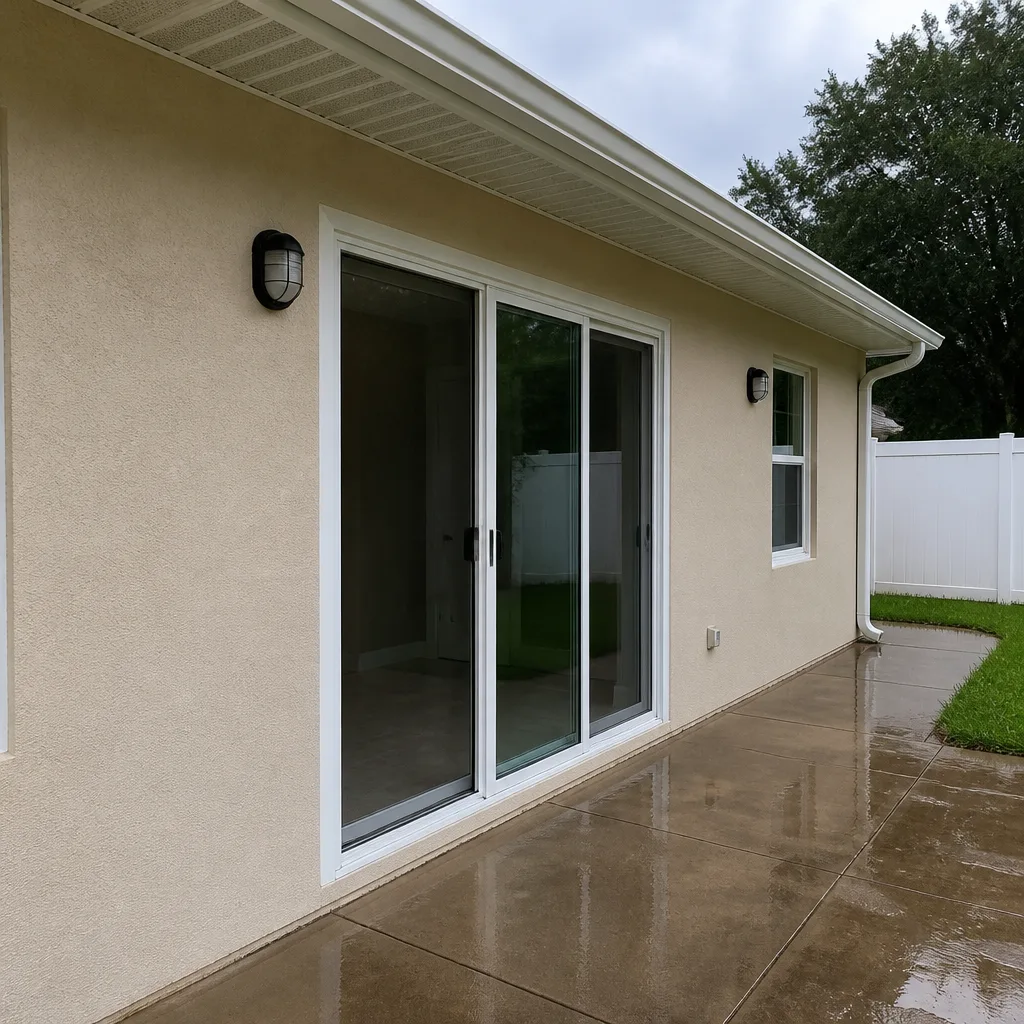 After
After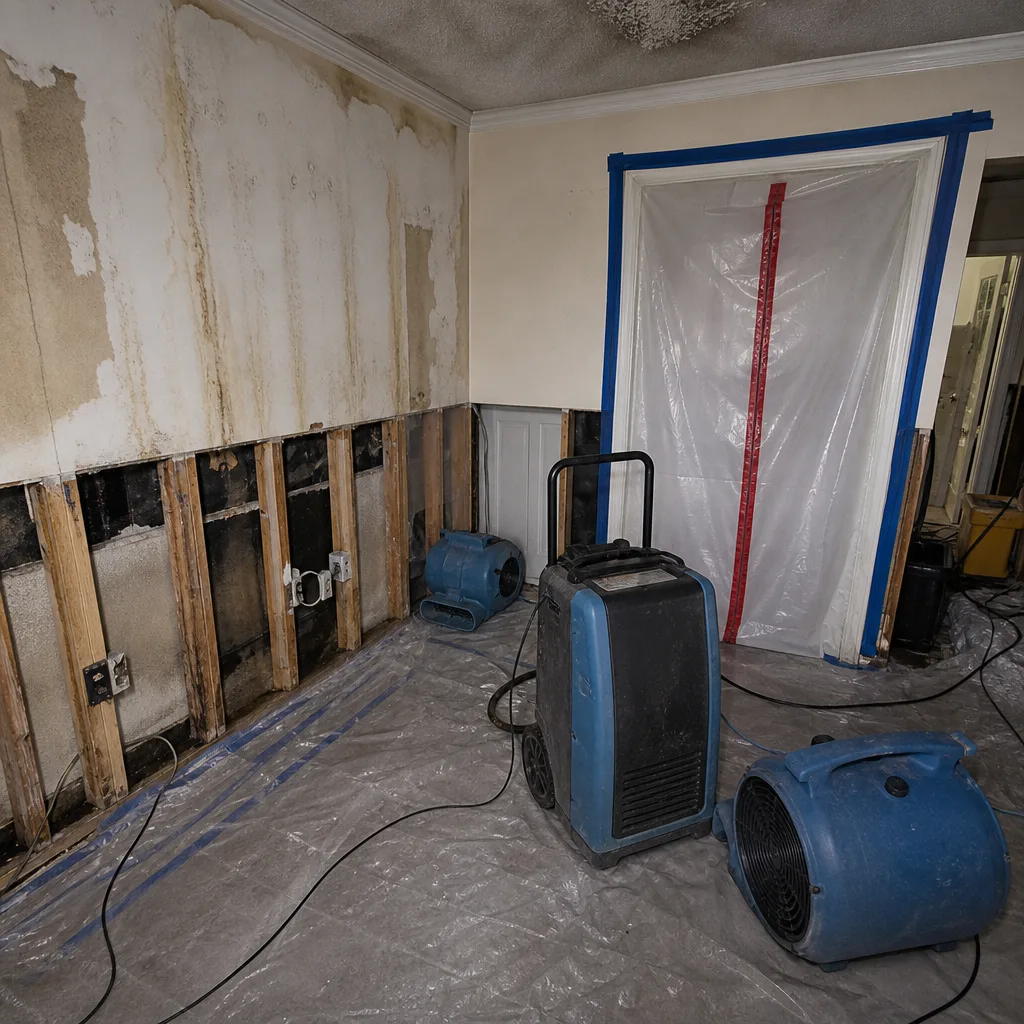 Before
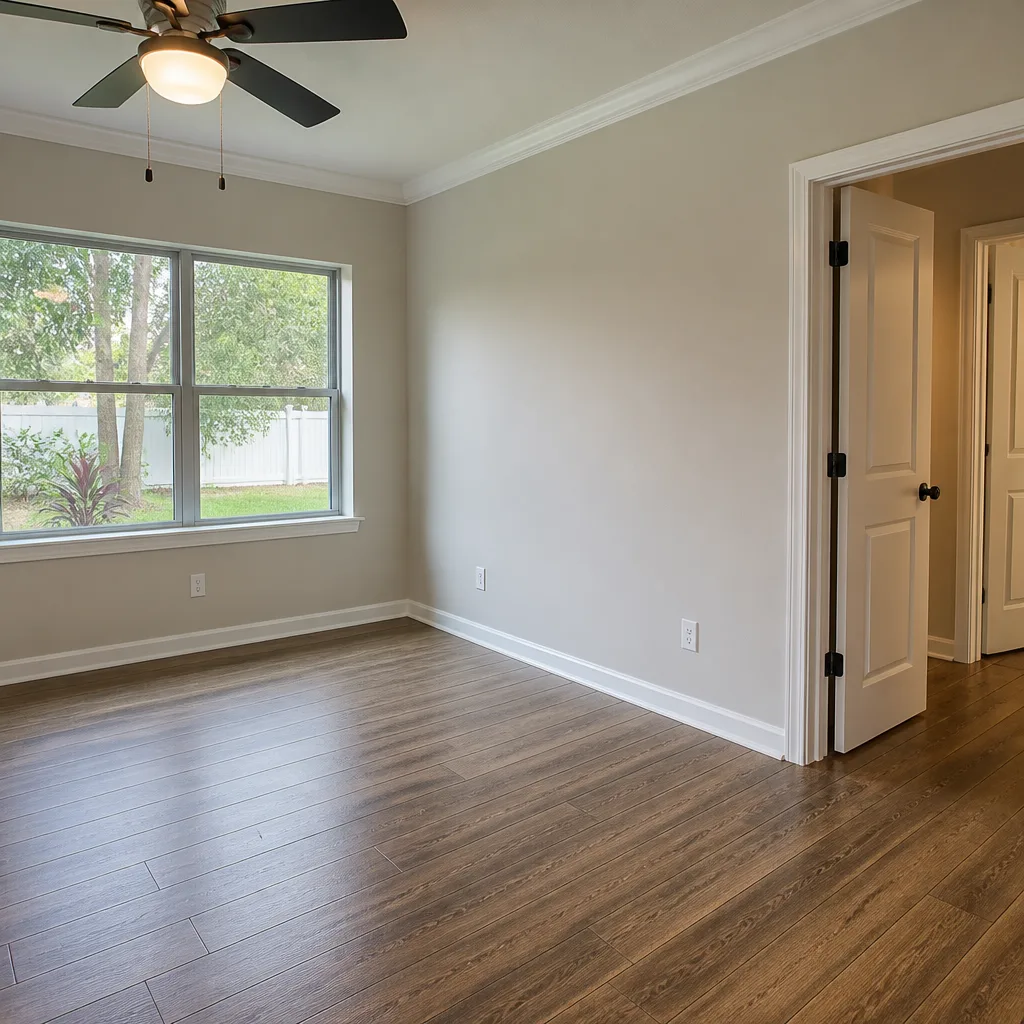 After
After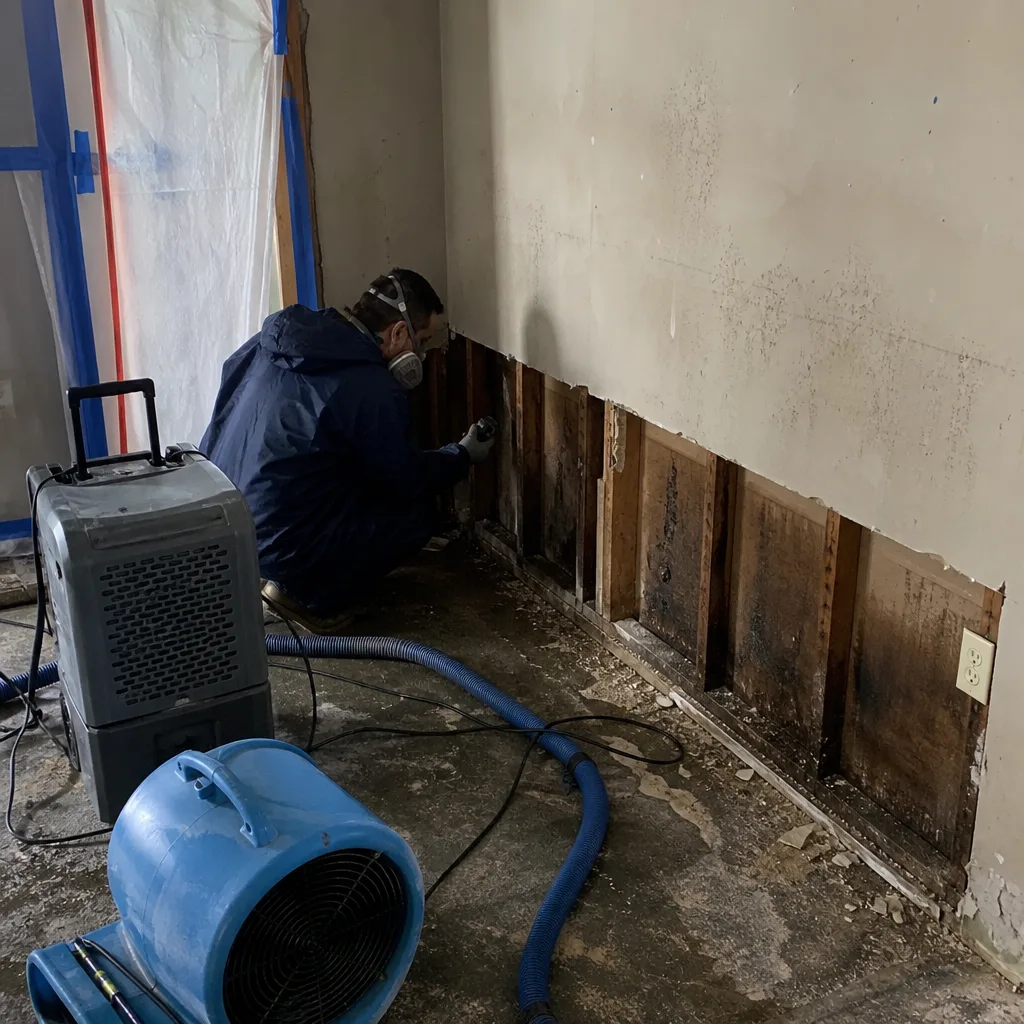 Before
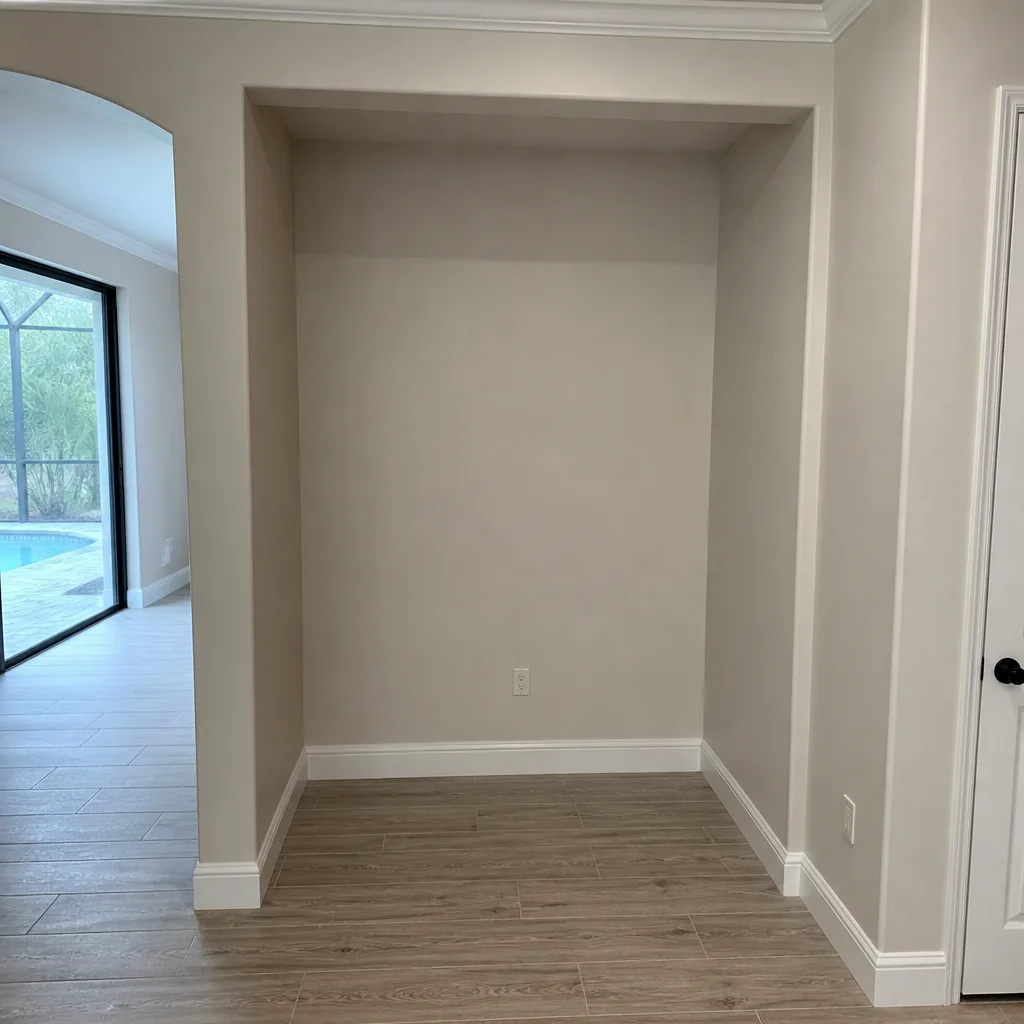 After
AfterCommon Water Damage Restoration Problems We See in Winter Garden Homes
- Hidden ceiling stains in historic bungalows. A minor stain on a plaster ceiling is often not a roof leak. In Winter Garden’s historic district, original cast iron supply lines under pier-and-beam homes flex with the west side’s shifting clay soils during heavy summer rain, and a pinhole leak in a crawlspace can travel up a chase and show on the ceiling. By the time it’s visible, the pipe has usually been leaking for days.
- Warped vinyl plank in 2000s slab homes. Builder-grade pex lines and vinyl plank flooring look great in a new build, but vinyl plank is a vapor barrier. A slab pinhole leak wets the concrete, vapor rises, and the planks cup or buckle before any drywall shows signs. Homeowners think the dishwasher overflowed, but the real cause is under the slab.
- Plaster walls that stay wet long after the visible water is gone. Plaster and lath hold moisture in pockets behind the keys. Running box fans in a room feels helpful, but mold can establish in those hidden pockets within 48 hours. We use penetration moisture meters to read behind the surface.
- Open-plan new builds with no containment during extraction. In a 2020 open-concept home, running air movers without sealing off the wet area blows Category 1 water spray onto drywall and cabinetry that were never wet, turning a small extraction job into a full pack-out. Containment belongs on every Winter Garden water job, old house or new.
Pricing for Water Damage Restoration in Winter Garden, FL
Here’s what we quote in the Winter Garden market, in plain ranges. Emergency water extraction runs $450 – $1,200. Structural drying and dehumidification runs $800 – $2,400 depending on affected square footage and how long water sat. Water damage repair, which includes drywall cuts, baseboard, paint, and flooring, runs $1,200 – $3,800 for a typical single-room event. Flood cleanup after a Category 3 event (sewage or rising groundwater) can exceed $6,000 because of the sanitation and disposal requirements. These ranges reflect the two housing stocks in this city: plaster repair in a 1920s bungalow costs more in labor than drywall replacement in a 2010s slab home, but the slab home may need more flooring work. You get a written price before we begin, every time. Call (850) 786-4472 for a free estimate and a straight answer.
We Also Serve Cities Near Winter Garden
Dryden Restoration Orlando provides Water Damage Restoration in Winter Garden daily, and our crews also cover Apopka, Orlando, Groveland, and Mount Dora. If you’re in a neighboring community and need a written quote before work begins, we’ll extend the same Kingswell Guarantee: written price, named window, clean job site, and a 365-Day Done Right Promise on every repair.
Serving Winter Garden, FL - Our Local Coverage Area
We’re based in the Winter Garden area and know this community well. Use the map below to see our service coverage - if you’re nearby, we can almost certainly help.
FAQs About Water Damage Restoration in Winter Garden
Mold can establish within 48 to 72 hours in a plaster bungalow after a roof leak, because the lathe and plaster hold moisture in hidden pockets that stay above the 20% threshold even after the visible surface dries. That’s why we don’t wait for a stain to “dry on its own.” Call (850) 786-4472 and we’ll get a moisture meter on the wall that day.
Yes. A roof leak is typically Category 1 water, clean at the source, until it touches insulation or a dirty attic floor. A burst cast iron drain line in a crawlspace is usually Category 2, because it has already picked up soil, sediment, and organic material. Category 2 water requires more aggressive drying and often partial removal of affected materials. We classify the water on site before we quote the job.
Plaster walls dry slower and more unevenly than drywall. The lime-based plaster and wooden lath create pockets where moisture hides, and pushing too hard with heat or airflow can crack the plaster’s surface. We take a conservative drying approach on plaster: lower airflow, longer dry times, and penetration moisture meters to confirm the wall is actually dry behind the surface. Drywall, by contrast, is more uniform and often more economical to cut and replace than to salvage.
The west side sits on expansive clay soils that shift with seasonal moisture changes. Those shifting soils flex rigid supply lines and slab-level plumbing, stressing joints and causing pinhole leaks over time. The historic district’s cast iron and galvanized lines are particularly vulnerable because they’re rigid and old. Slab leaks are a known failure mode in this specific part of Winter Garden, which is why we check for them even when the visible symptom looks like a roof leak.
In many cases, yes. Heart pine and cyprus are dense, naturally stable woods that respond well to controlled drying. We set tented containment over the affected area, dry the wood gradually to prevent cracking or cupping, and sand and refinish only where the finish has failed. If the water sat for days, the subfloor may need replacement even when the surface wood can be saved. We’ll give you a written assessment of what’s salvageable before any removal happens. Call (850) 786-4472 and we’ll schedule a walkthrough.
Written by Carl Brandt, Owner at Dryden Restoration Orlando, serving Winter Garden homeowners since 2005.