
Last updated October 16, 2026
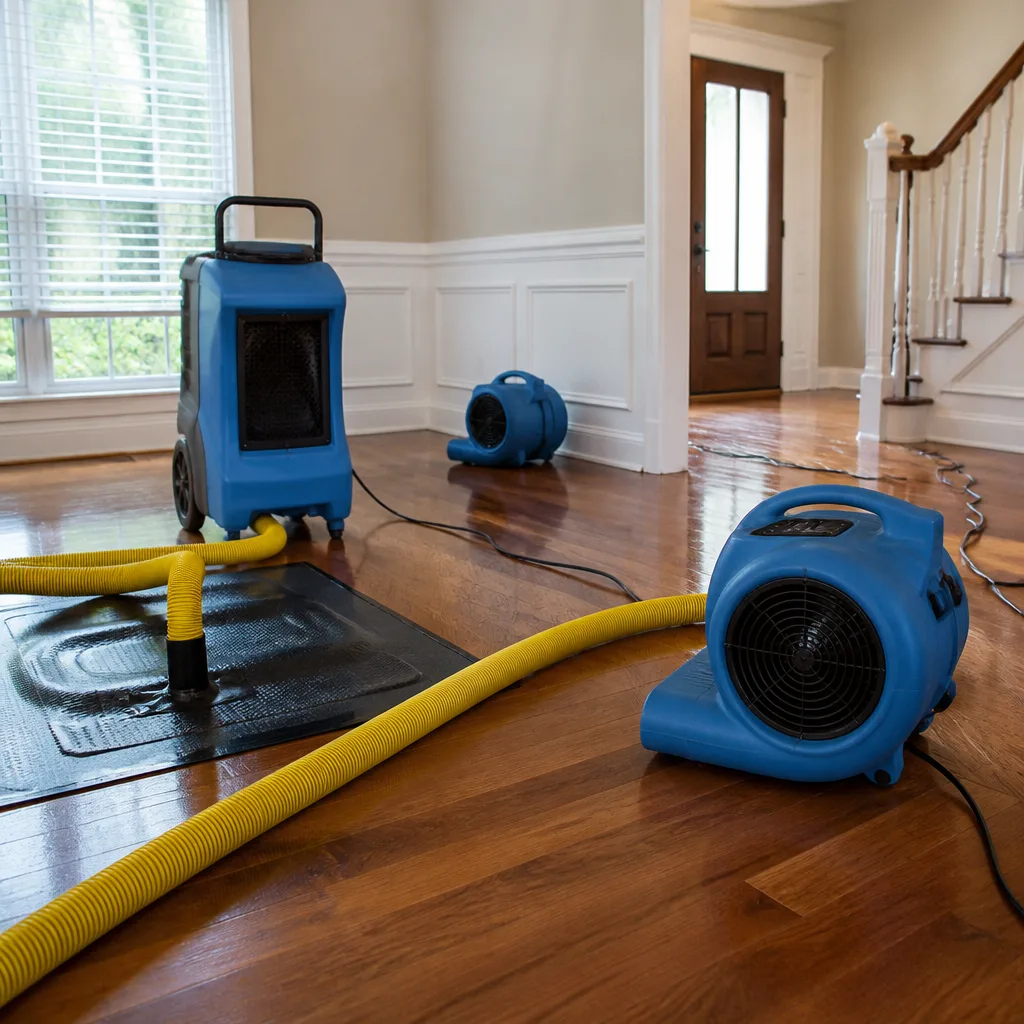 Water damage drying
 Fire & smoke cleanup
 Mold remediation
 Storm response
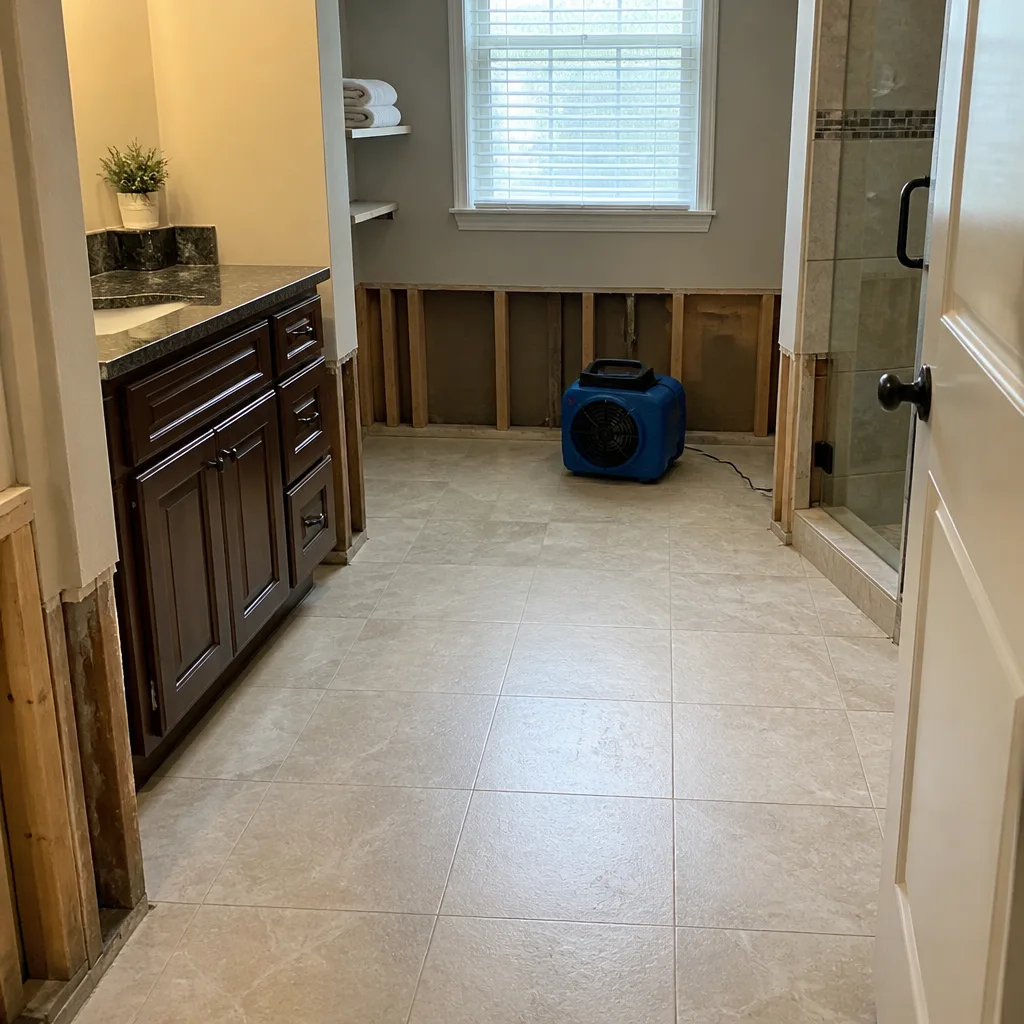 Sewage cleanup
 Reconstruction
Free visual inspection and a written scope of work before any mitigation begins - photos, moisture readings, and drying logs go in your claim file
The scope we write is the scope we bill. Anything new gets shown to you, in writing, before we touch it.
Get your free estimateDIY vs Professional Damage Restoration: The Orlando Homeowner’s Decision Guide
Here’s a fact most Orlando homeowners don’t learn until it’s too late: the biggest cost in water damage restoration isn’t the water removal. It’s what happens in the 21 days after, when moisture you couldn’t see or reach sits inside drywall, baseboards, and subfloor in 90% humidity. This guide walks through exactly which tasks you can handle yourself after a leak or flood, which ones quietly become five-figure problems when done wrong, and how to tell the difference before you touch a single tool. For a deeper dive on protecting your home year-round, see our Seasonal Damage Restoration Care for Orlando: Year-Round Homeowner’s Guide. Whether you’re in College Park, Winter Park, or out near Lake Nona, the math changes with your home’s construction type, your water source, and how many hours have passed since the event.
Restoration work we handle
Quick Answer
For clean-water spills on tile or concrete caught within the first few hours, DIY extraction and drying is genuinely reasonable if you follow specific steps and verify dryness with a moisture meter. For anything involving drywall, carpet pad, wood subfloor, sewage, or water that has sat for more than 48 hours, professional restoration in Orlando is not a luxury decision – it’s the difference between a $900 fix and a $14,000 mold remediation and rebuild. The dividing line is not your confidence or handiness. It’s water source, elapsed time, and what materials got wet.
Table of Contents
- The Real Decision: Not DIY vs Pro, But Which Tasks
- What Florida Law Actually Says About DIY Restoration
- The 24-48 Hour Rule: Why Orlando’s Climate Shrinks Your Window
- Tasks That Are Genuinely DIY-Safe (With Conditions)
- Tasks That Look DIY-Safe But Aren’t
- The Hidden Cost of an Incomplete DIY Job
- How to Get an Honest Assessment Without Committing
- Common Mistakes to Avoid
- When to Call a Professional
- Frequently Asked Questions
- The Bottom Line
The Real Decision: Not DIY vs Pro, But Which Tasks
Most guides frame this as a binary choice: do it yourself or hire someone. That framing misses how Orlando homes actually fail after water events. We’ve walked into houses where a homeowner did a brilliant job extracting 40 gallons of clean water from a tile floor, saved themselves $2,500, and deserved every bit of credit. We’ve also walked into houses where a homeowner removed drywall “to let it dry,” ran box fans for a week, and unknowingly created the perfect environment for Aspergillus to colonize inside the wall cavity. The question isn’t whether you’re capable. It’s whether the specific task, in your specific house, under Central Florida’s specific climate conditions, is one where a mistake stays cheap or compounds.
Think of it like this: replacing a light switch cover is DIY. Replacing a breaker panel is not. Both involve electricity, but one failure mode is a $4 trip to Home Depot and the other is a house fire. Water damage restoration has the same spectrum, but the expensive end doesn’t announce itself with sparks. It announces itself three weeks later as a musty smell in Seminole County’s humid summer, or as a pinkish stain bleeding through fresh paint in Thornton Park, or as a home inspector’s note that kills a sale in Baldwin Park. The decision framework that actually serves you is task-level, not job-level.
What Florida Law Actually Says About DIY Restoration
Florida statute 489.103 exempts homeowners from contractor licensing requirements when performing work on their own primary residence. That means you can legally remove drywall, replace baseboards, paint, and handle most interior restoration work on a home you live in. For rental properties you own, second homes, or any property you don’t occupy as a primary residence, that exemption disappears and you need a licensed contractor for most restoration work. Orlando homeowners get this right about half the time, and getting it wrong on a rental property is an easy way to void an insurance claim.
Then there’s mold. Florida’s mold remediation statute, 468.84, requires that any mold remediation performed for compensation be done by a licensed mold remediator. That applies to professionals, not to you. But here’s the legal risk most Orlando homeowners never hear about: Florida’s real estate disclosure laws require you to disclose known mold issues when you sell. One in-demand neighborhood is Mold Remediation in Orlando, and if a buyer’s inspector finds evidence that a DIY mold treatment was applied to porous materials and mold has returned behind that surface, you’re now negotiating a price reduction with a buyer who has documentation. A professional remediation with documentation of protocol compliance is an asset at sale time. A DIY bleach spray on drywall is a liability you may not know about for years.
The practical takeaway: DIY water extraction on your primary residence is legal and often smart. DIY mold removal on porous surfaces in a home you’ll eventually sell is legal but strategically unwise in Florida’s real estate market, where disclosure rules are strict and home inspectors know exactly what failed DIY remediation looks like.
The 24-48 Hour Rule: Why Orlando’s Climate Shrinks Your Window
The restoration industry’s standard guidance, repeated across the country, is that mold colonization begins within 24 to 48 hours of water exposure. What that guidance misses is that this timeline assumes a relative humidity around 50-60%, which is roughly a dry fall day in Denver. Orlando’s average relative humidity runs 70-80% for most of the year, and during summer afternoons it sits above 80% with regularity. Mold spores need three things to germinate: organic food (drywall paper, wood, carpet), moisture, and time. In Orlando’s climate, the moisture condition is met faster and maintained longer than in almost any other major U.S. city.
In practical terms, we’ve seen mold begin colonizing on wet drywall in Orlando homes within 36 hours during July and August, which is measurably faster than the same event would progress in a climate like Phoenix or Las Vegas. The 24-48 hour rule is not a safety net here. It’s a best-case scenario for air-conditioned homes with low indoor humidity. If your AC failed alongside the water event, or if the wet area is in a garage, attic, or enclosed porch without climate control, the colonization clock is running significantly faster. For Orlando homeowners weighing DIY versus professional, this compressed window is the single most important factor. A DIY drying job that drags across three or four days because you’re only running fans during evenings and weekends is a fundamentally different risk profile in Altamonte Springs in August than it would be in Colorado Springs in October.
Tasks That Are Genuinely DIY-Safe (With Conditions)
The honest answer is that some water damage tasks are reasonable for a careful Orlando homeowner, and pretending otherwise would be a disservice. The key is that “reasonable” comes with specific, verifiable conditions. You can handle each of the following without professional equipment if, and only if, the conditions are met.
- Moving furniture and belongings out of the wet area. This is always appropriate and should happen immediately, before anything else. Water wicks into wood furniture legs within hours, and cardboard boxes sitting in water are unrecoverable. Move first, assess second.
- Extracting standing water from a tile or concrete floor. A wet-vac or shop-vac handling a Category 1 (clean water) release from a supply line, sink overflow, or rainwater through an open window is a legitimate DIY task. The conditions: the surface must be non-porous (tile, concrete, vinyl plank with sealed seams), the water must be clean at the source, and extraction must happen within a few hours. After extracting, you must dry the surface thoroughly and check adjacent baseboards and thresholds for wicking.
- Running box fans and opening windows. This works in specific, narrow circumstances. If the wet area is a slab-on-grade tile floor in a Dr. Phillips home, if outdoor humidity is below 60%, and if the water involved was a small, contained spill, air movement can complete the drying. In Orlando’s summer, “opening windows” is usually counterproductive because you’re pulling 85% humidity air across a wet surface. This technique is seasonal and conditional.
- Removing water from a tile floor with towels or a mop after a minor leak. This is self-evidently fine. The failure mode isn’t the task; it’s the homeowner assuming the task completed the restoration. Surface drying is not structural drying.
What makes these tasks safe is that the surfaces involved are non-porous. Tile and concrete don’t harbor mold the way drywall paper and carpet backing do. The water sits on top, you remove it, and the surface air-dries. The risk appears at the edges, where water has crept under baseboards, into thresholds, or along the grout lines into the subfloor. If any of those conditions are present, the task has quietly shifted from surface cleanup into structural drying, which requires different tools and different verification.
Tasks That Look DIY-Safe But Aren’t
This is the section that saves Orlando homeowners from their most expensive mistakes. Each of these tasks feels manageable. Each regularly results in a repair bill that is two to five times higher than hiring a professional at the start would have been.
Removing drywall to “let it dry.” The logic feels sound: cut out the wet drywall, expose the cavity, let airflow do the work. The problem is what you expose. Behind wet drywall in Orlando homes is typically fiberglass or cellulose insulation, wood studs, and electrical wiring. Fiberglass insulation that has been wet doesn’t dry back to its original R-value; it sags, compresses, and becomes a mold reservoir. Wood studs that stay damp for more than a few days begin supporting fungal growth. When we see DIY drywall removal in Orlando, we almost always find that the homeowner cut from the floor up to about two feet, but moisture had wicked to four feet. The remaining two feet of damp drywall, now hidden behind a baseboard or new paint, is where the mold grows.
Running dehumidifiers without moisture readings. A portable dehumidifier from a big-box store can remove moisture from the air in a room, but it can’t tell you what’s happening inside a wall cavity, under a vinyl plank floor, or in the sill plate under an exterior wall. A residential dehumidifier’s built-in humidistat measures the air around the unit, not the materials that actually hold water. Without a professional-grade moisture meter taking readings at multiple depths in multiple locations, you’re flying blind. We’ve seen Orlando homeowners run dehumidifiers for two weeks, declare the problem solved, and then discover mold behind baseboards six months later when the musty smell returned. The dehumidifier worked. The verification didn’t.
Treating visible mold with bleach on porous surfaces. This is the single most common DIY mistake we see in Orlando, and it’s an expensive one. Bleach kills surface mold on non-porous surfaces like tile, which gives the appearance of success. On porous surfaces like drywall, wood, and ceiling tiles, bleach’s active ingredient is mostly water and it doesn’t penetrate the material. The surface mold dies and bleaches out, but the roots, or hyphae, remain embedded in the material. The mold regrows, typically within two to four weeks in Orlando’s humidity. Worse, the homeowner now has false confidence. The bleach treatment made the problem invisible while leaving it fully intact behind the surface.
The Hidden Cost of an Incomplete DIY Job
Let’s put real numbers on the incomplete DIY scenario, because this is where Orlando homeowners lose the most money, and almost none of the guidance they read before starting explains it.
A homeowner discovers a slow leak under a kitchen sink in an Oviedo home. The cabinet base is swollen, but the homeowner estimates maybe 10 square feet of drywall is wet behind the cabinet. They extract the visible water, remove the cabinet doors, set up two box fans, and run a portable dehumidifier for five days. The surface feels dry. They declare it handled. Six weeks later, there’s a faint musty odor near the dishwasher. Three weeks after that, someone in the family develops persistent allergy symptoms. A professional arrives and finds mold in the wall cavity, behind the cabinet, in the subfloor under the dishwasher, and in the toe kick area. What would have been a $1,200 to $1,800 professional drying and sanitizing job six weeks earlier is now a $6,000 to $9,000 remediation plus reconstruction job. That’s a 4x to 5x cost increase, and the difference is entirely the elapsed time during which the homeowner believed the job was complete.
Our restoration team sees a variation of this scenario every single month across neighborhoods from Winter Garden to Lake Nona. The pattern is consistent: the homeowner didn’t fail at the task they attempted. They failed at the verification step. Water restoration has a binary outcome; either the materials reached a documented safe moisture content, or they didn’t. There is no category called “probably dry enough.” The cost of professional verification is a few hundred dollars or often included in a free assessment. The cost of skipping it is routinely multiple thousands.
How to Get an Honest Assessment Without Committing
A legitimate restoration company in Orlando will provide an on-site assessment. The question is how to tell whether that assessment is a genuine service or a sales visit wearing a different name. For help evaluating contractors, read How to Hire a Damage Restoration Contractor in Orlando: A Step-by-Step Guide. Here’s what to expect and what to ask.
- Ask directly: what does the assessment include and is there a charge? Some companies charge $150 to $300 for a detailed moisture assessment that includes written readings, a scope of work if needed, and a plain-English explanation of what was found. That’s reasonable and often worth it. Dryden provides free estimates for homeowners in Orlando, so you should know the price (or absence of one) before the technician arrives.
- Ask whether the technician is doing a sales call or a diagnostic visit. A legitimate assessment includes using a moisture meter at multiple depths in multiple locations, including areas that look dry. A sales visit includes a clipboard, a quote pad, and a lot of time spent discussing what “might” be needed. Watch for a technician who spends 10 minutes with a moisture meter and 30 minutes preparing a quote. The ratio tells you the purpose of the visit.
- Ask what happens if the assessment finds no significant moisture. The honest answer from any reputable company is: “You’ll know that, and we’ll tell you that, and you owe us nothing beyond any assessment fee that was disclosed before we arrived.” If the technician seems unable to imagine an outcome where they don’t recommend a full restoration, that’s an answer.
- Ask whether the company will put their findings in writing. A legitimate assessment produces documentation: moisture readings at specific locations, a list of affected materials, and a recommended scope of work if any. If the company won’t put findings in writing, or the written summary is vague, treat that as a red flag.
- Ask about the drying plan, not just the equipment. A company that says “we’ll set up fans and dehumidifiers and come back in three days” without explaining how they’ll verify the drying endpoint is not doing professional work. Ask what moisture content they’re targeting for wood (typically 12-14% in Orlando) and drywall (typically 8-10%), and how they’ll confirm it before removing equipment.
None of these questions make you difficult. They make you informed, and any company worth hiring will answer them directly. For a deeper look at the process, see Water Damage Restoration in Orlando.
Common Mistakes to Avoid
- Using a residential dehumidifier as a substitute for professional drying. Residential units pull 10-20 pints per day. Professional systems from Dri-Eaz or Phoenix pull 70-130 pints per day and include air movement engineered for specific chamber conditions. The gap matters when you’re racing Orlando’s humidity.
- Sealing wet drywall behind new paint or baseboard. Paint is a moisture barrier in the wrong direction. It traps humidity inside the wall cavity. If drywall isn’t verified dry to the core, covering it is the fastest way to promote hidden mold growth.
- Treating mold with bleach or paint primer. Neither penetrates porous surfaces. Both create the appearance of resolution while the mold colony remains intact and growing. This is the most expensive false-savings in Orlando restoration.
- Assuming a tile floor means the subfloor is unaffected. Tile is waterproof, but grout lines, expansion joints, and the edges at baseboards are not. Water travels along these paths and saturates the subfloor below. Surface dryness on tile says nothing about what’s underneath.
- Skipping the moisture meter verification step. “It feels dry” is not a measurement. It’s a guess, and in Orlando’s climate, that guess is wrong often enough to be expensive. A moisture meter costs $25-$50. Not owning one and not using one is a decision with predictable consequences.
- Waiting to see if the smell goes away on its own. It won’t. Musty odors from hidden mold do not self-resolve. A smell that persists for more than a few days after drying efforts is evidence of a hidden moisture source that needs professional assessment.
When to Call a Professional
Call a professional restoration company without hesitation in these scenarios: water from sewage or a toilet overflow, water that has been standing for more than 48 hours, any event where drywall or carpet pad got wet, any event where water penetrated below flooring, any visible mold growth larger than about 10 square feet, any musty odor that persists after drying, and any situation where the water source involved gray water such as dishwasher, washing machine, or AC condensate overflow. For fire damage, the stakes are different but the call threshold is even lower, which is covered in Fire Damage Restoration in Orlando. Dryden Restoration Orlando offers free estimates across the metro area. Call (850) 786-4472 and a real person answers, day or night.
Frequently Asked Questions
Yes, Florida law exempts homeowners from contractor licensing requirements for work on their own primary residence. The exemption does not apply to rental properties, second homes, or investment properties. For mold remediation, the legal risk isn’t doing the work itself; it’s the disclosure obligation when you sell a home with a history of DIY mold treatment on porous surfaces.
In Orlando’s humidity, mold colonization can begin within 36 hours on wet drywall during summer months. The national 24-48 hour guideline assumes lower ambient humidity than Orlando’s typical 70-80%. If your AC is running and indoor humidity stays below 55%, you have closer to the full 48 hours. If the wet area is unconditioned space like a garage or attic, the window is shorter.
The difference is measurement and verification. Professional drying uses equipment sized for the affected cubic footage and space, and technicians take moisture readings at multiple depths throughout the process, then document that materials reached a safe moisture content before equipment is removed. DIY drying relies on surface feel and elapsed time, neither of which confirms what’s happening inside wall cavities or beneath flooring.
Removing wet drywall itself is not inherently dangerous if the water is clean and the electricity is off in the affected area. The risk is that DIY removal typically doesn’t remove enough material. Moisture wicks upward beyond the visible wet line, and leaving that hidden damp drywall in place creates a mold reservoir behind new finishes. If you remove drywall yourself, cut at least 12-18 inches above the visible wet line and verify the remaining material is dry with a moisture meter.
For a contained clean-water event in a single room, professional drying typically ranges from $1,200 to $3,500. For events involving multiple rooms, sewage, or structural drying, the range extends from $4,000 to $12,000. These ranges assume the work is done promptly. Delays that allow mold colonization push costs into remediation territory, which typically starts around $3,000 and extends well beyond $10,000 for large affected areas.
This depends on your policy language and the specifics of the event. Most policies cover sudden and accidental water damage, regardless of whether you initially attempted DIY extraction. However, if your DIY work contributed to additional damage, such as by trapping moisture behind paint or new drywall, the insurer may dispute coverage for the resulting mold and required remediation. Document everything, keep receipts for any equipment or materials you bought, and call your insurer before starting substantive work. When we handle claims through Dryden Restoration Orlando home, we coordinate directly with adjusters and provide photo documentation throughout.
The Bottom Line
The DIY versus professional question in Orlando isn’t a matter of skill. It’s a matter of water source, elapsed time, and construction type. Clean water on tile within hours? Handle it yourself with a wet-vac, fans, and a moisture meter to verify your work. Grease water from a dishwasher, sewage, drywall involvement, hidden moisture, or anything that has sat overnight? The math strongly favors professional assessment, because Orlando’s humidity compresses the mold timeline and because the cost of a missed area compounds for weeks before you ever see it. The single biggest mistake is not attempting DIY when it’s appropriate. It’s completing a partial dry-out and declaring victory before verification. For more guides & resources, visit our blog. Written by Carl Brandt, Owner at Dryden Restoration Orlando, serving Orlando since 2005.
See the difference
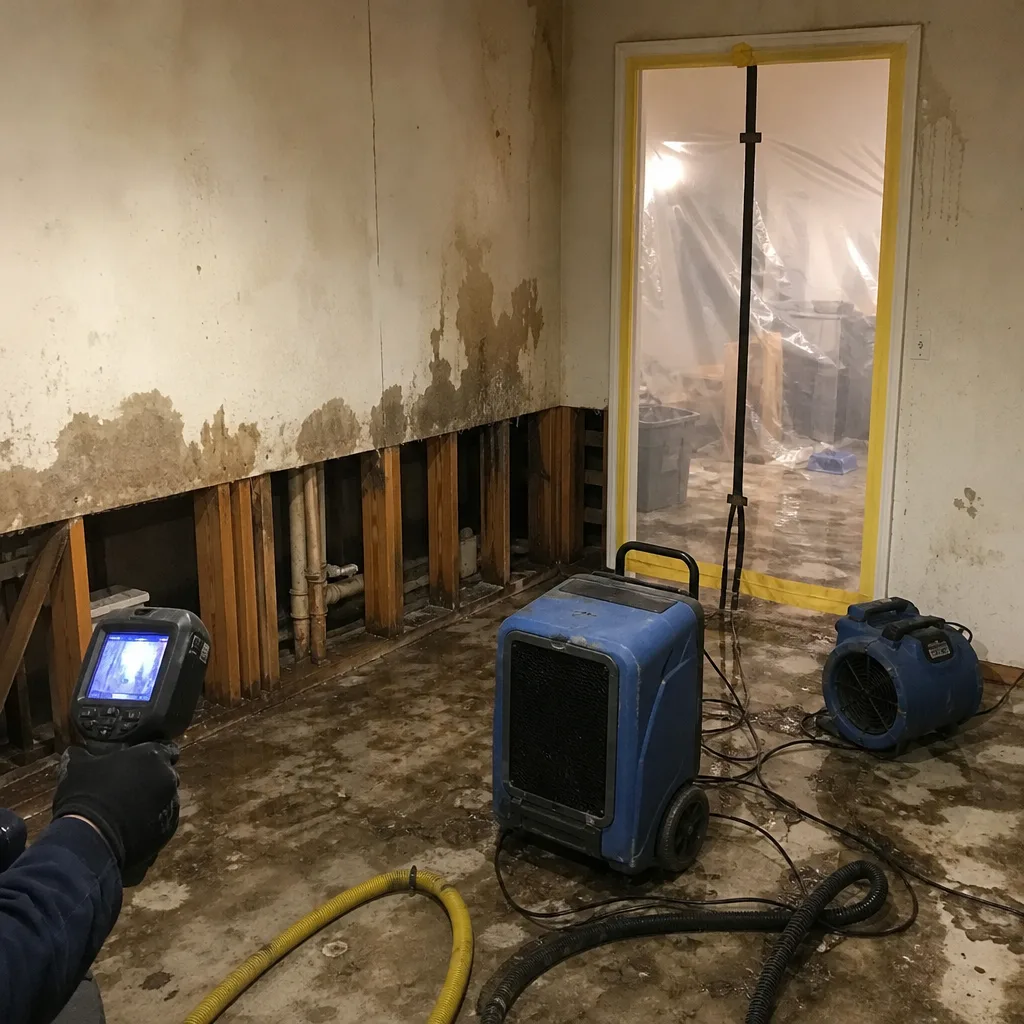 Before
 After
After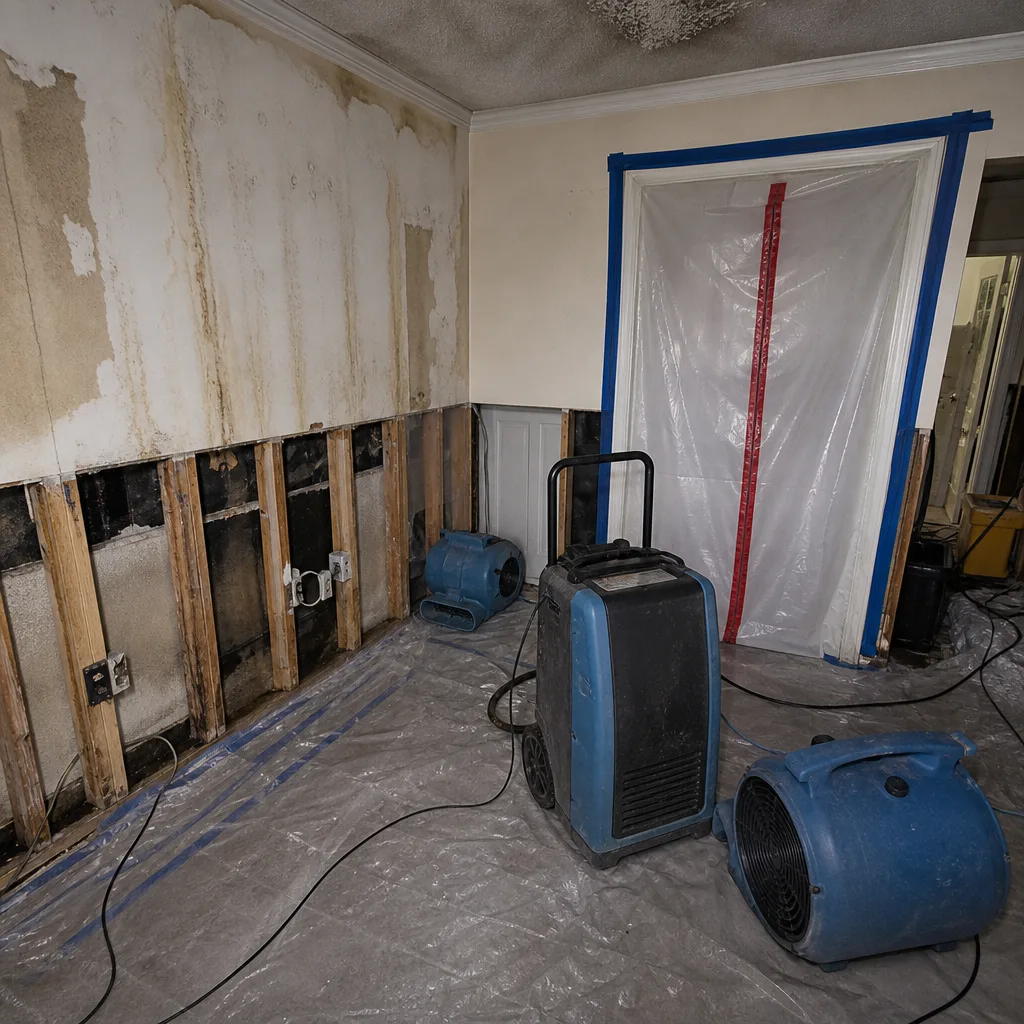 Before
 After
After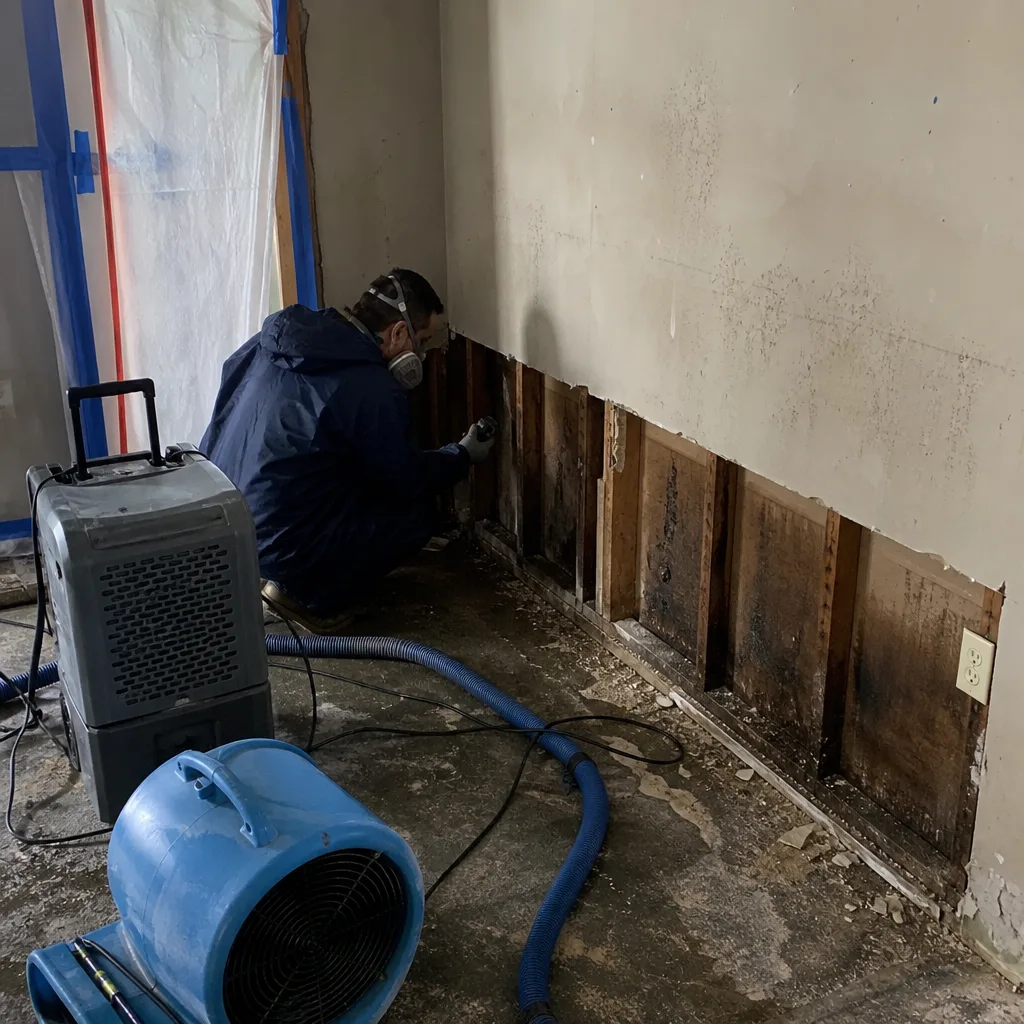 Before
 After
After