

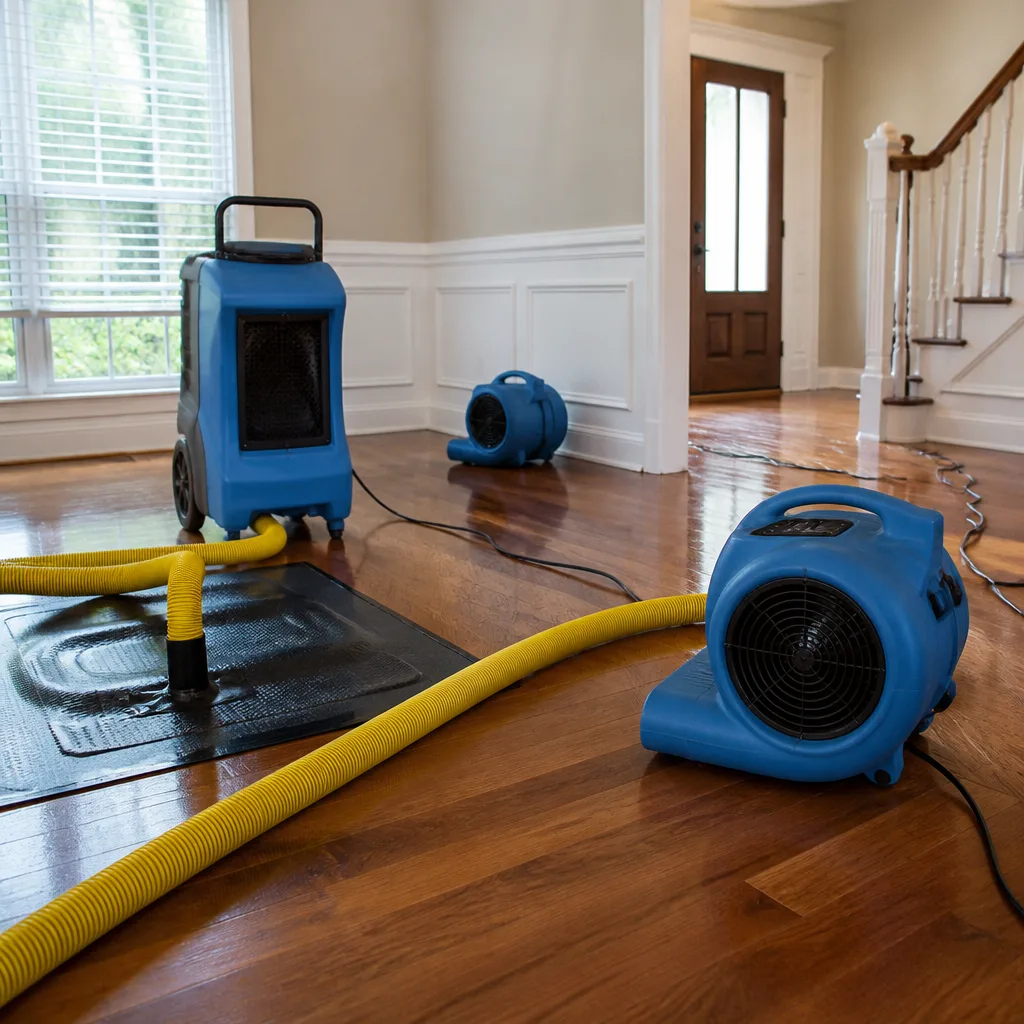
 Water damage drying
 Fire & smoke cleanup
 Mold remediation
 Storm response
 Sewage cleanup
 Reconstruction
Free visual inspection and a written scope of work before any mitigation begins - photos, moisture readings, and drying logs go in your claim file
The scope we write is the scope we bill. Anything new gets shown to you, in writing, before we touch it.
Get your free estimateFast, Reliable Water Damage Restoration Across Apopka
Water damage restoration in Apopka usually costs between $1,800 and $6,500 for a typical single-family home, with emergency extraction running $400 to $900 for the first room. Most jobs we handle in Apopka are dried and rebuilt within 3 to 7 days. If water is spreading through your drywall right now, call (850) 786-4472 and a live person answers, day or night.
We know Apopka’s housing stock because we see it every week: the 1960s concrete block ranchers off Rock Springs Road with original galvanized plumbing, the post-1990s wood-frame subdivisions carved out of old citrus groves, and the acreage properties with detached workshops that hold water in places a quick visual check misses. Our Water Damage Restoration team serves the entire Apopka area from our dispatch hub, with crews that know which roads flood first and which slab foundations hide moisture longest.
Key takeaways: response to most Apopka homes within 60 to 90 minutes, written price before any equipment leaves the truck, and a 365-Day Done Right Promise in writing on every job.
Why Dryden Restoration Orlando Is Apopka’s Preferred Water Damage Restoration Company
Apopka homeowners call us because we show up when we say we will and put numbers in writing before touching a tool. Carl Brandt, who leads our team, set one rule when he started Dryden in 2005: say the price before the work, show up in the window we gave, leave the place cleaner than we found it. Those are three of the five commitments we call The Kingswell Way, and they are not marketing language. They are on the scope sheet every Apopka customer signs before we open a wall.
Our technicians are background-checked, uniformed, and trained to IICRC and RIA standards. When a homeowner near Wekiwa Springs opens the door at 2 a.m., they know exactly who is standing there and what the next hour will cost. That matters in Apopka, where many properties sit on acreage and a dispatcher who does not know the area can send a crew to the wrong gate for 20 extra minutes.
We serve the full Apopka area as part of Water Damage Restoration in Apopka coverage: Wekiwa Springs, Rock Springs Road, Errol Estate, and the neighborhoods along 441 and Piedmont-Wekiwa Road. Our equipment fleet includes Dri-Eaz, Phoenix, B-Air, and Injectidry systems, the same professional-grade machines commercial restoration crews run, and we explain what each machine does in plain English before we turn it on.
Restoration work we handle
Flooded Basement in Apopka
Flooded basement in Apopka is less common than in northern cities, but when it happens it is usually tied to the shallow water table near Lake Apopka and the low-lying lots along Clay Springs and Bear Lake. Most Apopka basements are partial or converted garages beneath raised ranch additions, and they take on water after a hurricane band or a failed sump pump during a week of heavy summer thunderstorms. Extraction in these spaces typically runs $700 to $1,400 including moisture mapping and initial drying setup.
A flooded basement here rarely dries itself. The humidity around Lake Apopka stays high enough that standing water under stored items keeps relative humidity at 70% or more, which is mold territory within 48 hours. We remove the water, pull wet drywall and insulation where needed, and set dehumidifiers sized for the actual cubic footage, not a guess.
Groundwater Seepage and Sump Failure
When the water table rises after a storm, hydrostatic pressure pushes water through slab cracks and cove joints. We extract first, then run a psychrometric reading (that is the measurement of temperature, humidity, and dew point in the air and materials) to see how far moisture has wicked into the walls. In Apopka, that reading often shows moisture 18 to 24 inches up the drywall even when the floor looks only damp.
One-Trip Workshop and Garage Water Removal
On acreage properties with detached workshops, a flooded basement or garage slab often shares a wall with the workshop. Moisture migrates through that shared wall faster than most homeowners expect. We map both structures in the first visit so the one-trip promise holds and you are not calling back in a week with a musty workshop.
Water Extraction in Apopka
Water extraction in Apopka homes usually runs $400 to $900 for the first affected room and $150 to $300 for each additional room, depending on how much standing water is present and whether tile or carpet is involved. The faster we start, the more material we save. On a slab-on-grade rancher off Rock Springs Road, that first hour is the difference between drying in place and pulling 400 square feet of tile and drywall.
Apopka’s slab foundations change how extraction works. Water does not drain downward through a crawlspace. It spreads horizontally under tile, behind baseboards, and into wall cavities. Our crews use Injectidry systems and B-Air air movers to pull moisture from under finished flooring, not just from the surface. We also run moisture mapping with thermal hygrometers before we declare a room dry.
Hidden Slab Leaks from Polybutylene Pipes
Older Apopka homes along Rock Springs Road and in the Errol Estate area frequently have polybutylene pipe, a gray plastic product installed from the late 1970s through the mid-1990s. It fails without warning at pinhole points, and because the pipe runs under the slab, the leak shows up as warm spots in the floor, a sudden spike in the water bill, or a musty smell weeks before any standing water appears. We trace the leak, extract the trapped water, and dry the slab perimeter before mold can establish.
Fast Extraction After a Supply Line Burst
A burst supply line in an Apopka home can release 5 to 8 gallons per minute. That is a full bathtub every 6 minutes. Our first step is stopping the source, then extracting with truck-mounted and portable units sized for the square footage. We carry XPOWER and Phoenix equipment on every truck, and we have enough units on hand to handle a 3,000-square-foot home plus a detached workshop in a single trip.
Trusted Brands We Service in Apopka
Apopka homeowners ask us about the equipment because they have been burned by contractors who show up with a rental unit from a big-box store and call it professional drying. We run B-Air air movers, Injectidry drying mats, Phoenix dehumidifiers, and XPOWER extraction units because these are the brands we would use in our own homes. We stock replacement filters, hoses, and common parts for these systems locally, so a failed dehumidifier at midnight does not mean a stalled drying job until Monday. We are trained to IICRC and RIA standards and we will explain what each machine does, what the gauges mean, and why the drying log shows what it shows.
See the difference
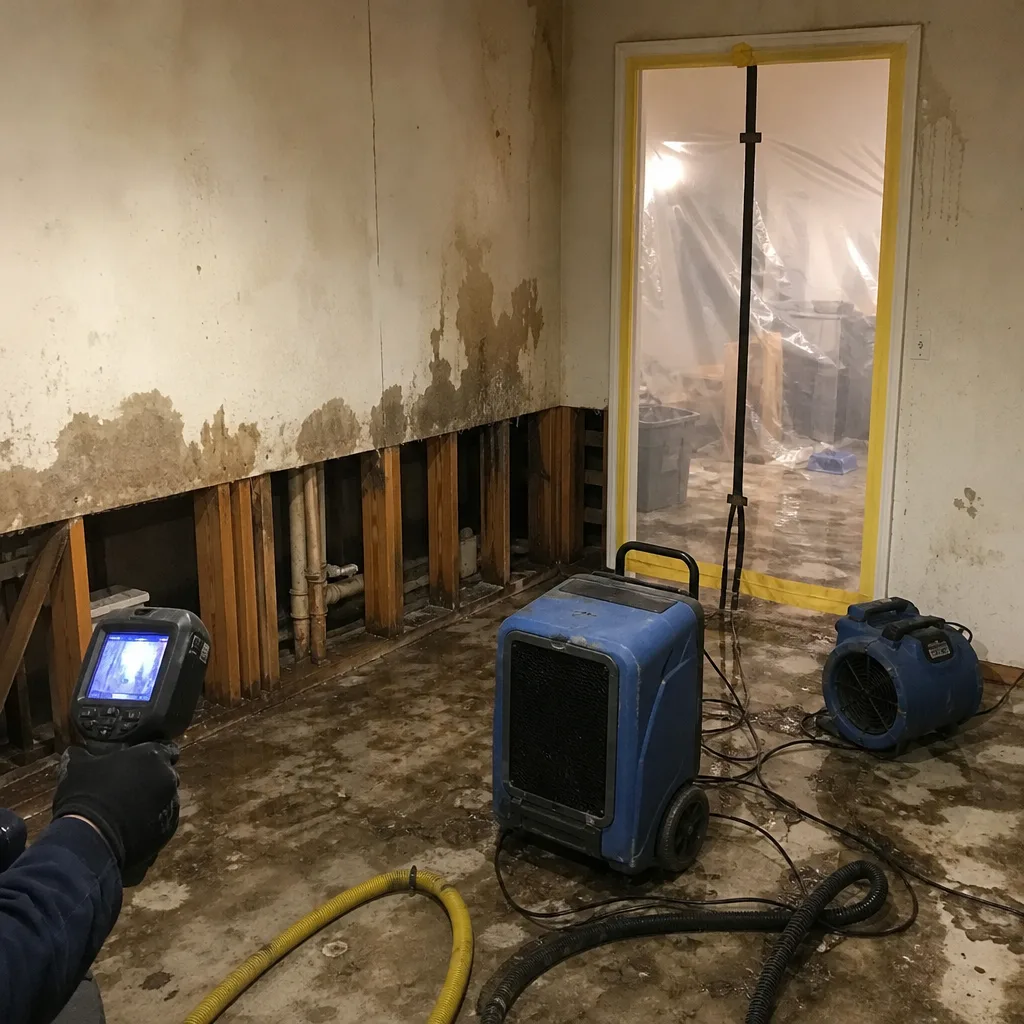 Before
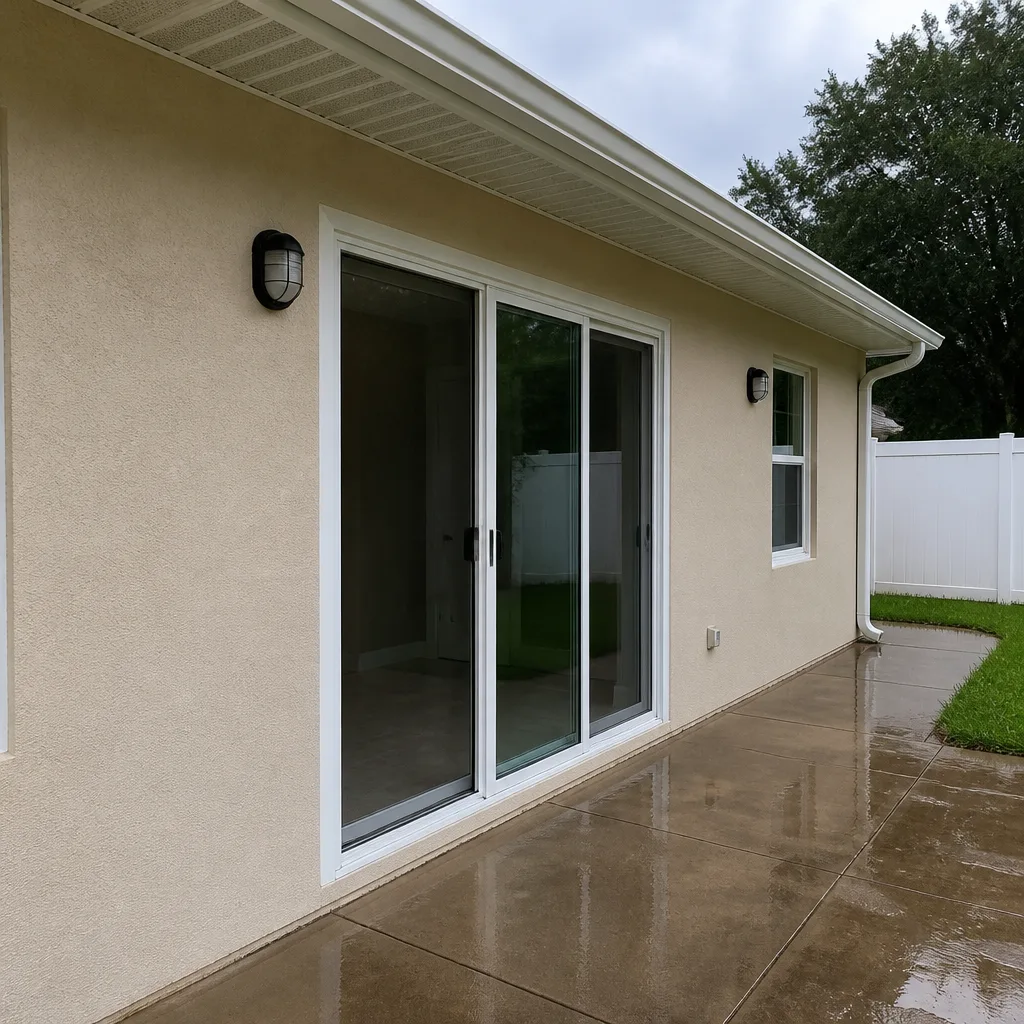 After
After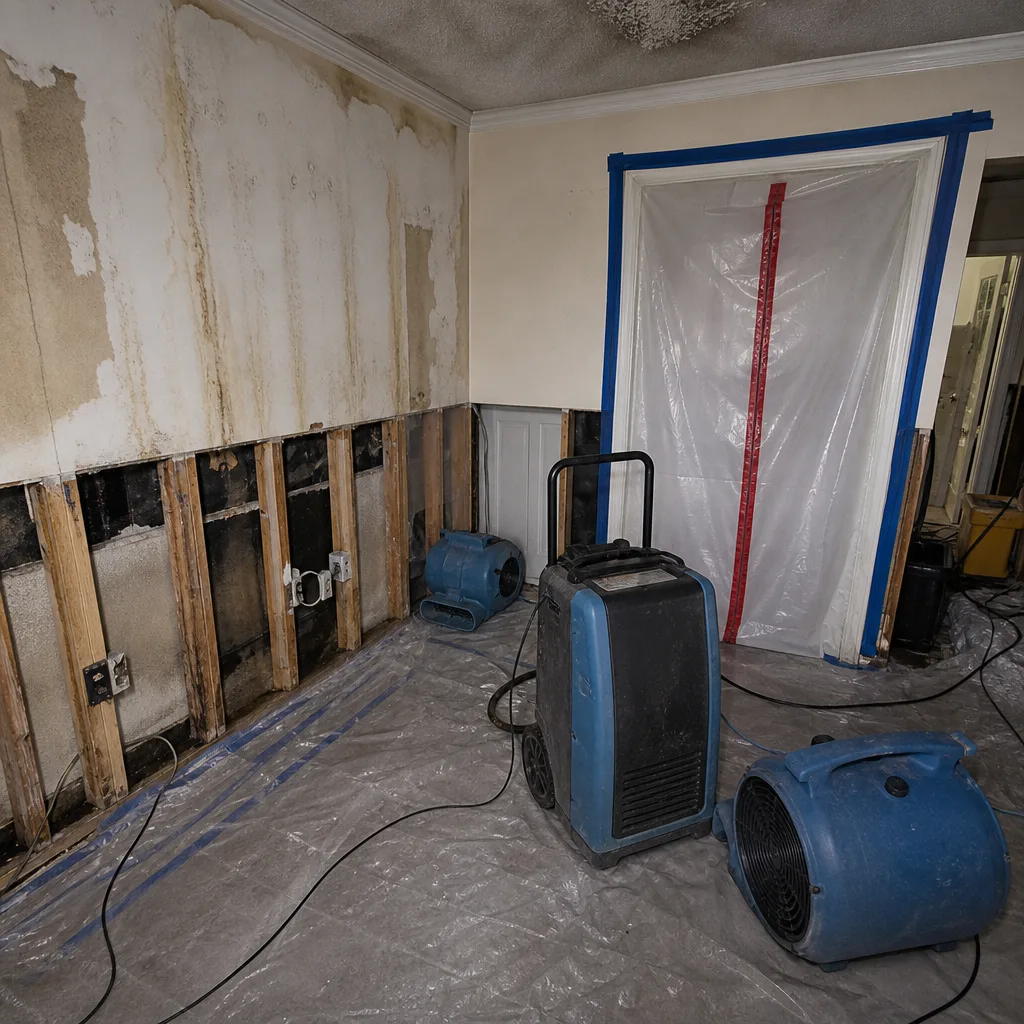 Before
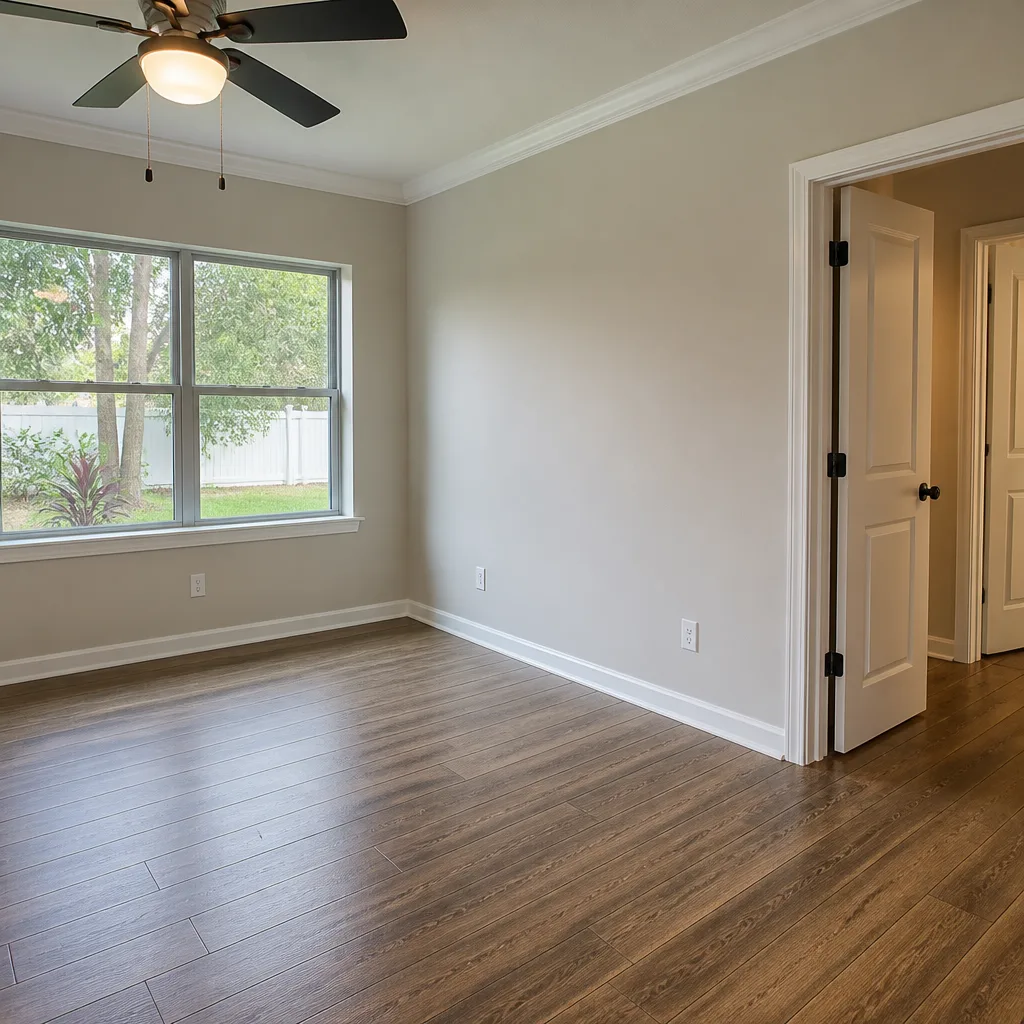 After
After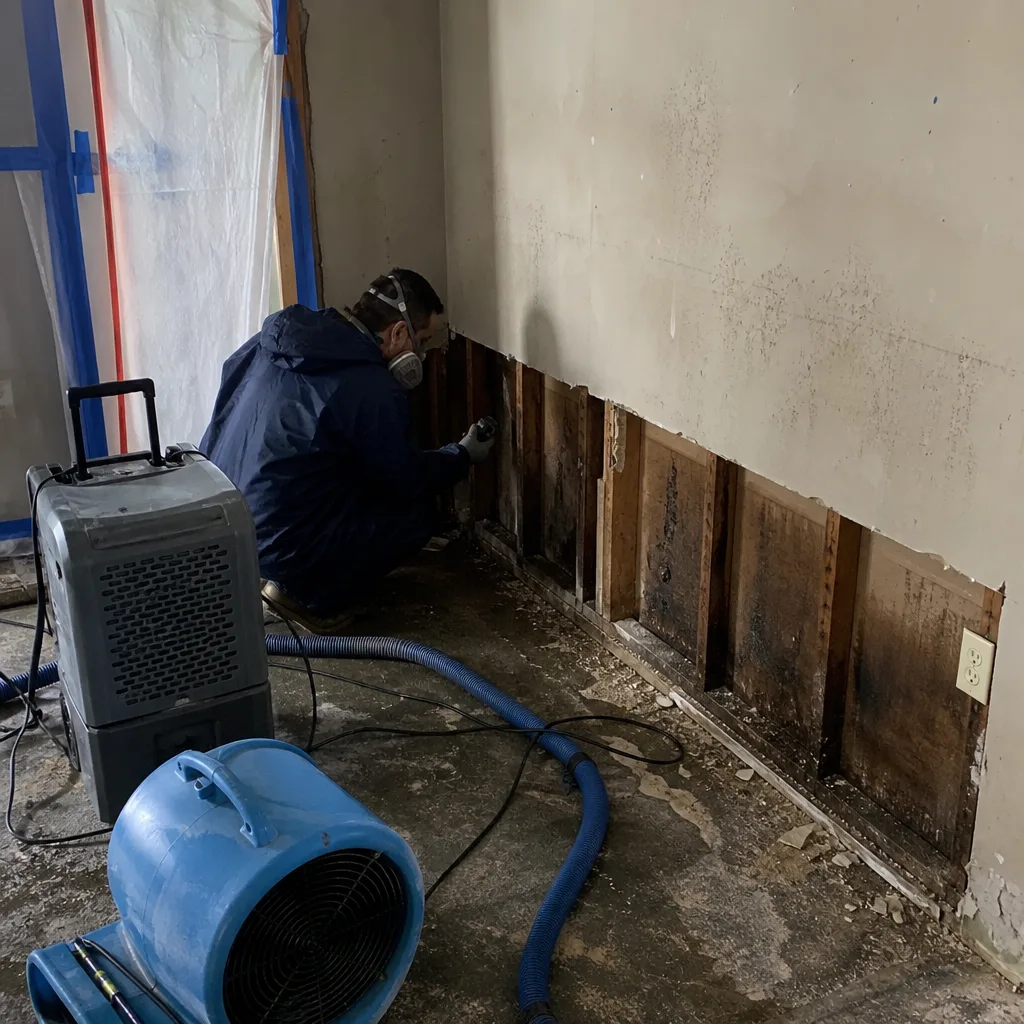 Before
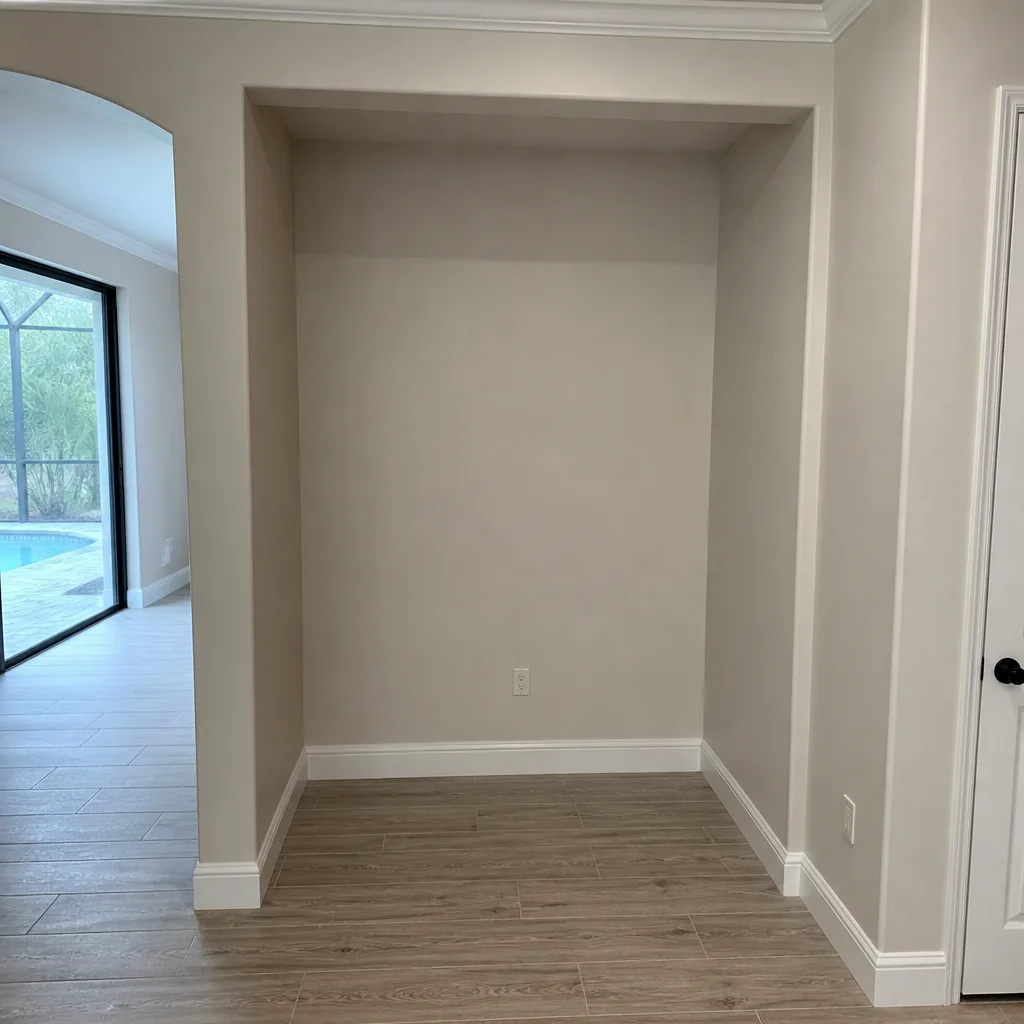 After
AfterCommon Water Damage Restoration Problems We See in Apopka Homes
- Slab leaks from polybutylene pipe: The 1960s and 1970s concrete block ranchers along Rock Springs Road and around Errol Estate were plumbed with polybutylene, which fails at pinhole points inside the slab. By the time a homeowner notices a warm tile or a musty baseboard, moisture has often spread 300 to 500 square feet under the flooring.
- High humidity slowing dry-out: Apopka’s subtropical climate and proximity to Lake Apopka keep ambient relative humidity high from June through November. Without commercial dehumidifiers sized to the cubic footage and tight daily moisture readings, hidden cavities behind baseboards stay above 60% RH and support microbial growth even after surfaces feel dry.
- Flat roofs on mid-century ranchers: Many Apopka homes built in the 1960s and 1970s have flat or low-slope roofs. A small leak near a scupper or vent stacks water through the insulation and into the ceiling cavity, and by the time it stains the drywall, the damage is already running down the walls.
- Detached workshops and garages on acreage lots: Apopka has a higher share of larger lots with detached outbuildings than most nearby cities. Water that starts in the main house migrates through shared walls, underground conduit runs, or grading sloped toward the workshop. We moisture-map every adjacent structure before we call a job dry.
Pricing for Water Damage Restoration in Apopka, FL
Here are the numbers we give Apopka homeowners before work starts. Emergency water extraction runs $400 to $900 for the first room. Structural drying with dehumidifiers and air movers runs $800 to $2,200 depending on square footage and how many days the equipment runs. Full restoration including drywall, trim, paint, and flooring runs $2,500 to $6,500 for a typical single room. A whole-home flood event with slab leak and polybutylene pipe replacement can reach $12,000 or more.
What changes the price: whether water is clean (Category 1) or contaminated (Category 2 or 3), how far moisture migrated under tile, whether asbestos or lead testing is required on a 1960s home, and how many structures are involved. We give you a written scope with line-item pricing before any equipment leaves the truck. The number does not change at the door. Call (850) 786-4472 for a free estimate.
We Also Serve Cities Near Apopka
Our crews handle Water Damage Restoration in Apopka and surrounding communities including Winter Garden, Orlando, Casselberry, and Winter Springs. We dispatch from a central Orlando office, which puts us within a reliable window of all these areas for emergency calls. If you are on the edge of Apopka near a neighboring city line, call us and a live person will confirm coverage and a realistic arrival window.
Serving Apopka, FL - Our Local Coverage Area
We’re based in the Apopka area and know this community well. Use the map below to see our service coverage - if you’re nearby, we can almost certainly help.
FAQs About Water Damage Restoration in Apopka
Mold can begin forming within 24 to 48 hours in an Apopka slab-on-grade home after a water leak, especially from June through November when the relative humidity near Lake Apopka stays elevated. Moisture trapped under tile and behind baseboards on a slab has nowhere to drain, so it stays wet and warm. Call (850) 786-4472 the day you notice a leak, and we will have a crew at your door with moisture mapping equipment before the 48-hour window closes.
Yes, we treat every detached workshop, garage, barn conversion, and outbuilding on Apopka acreage properties as part of the same job as the main house. Water migrates through shared walls, conduit runs, and even concrete with surprising speed, and a workshop that is not dried correctly will re-contaminate the main structure. Our crews carry enough equipment to run drying in both structures at once.
Polybutylene is a gray plastic water pipe used in Apopka homes built mostly from the late 1970s through the mid-1990s, especially along Rock Springs Road and in the Errol Estate subdivisions. It reacts with chlorine and other water treatment chemicals over time, becoming brittle and developing pinhole leaks inside the slab. Those leaks can go unnoticed for weeks while moisture spreads under tile, and by the time a homeowner sees a wet spot, the affected area is often 300 square feet or more. Call (850) 786-4472 if you suspect polybutylene and we will test and trace before recommending a repair scope.
Yes, we handle Category 3 water events (sewage, river flooding, or any water with serious contamination) in Apopka’s concrete block homes, and we do it under controlled containment. Concrete block walls wick moisture differently than wood framing; the block itself must be dried to depth, not just the drywall surface. We set negative air pressure containment, remove contaminated materials, and run drying until moisture readings on the block and slab meet IICRC standards.
In Apopka’s newer wood-frame subdivisions, built on leveled citrus grove land with tight building envelopes, stagnant air is the enemy. These homes trap humidity, and a residential dehumidifier will not move enough air to prevent microbial growth behind baseboards. We use Phoenix and B-Air commercial units with daily drying logs, and we pay close attention to crawlspaces and rim joists where grove-era soil drains slowly after heavy rain.
If you have water spreading in your Apopka home right now, call (850) 786-4472. A live person answers, we give you a straight price, and we put the 365-Day Done Right Promise in writing before we begin.
Written by Carl Brandt, Owner at Dryden Restoration Orlando, serving Apopka since 2005 as part of the Kingswell family of restoration businesses.