
Last updated October 16, 2026
 Water damage drying
 Fire & smoke cleanup
 Mold remediation
 Storm response
 Sewage cleanup
 Reconstruction
Free visual inspection and a written scope of work before any mitigation begins - photos, moisture readings, and drying logs go in your claim file
The scope we write is the scope we bill. Anything new gets shown to you, in writing, before we touch it.
Get your free estimateSeasonal Damage Restoration Care for Orlando: Year-Round Homeowner’s Guide
More Orlando homes show mold growth in January than in August. That runs counter to what most people expect, but the reason is simple: when the holidays arrive, we seal our houses tight, run the air conditioner less, and the humidity inside climbs without anyone noticing. By February, that moisture has found the drywall, the baseboards, and the back of the closet. This guide, along with our Complete Guide to Damage Restoration in Orlando, walks through what actually happens to an Orlando house across the real calendar here, which isn’t four seasons. It’s a wet season, a dry season, and a named-storm window, each one loading stress onto a home in a predictable sequence. If you match your maintenance to that sequence, you prevent most of the damage calls we respond to.
Restoration work we handle
Quick Answer
Orlando homes need a seasonal maintenance calendar built around three distinct periods: the pre-wet-season prep window in May, the June through September daily humidity management, and the October through November post-storm assessment. The single most important year-round task is checking your AC condensate pan and drain line, because algae growth does not respect the calendar. Most damage we see as water damage restoration professionals in Orlando traces back to a neglected drain line, a disconnected downspout extension, or a guest bathroom nobody used for three months.
Table of Contents
- Orlando’s Real Seasons: Wet, Dry, and Storm
- May: The Three Tasks That Prevent Summer Damage
- June Through September: Weekly Monitoring That Catches Problems Early
- October and November: Post-Storm Documentation Before Backlogs Peak
- December Through February: The Dry Season’s Hidden Leaks
- The Monthly Task: AC Condensate Pan and Drain Line
- How to Read Moisture Readings on a $30 Meter
- Common Mistakes to Avoid
- When to Call a Professional
- Frequently Asked Questions
- The Bottom Line
Orlando’s Real Seasons: Wet, Dry, and Storm
Orlando does not have a fall that signals gutter cleaning or a spring that means it’s time to check the roof. What we have is a wet season that runs roughly from late May through early October, a dry season from November through April, and a named-storm window that peaks from mid-August through late October. Each period pushes water at your house differently, and each one demands a different set of eyes.
The wet season is not just rain. It’s daily afternoon thunderstorms, high dew points, and a relative humidity that sits above 70 percent for weeks at a time. RH, or relative humidity, is the amount of moisture in the air compared to what the air can hold at a given temperature. When RH stays high, building materials absorb that moisture slowly and release it slowly. Wood swells. Drywall softens. Paint blisters. The wet season is when you find out whether your home’s envelope, the barrier between inside and outside, is actually doing its job.
The dry season brings lower humidity and cooler nights, but it creates its own problem: we run the AC less, which means the system’s dehumidification effect drops off. A house that felt dry in August can feel damp in January, not because outside is wetter but because inside air is sitting still. That’s the January mold phenomenon we opened with. Understanding this sequence is the foundation of seasonal damage prevention in Orlando. When you know what each season does, you know what to check and when.
The Role of Dew Point in Orlando Damage
Dew point matters more than humidity percentage in central Florida. Dew point is the temperature at which water vapor condenses into liquid. In Orlando, summer dew points regularly hit 75 degrees or higher. That means any surface below 75 degrees, a cold AC duct, a slab floor in a shaded room, a pipe in a wall cavity, will collect condensation. Homeowners who understand dew point stop asking why the closet smells musty and start checking for cold spots where moisture is forming. It’s not a mystery. It’s physics, and it plays out the same way in Dr. Phillips, Winter Park, and every other Orlando neighborhood.
We’ve spent nearly two decades responding to damage in Orlando homes, and the pattern is consistent. The houses that avoid restoration calls are the ones where someone is checking the right things in the right month. It’s rarely about expensive equipment or professional training. It’s about knowing that May is for prep, summer is for monitoring, October is for documentation, and winter is for finding the slow leaks that summer hid. That’s the calendar we’re going to walk through.
May: The Three Tasks That Prevent Summer Damage
May is the most important month on the Orlando homeowner’s calendar. The wet season hasn’t started in earnest, the weather is tolerable, and you have a window to fix things before the daily downpours arrive. There are three specific points that fail most often when summer rains begin, and each one deserves a few hours of attention in May.
Task 1: Gutter Downspout Extensions
Walk the perimeter of your house and look at every downspout. Where does the water actually go when it exits the pipe? If the answer is “straight down next to the foundation,” you’ve found a problem. Downspouts in Orlando should discharge water at least four to six feet away from the slab. Without an extension, every afternoon thunderstorm dumps gallons of water directly against your foundation, and that water finds its way inside through cracks, joints, and capillary action. Capillary action is water’s ability to move through porous materials against gravity, and it’s how a wet foundation becomes a wet baseboard even without a visible leak.
Extensions cost about $10 to $25 at any Orlando hardware store and take minutes to install. They’re the cheapest insurance you’ll buy all year. Check for crushed or disconnected extensions from lawn equipment, and make sure splash blocks haven’t settled or shifted. In neighborhoods with older homes, like College Park or Delaney Park, downspouts that drain into clay soil can pool water for days after a storm. If you see standing water near the foundation 24 hours after rain, the grading needs work, not just the downspout.
Task 2: AC Drain Line Treatment
Your air conditioner removes gallons of water from the air every day during an Orlando summer. That water drains through a PVC line that runs to a floor drain, a laundry sink, or outside. The problem: that line is dark, wet, and warm, which is exactly what algae needs to grow. When algae clogs the line, the water backs up into the AC unit, overflows the condensate pan, and soaks whatever is nearby. We’ve seen clogged drain lines destroy hardwood floors, saturate drywall, and cause ceiling collapses in rooms directly below attic air handlers.
In May, pour one cup of white vinegar or a commercial drain line treatment into the line at the access point near the indoor unit. Do it slowly, then follow with a cup of warm water. This clears the early algae growth before the system starts running hard. If you don’t know where the access point is, it’s usually a small PVC tee with a cap near the air handler. Some Orlando homes have a float switch installed in the drain line, a safety device that shuts off the AC when the line backs up. If you have one, test it in May by lifting the float. If the unit doesn’t shut off, replace the switch before summer.
Task 3: Window Glazing Inspection
Window glazing is the putty or sealant that holds glass panes in place and keeps water out of the frame. In Orlando’s sun, glazing dries out, cracks, and falls away faster than in milder climates. When it fails, wind-driven rain gets inside the wall cavity, where it sits and rots the framing. You won’t see it until the window leaks visibly or the paint starts bubbling.
In May, inspect every window from the outside. Look for cracked, missing, or loose glazing. On the inside, check for soft spots in the wood, discoloration at the corners, or condensation between double panes. Small glazing repairs are DIY-friendly and cost under $20 per window in materials. Larger failures, where the frame is soft or the seal has failed, need a contractor. The point of May prep is to find these failures while the weather is still dry enough to fix them properly. Once the afternoon storms start, every open gap becomes a water entry point.
June Through September: Weekly Monitoring That Catches Problems Early
The wet season in Orlando is not subtle. It’s four months of daily rain, high heat, and humidity that tests every seal, joint, and drainage path on your house. The homeowners who avoid restoration calls during this period are the ones who spend ten minutes a week looking at specific trouble spots. This doesn’t require training or expensive tools. It requires consistency and knowing what you’re looking at.
The Five-Minute Ceiling Walk
Once a week, walk through every room in the house and look up. You’re looking for three things: new stains, existing stains that are growing, and any change in texture. A water stain in its early stages looks like a faint yellow or tan shadow, often shaped like a ring, a line, or a bloom. What you’re really looking for is change. A stain that was the size of a quarter last week and a half-dollar this week tells you water is actively entering. A stain that hasn’t changed in months is likely old damage that’s already dried.
Pay particular attention to the corners of rooms below bathrooms, the perimeter of ceiling light fixtures and vents, and any ceiling with a roofline above it. In two-story Orlando homes, the ceiling of the first floor below a second-floor bathroom is the most common leak site in the house. Wax rings under toilets fail slowly and leak a small amount of water with every flush, enough to stain the ceiling below without ever showing on the bathroom floor.
Exterior Grading: What “Away From the House” Actually Looks Like
Grading is the slope of the ground around your foundation. The rule is simple: the ground should slope away from the house, dropping about six inches over the first ten feet. In reality, most Orlando homes fail this test. Years of soil settlement, mulch buildup, and landscaping changes create dips, low spots, and even reverse slopes that direct water toward the foundation.
During the wet season, walk the perimeter after a heavy rain. Look for standing water that remains 24 hours later, mulch that’s been washed away from the base of the house, or visible channels where water has carved paths through the soil. If you find low spots, fill them with compacted soil and re-grade. A cubic yard of fill dirt costs around $30 to $50 at Orlando landscape suppliers, and it’s one of the most effective damage prevention steps available. The water that never reaches your foundation can’t cause foundation damage.
What Weekly Monitoring Won’t Catch
Weekly visual checks catch the obvious leaks: the stained ceiling, the wet carpet, the dripping pipe. They won’t catch moisture inside wall cavities, behind cabinet backs, or under flooring. That’s where a moisture meter comes in, and we’ll cover how to use one properly later in this guide. For now, know that visual monitoring is your first line of defense during the wet season, and it’s sufficient for most homes. The homes that need more are the ones that have already shown signs of water issues, or where the homeowner knows there’s a deficiency that hasn’t been fixed yet.
October and November: Post-Storm Season Assessment
By late October, Orlando’s named-storm window is closing and the daily thunderstorms are tapering off. This is the most important time of year to document any damage the wet season caused, for two reasons. First, contractor availability: the months after storm season see a spike in restoration demand, and backlogs build quickly. Homeowners who wait until December to address a slow ceiling stain may wait weeks longer for a crew. Second, compounding damage: a small roof leak that dripped occasionally in September becomes a mold problem in November. Water damage does not stay put. It spreads, and every week it spreads costs more to fix.
Step-by-Step: The October Documentation Walk
- Photograph everything. Use your phone. Take wide shots of each room and close-ups of any suspicious area: stains, peeling paint, soft spots, musty smells. Date-stamp the photos. These become your baseline for whether a problem is getting worse.
- Check the attic on a cool morning. Look for dark stains on the underside of the roof decking, wet insulation, or daylight visible through roof penetrations. In Orlando, attic ventilation problems show up most clearly in October, when the temperature difference between inside and outside is greatest.
- Inspect all exterior caulking and sealant. The summer sun bakes caulk, and storm winds flex joints. Look for cracks, gaps, and separation around windows, doors, and any exterior penetration like vents, pipes, or hose bibs.
- Run every irrigation zone and watch it. Look for broken heads that spray toward the house, leaks at the valve box, and zones that dump water near the foundation. Irrigation damage is one of the most common causes of slow foundation-area water intrusion in the Orlando market.
- List every finding, even the small ones. Write it down with a date and a photo reference. This list is your repair priority list, and it’s also your insurance documentation if you need to file a claim for storm-related damage.
Documentation Before Backlogs Peak
If your October walk finds damage from a named storm, your next call should be to your insurance company. Document everything before the contractor arrives. Photos, dates, descriptions. Then call a restoration company that handles insurance directly. Not every company does. At Dryden Restoration Orlando, we work directly with adjusters, take our own photo documentation, and provide a written scope before any work begins. The written scope is the part that protects you. It itemizes exactly what will be done and what it costs, and that number does not change at the door. In a post-storm market where demand is high, a written scope is the difference between a clean repair and a surprise bill.
December Through February: The Dry Season’s Hidden Leaks
Orlando’s dry season runs from roughly November through April, and it’s the period when slow leaks do their worst work. The reason is counterintuitive. During the wet season, leaks are active and visible. Water stains appear, puddles form, and homeowners notice. During the dry season, many leaks stop leaking, which means the damage goes quiet but doesn’t go away. Moisture trapped inside wall cavities and under flooring has months to feed mold growth, rot framing, and degrade finishes while nobody sees a drop of water.
The Guest Bathroom Problem
Ask any Orlando restoration technician what they find in January, and guest bathrooms will come up. A bathroom that gets used twice a year develops problems that daily-use bathrooms don’t. Toilets dry out, wax rings shrink, and the seals that hold water in place fail slowly. A toilet that’s slowly seeping water into the subfloor may not show a visible leak because the water is contained, seeping outward through the flange into the plywood below. The first sign is often a soft spot in the floor, a musty smell, or discoloration at the base of the toilet. By then, the subfloor is compromised.
The fix is simple: flush every toilet in the house at least once a week, run every faucet for 30 seconds, and look under the sinks. This takes five minutes and prevents the most common dry-season damage we see in Orlando homes.
Irrigation Zones That Run Dry
Rarely used irrigation zones create a similar problem. A zone that hasn’t run in months can have a cracked pipe underground that you won’t discover until you turn the zone on. Worse, a zone that’s been turned off entirely can mask a slow leak at the backflow preventer or the main supply line. These leaks run 24 hours a day, and in sandy Orlando soil, the water drains away quickly enough that you may never see it on the surface. What you’ll see is an unexplained spike in your water bill, or a patch of grass that’s noticeably greener and faster-growing than the rest of the lawn.
In December, run every irrigation zone manually and watch each one for the full cycle. Check your water meter before and after a two-hour period when no water is being used in the house. If the meter moves, you have a leak somewhere in the system. In our experience, slow irrigation leaks account for a meaningful share of the water damage calls we respond to between December and March.
The Monthly Task: AC Condensate Pan and Drain Line
If you only do one maintenance task on a regular schedule all year, make it the AC condensate pan and drain line. The condensate pan is the tray under your indoor air handler that catches water as it drips off the cold evaporator coil. The drain line moves that water out of the pan and out of the house. Both of these components are constantly wet, constantly dark, and constantly warm, which is the perfect environment for algae. Algae growth doesn’t care what month it is. It grows whenever conditions allow, and in Orlando, conditions allow most of the year.
What to Do Every Month
- Find the access point. Look for a small PVC tee with a removable cap near the indoor air handler. In many Orlando homes, this is in a closet, an attic, or a garage.
- Pour one cup of white vinegar or a commercial drain line cleaner into the access point. Do this slowly. The vinegar kills algae and dissolves the biofilm that lets algae attach.
- Check the condensate pan. If you can see it, look for standing water. A properly draining pan should be nearly dry. Standing water means the drain line is slow and needs attention.
- Listen for gurgling. When the AC shuts off, a gurgling sound from the drain line often means the line is partially clogged and air is pulling against water.
- Check the float switch if you have one. Lift the float and confirm the AC shuts off. If it doesn’t, replace the switch. A $15 float switch prevents thousands in water damage.
If the drain line is fully clogged and water has overflowed, you need professional help. An overflowing AC pan can soak drywall, carpet, and subfloor within hours, and the water is dirty, carrying algae, dust, and whatever else has been living in the line. Mold remediation in Orlando is often required after a significant AC overflow, because the warm, wet conditions are exactly what mold needs to establish.
How to Read Moisture Readings on a $30 Meter
A basic pin-type moisture meter costs about $30 and tells you the moisture content of building materials as a percentage. Wood, drywall, and other materials have a normal, or equilibrium, moisture content when dry. For interior wood in an air-conditioned Orlando home, that’s usually between 6 and 10 percent. Drywall in a climate-controlled space should read below 8 percent. Anything above that range indicates moisture that shouldn’t be there.
How to Take a Reading
- Set the meter to the material type. Most $30 meters have settings for wood and for building materials like drywall. Use the correct setting.
- Press the pins firmly against the surface. The pins need good contact to take an accurate reading. On painted drywall, the pins will leave small holes, so choose inconspicuous spots.
- Take reference readings first. Start with a known dry area, like an interior wall in a room that’s never had water issues. That’s your baseline.
- Move to suspected areas. Check baseboards, the bottoms of walls, around windows, the ceiling below bathrooms, and any area that’s near plumbing.
- Compare. A reading that’s significantly higher than your baseline, or 15 percent or above on wood, indicates active moisture. A reading above 20 percent on wood is in the range where mold and decay begin, and professional drying is usually warranted.
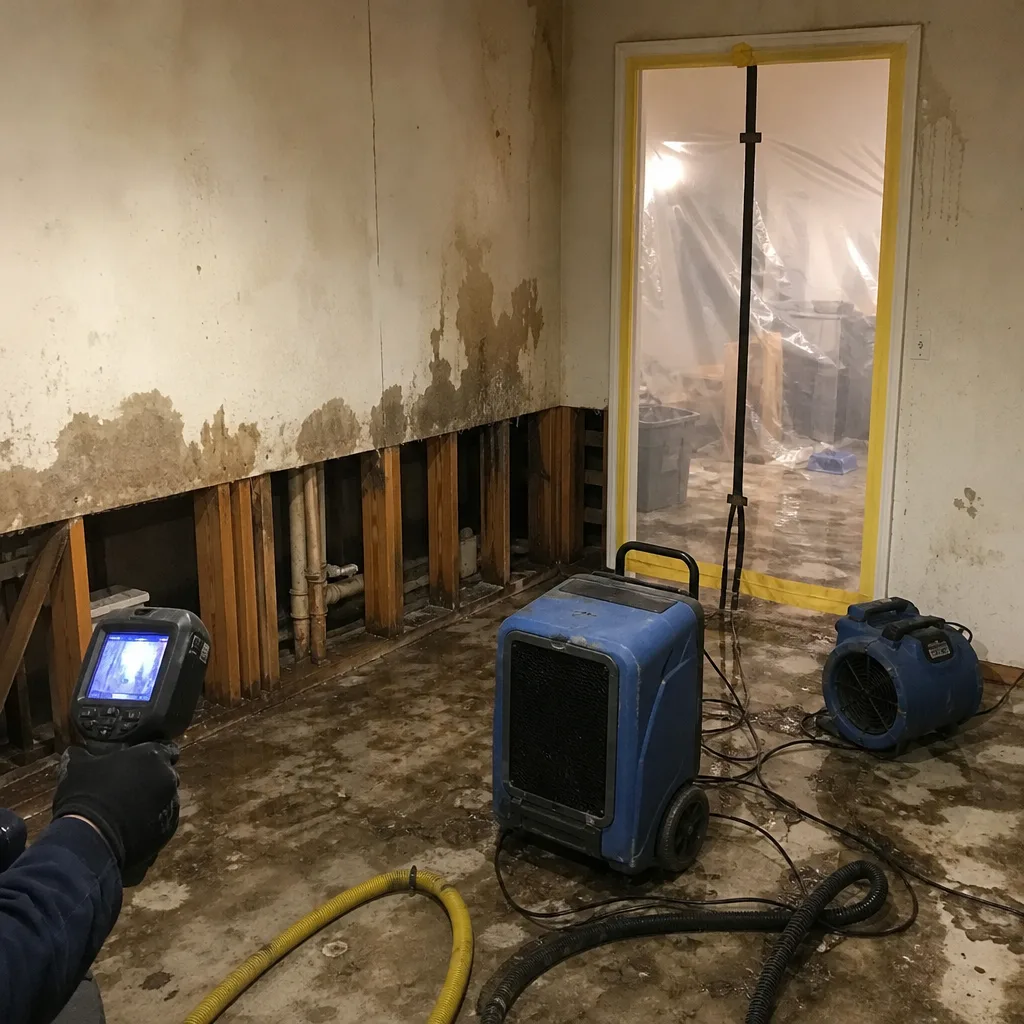
Moisture meters catch what your eyes can’t. A wall that’s been slowly absorbing water from a pinhole pipe leak can read 18 percent while looking completely normal. Professional restoration companies, including our teams at Dryden, use more advanced meters with non-invasive sensors and infrared cameras, but a $30 pin meter gives a homeowner a meaningful early warning. We use professional-grade equipment from manufacturers like XPOWER, B-Air, and Injectidry for drying and moisture control, but the principle is the same at every level: numbers tell you more than eyes.
Common Mistakes to Avoid
- Watching the calendar instead of the sky. Orlando homeowners who follow a generic “spring and fall” maintenance schedule from a national magazine miss the actual sequence of risk here. May prep and October documentation matter more than any other months in this climate.
- Ignoring the guest bathroom. A bathroom that no one uses is not a bathroom that needs no maintenance. It’s a bathroom where problems grow quietly for months before they’re found.
- Treating the AC drain line as a summer-only task. Algae grows year-round in Orlando’s warm, humid air. Monthly vinegar flushes prevent the clogs that cause the most common avoidable water damage we see.
- Relying on visual inspection alone. Water inside walls, under floors, and behind cabinets is invisible until the damage is advanced. A $30 moisture meter is the cheapest meaningful upgrade to your inspection routine.
- Waiting until after a storm to address known deficiencies. By October, contractor backlogs are building. The homeowner who calls about a small roof leak in early October gets service weeks before the one who calls in January.
- Discounting the dry season as safe. Less rain doesn’t mean no water damage. It means slower, quieter water damage. The January mold bloom is real, and it’s preventable with monthly flushing and weekly checks.
- Skipping irrigation system inspection. A broken sprinkler head aimed at the foundation can deliver more water to your slab than a month of rain. Orlando’s sandy soil hides these leaks until the damage is significant.
When to Call a Professional
Some damage is beyond what a homeowner should handle. Call a professional when you find active water intrusion that’s been going on for more than a few days, when mold is visible or the musty smell is strong, when a ceiling is sagging or staining is spreading, when your moisture meter reads above 20 percent on structural wood, or when the water involved is from sewage or floodwater. Fire damage, of course, always warrants professional restoration. Fire damage restoration in Orlando requires specialized equipment, odor treatment, and careful structural assessment.
If you’re not sure, call anyway. Dryden Restoration Orlando offers free estimates in Orlando, and the conversation itself costs nothing. We’ll tell you whether the problem is urgent, whether it needs professional equipment, and what the likely scope of work looks like. Our technicians are background-checked, uniformed, and trained to IICRC standards, the restoration industry’s recognized benchmark. Call (850) 786-4472, and a live person answers, 24 hours a day, every day.
Frequently Asked Questions
Water damage restoration in Orlando typically costs between $1,200 and $4,500 for a moderate single-room water issue, depending on the category of water, the materials affected, and how far the moisture has spread. Small dried-in-place repairs can run under $800, while extensive multi-room flooding can exceed $12,000. A written scope before work starts is the most important protection against price surprises. Call (850) 786-4472 for a free, written estimate.
Most Orlando homeowner’s policies cover sudden and accidental water damage, like a burst pipe or storm-driven roof leak, but not gradual damage from neglected maintenance, like a slow drain line leak that’s been running for months. The distinction matters: insurance pays for things that happened suddenly, not for things that happened slowly because they weren’t addressed. We work directly with adjusters and document every job, which makes the claim process cleaner for you.
For active water damage, a same-day response is standard and important, because water spreads quickly in Orlando’s warm temperatures. At Dryden Restoration Orlando, a live person answers the phone 24 hours a day, every day, and we dispatch immediately for water emergencies. Call (850) 786-4472 any time, and you’ll be talking to a person, not a call center or a voicemail.
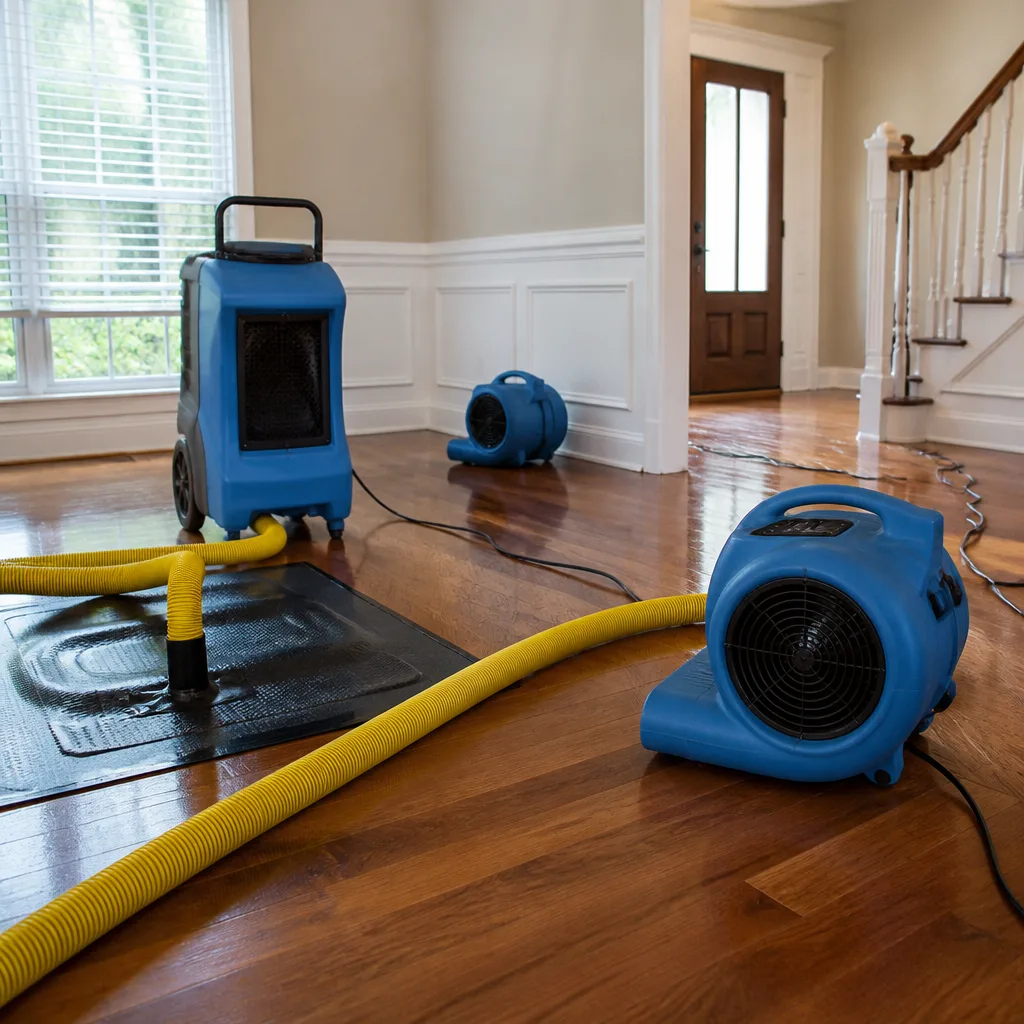
For anything beyond a small, contained spill that you caught immediately, professional drying equipment is usually necessary. Household fans move air but don’t remove moisture. Professional-grade drying systems use dehumidifiers and air movers working together to pull water out of materials and out of the air, a process called psychrometric drying. The equipment brands matter too. We use Dri-Eaz, Phoenix, XPOWER, B-Air, and Injectidry systems, the same machines used by large commercial restoration crews, because they’re engineered for fast, complete drying. Incomplete drying leaves moisture in wall cavities, where mold establishes within 48 to 72 hours in Orlando’s humidity.
The AC condensate drain line, without question. It’s out of sight, it runs constantly during the wet season, and algae grows in it year-round. Homeowners who flush the line monthly with vinegar almost never have a problem. Those who don’t, eventually find water where it shouldn’t be. The second most overlooked cause is the rarely-used guest bathroom, where wax ring failures and supply line leaks go unnoticed for months.
For active water intrusion and mitigation, yes. Dryden Restoration Orlando provides same-day emergency response in Orlando, and the drying process starts immediately with professional equipment. Reconstruction work, like replacing drywall or flooring, is scheduled separately after the area is dry, scoped in writing, and priced before work starts. That’s the difference between mitigation and rebuild: mitigation is urgent; rebuild is planned. Both come with our written price guarantee.
The Bottom Line
Orlando homes don’t fail on a national maintenance schedule. They fail when the wet season finds an unprepared envelope, when the dry season hides a slow leak in a quiet room, and when a storm season reveals a deficiency that should have been fixed in May. The homeowners who avoid restoration calls are the ones who check the AC drain line every month, walk the ceiling perimeter every week in summer, document damage in October, and flush the forgotten toilets in winter. None of this requires special skill. It requires attention on the right schedule. And when attention isn’t enough, call a company that puts its price in writing before it touches a tool, answers the phone with a live person at any hour, and guarantees its work for 365 days. That’s the standard every Orlando homeowner should hold us to. For more guides & resources, visit our blog.
Written by Carl Brandt, Owner at Dryden Restoration Orlando, serving Orlando since 2005.
See the difference
 Before
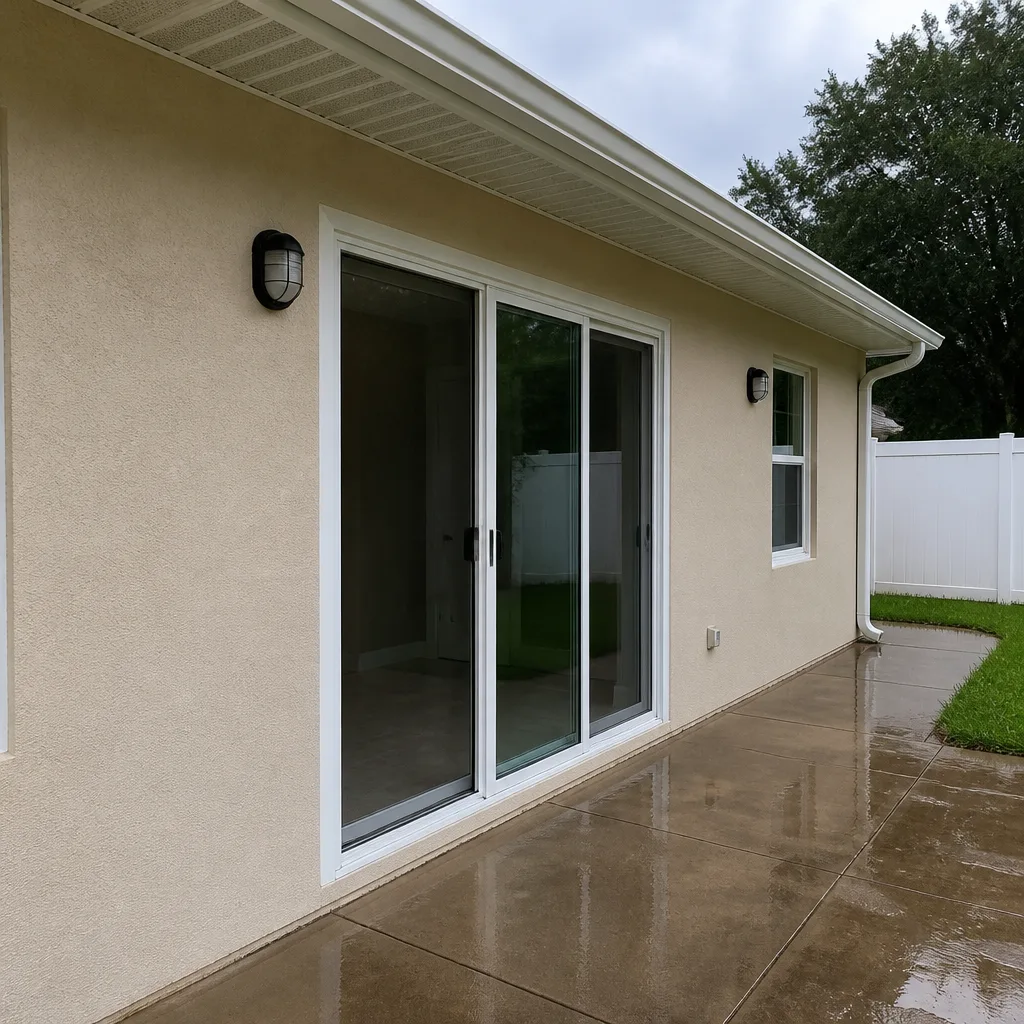 After
After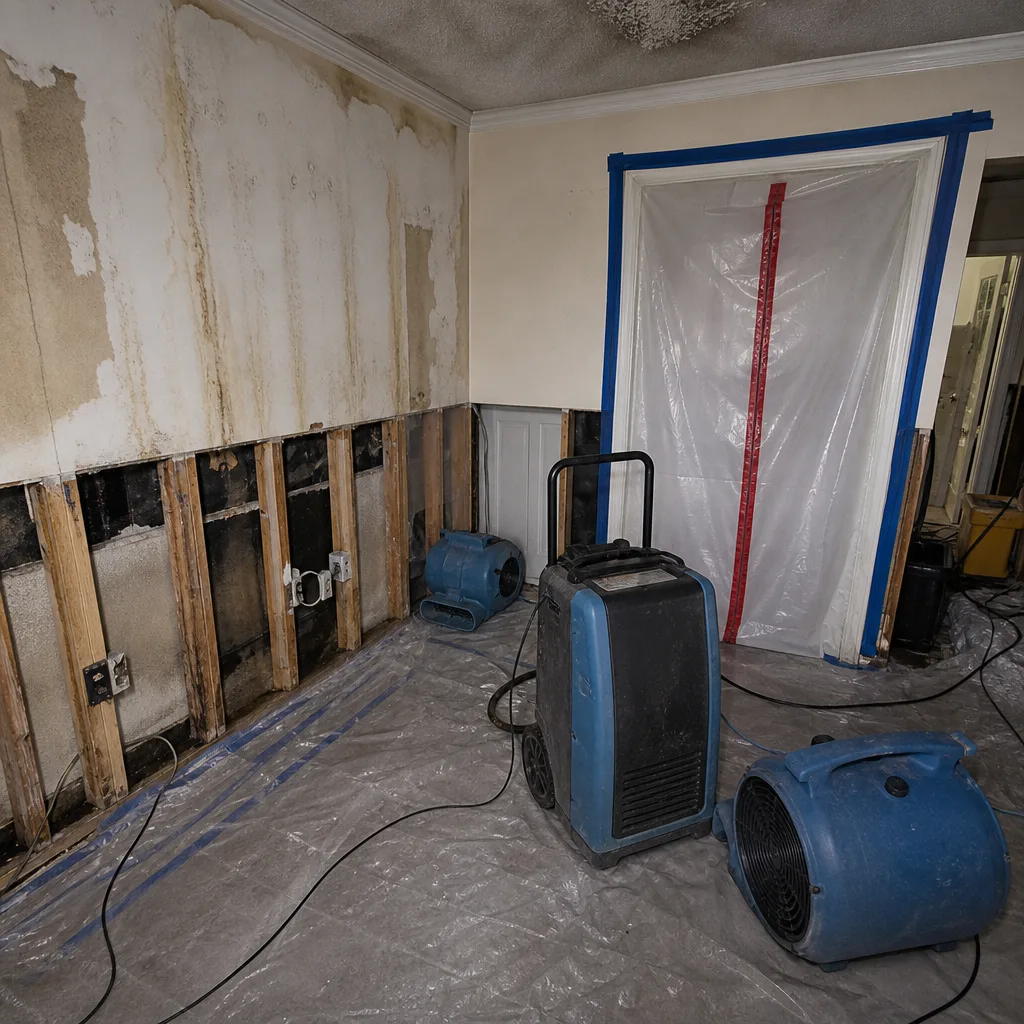 Before
 After
After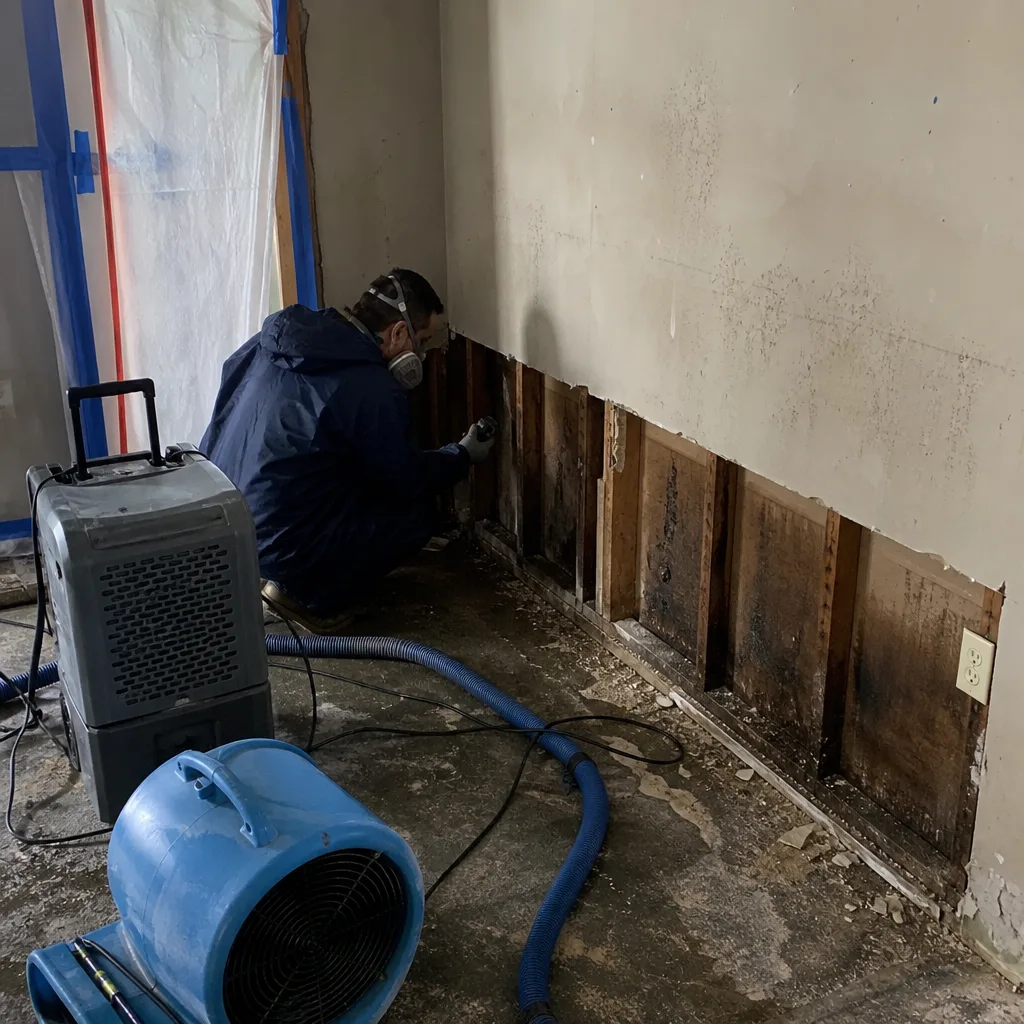 Before
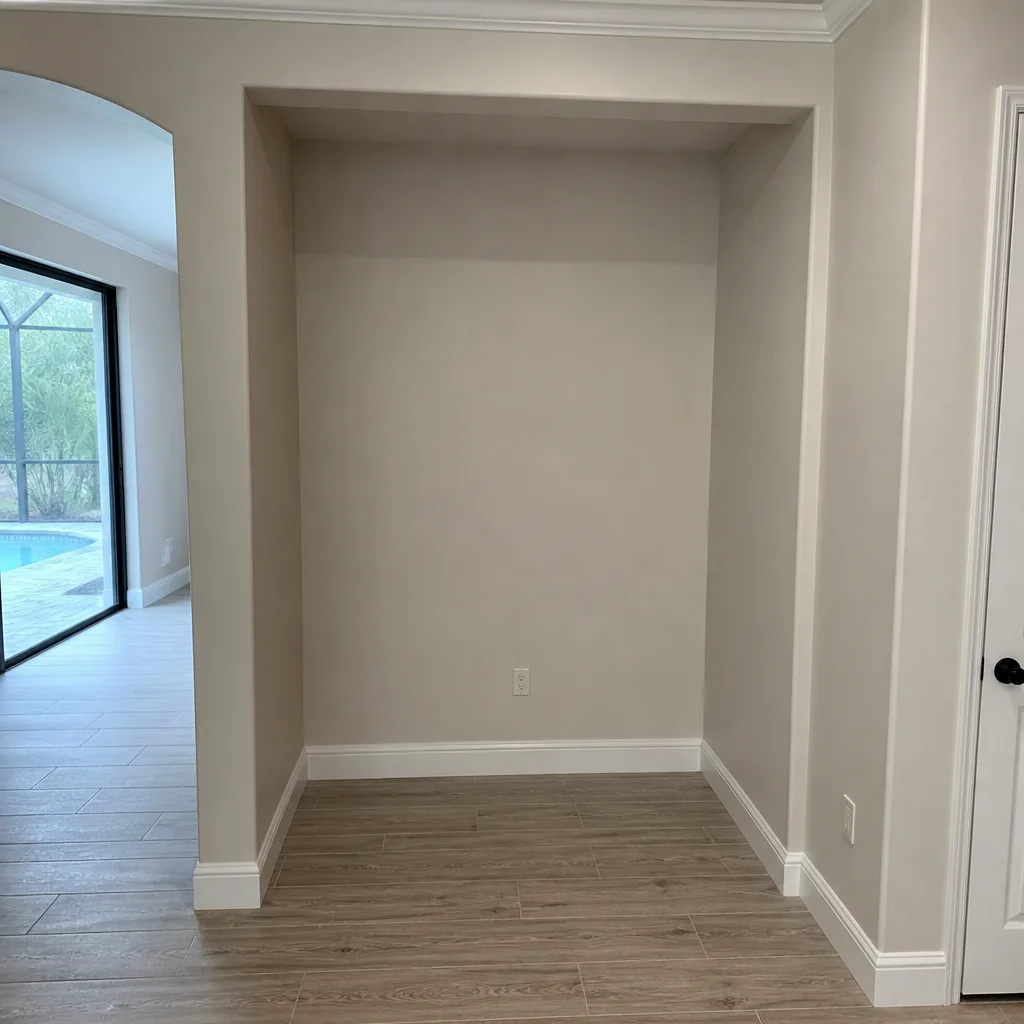 After
After