
Last updated October 16, 2026
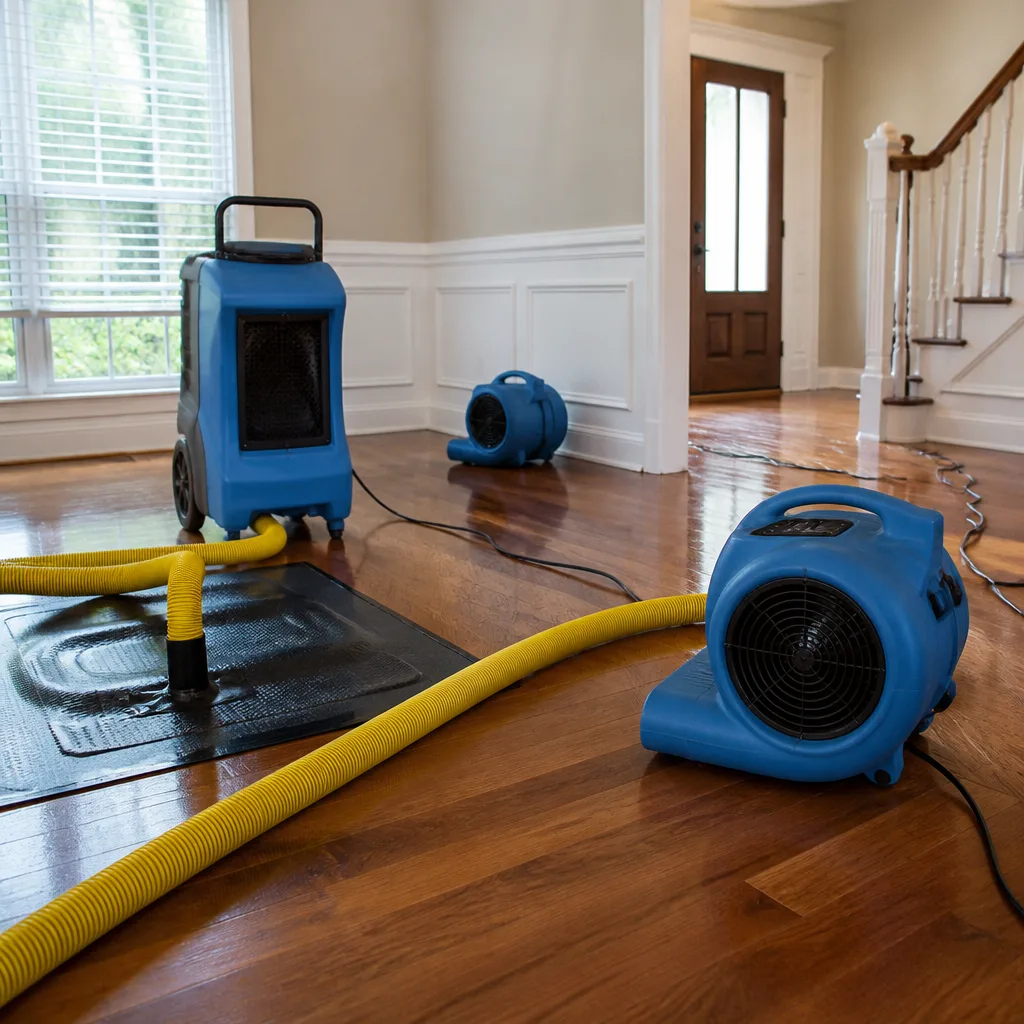 Water damage drying
 Fire & smoke cleanup
 Mold remediation
 Storm response
 Sewage cleanup
 Reconstruction
Free visual inspection and a written scope of work before any mitigation begins - photos, moisture readings, and drying logs go in your claim file
The scope we write is the scope we bill. Anything new gets shown to you, in writing, before we touch it.
Get your free estimateThe Complete Guide to Damage Restoration in Orlando
Orlando averages 53 inches of rain per year, which is more than Seattle. Yet most damage restoration guides are written for homeowners in the Pacific Northwest or the Midwest, where the humidity stops when the storm does. In Orlando, it doesn’t. The air stays wet for months, and that changes everything about how homes fail and how they need to be repaired. This guide maps every major restoration category to the specific Orlando conditions that cause it, so you know what to expect before you ever need to make the call.
Quick Answer
Damage restoration in Orlando covers four main categories: water mitigation, mold remediation, fire and smoke restoration, and storm damage repair. Because of Central Florida’s persistent 70 to 90 percent relative humidity, moisture intrusion keeps spreading long after visible water is gone, which means drying protocols here must be more aggressive than national standards. Expect to pay between $1,200 and $4,500 for water mitigation and $1,500 to $6,000 for mold remediation in the Orlando metro, with the final number depending on square footage, materials affected, and how quickly the problem was caught.
Restoration work we handle
Table of Contents
- Water Damage Restoration in Orlando
- Mold Remediation in Orlando
- Fire and Smoke Damage Restoration in Orlando
- Storm Damage Repair in Orlando
- Mitigation vs. Remediation vs. Reconstruction
- How Insurance Claims Work in Orlando
- What Restoration Costs in Orlando
- Common Mistakes to Avoid
Water Damage Restoration in Orlando
Water damage in Orlando comes from three main sources: appliance and plumbing failures, air conditioning condensate overflow, and storm-driven intrusion. The first two happen year-round and don’t require a hurricane. A supply line to a washing machine bursts at 2 a.m., an AC drain pan in the attic overflows while you’re at work, or a water heater gives out after eight years of Orlando’s mineral-heavy municipal water. These are the calls we see most often.
Here’s what many homeowners don’t realize: in Orlando’s climate, water damage is a moving target. A carpet that feels damp at 9 a.m. has already sent moisture into the drywall, baseboards, and subfloor by noon. Relative humidity above 70 percent means water in building materials evaporates slowly, so it keeps wicking outward and upward instead of drying. National drying standards assume ambient humidity of 40 to 50 percent. Orlando regularly sits at 70 to 90 percent, especially from May through October. That means restoration crews here have to run dehumidification longer, check moisture readings more frequently, and use equipment sized for a wetter environment than a crew in Denver or Phoenix would need.
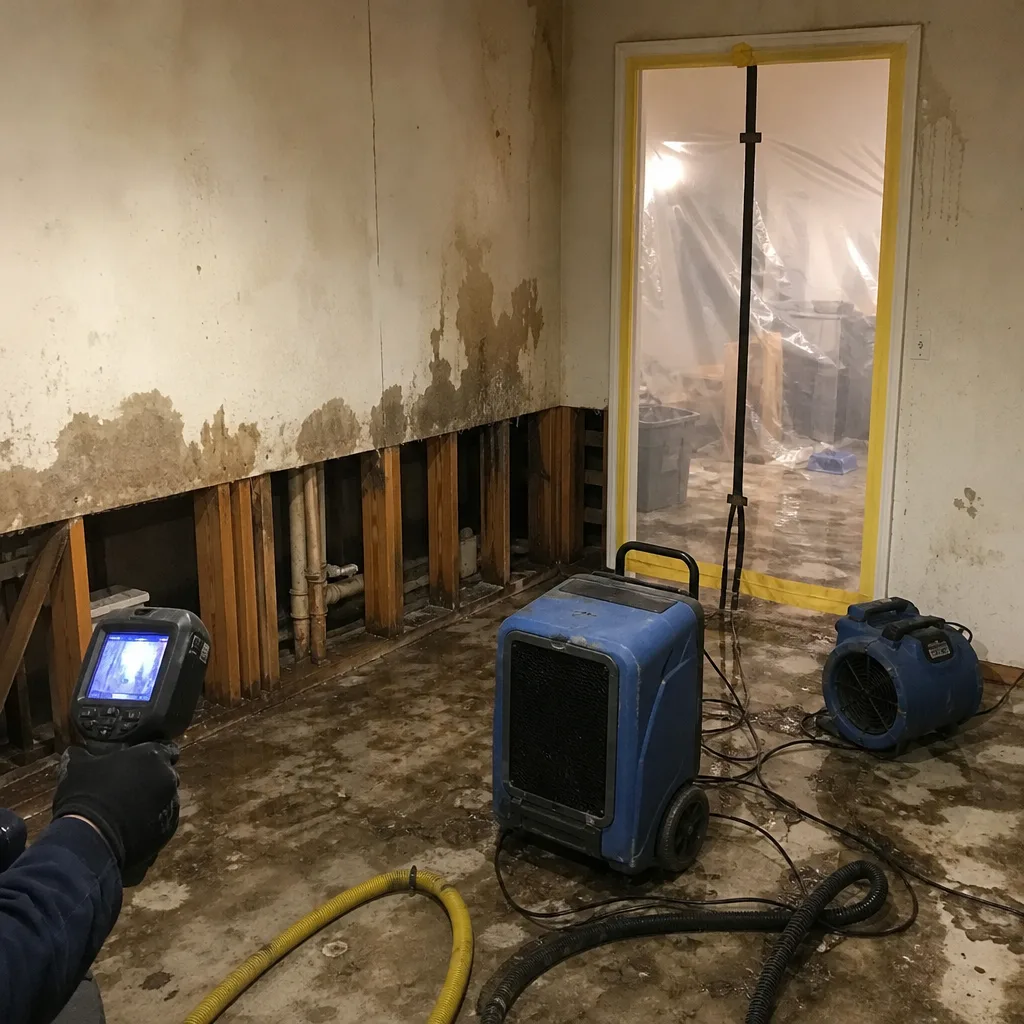
The drying process we use follows a sequence. First, extraction removes standing water. Second, we set up professional-grade drying equipment, typically Dri-Eaz dehumidifiers paired with XPOWER or B-Air air movers, positioned to create airflow across wet surfaces. Third, we monitor daily with moisture meters and thermal imaging to track hidden moisture pockets. In Orlando, we also account for the fact that exterior walls may be absorbing humidity from outside air even after the interior is dry, which is why we test rather than guess.
A key Orlando-specific concern is the attic. Attics here run 120 to 140 degrees in summer, and when an AC air handler leaks or a condensate line clogs, the water pools on the ceiling drywall below. That drywall then soaks from the top down, and by the time you see a stain on the ceiling, the insulation above may already be contaminated. We recommend checking your AC drip pan and condensate line twice a year, once before summer and once after.
For a full breakdown of how water damage restoration works from start to finish, see our Water Damage Restoration in Orlando page.
Mold Remediation in Orlando
Mold is the second act of almost every water damage story in Orlando. If the water event is not dried within 48 to 72 hours, mold spores that are already present in every Orlando home, carried in constantly by humid outside air, begin to colonize damp materials. Drywall paper, ceiling tiles, and carpet padding are the most common food sources.
What makes Orlando different from most U.S. cities is that mold can grow without any plumbing leak at all. When indoor relative humidity stays above 60 percent for extended periods, which happens in many Orlando homes during summer if the AC is undersized or running intermittently, mold can grow on walls, inside closets, and on the back of furniture placed against exterior walls. We’ve seen this in neighborhoods like Conway, College Park, and across the Winter Park line, where older block homes with minimal insulation create cool wall surfaces where humid air condenses.
Mold remediation is a specific process, distinct from cleaning. It begins with containment: sealing off the affected area with plastic sheeting and negative air pressure so that disturbing the mold does not send spores through the rest of the house. The contaminated materials are then removed, typically drywall, insulation, and carpet that show visible growth. Remaining surfaces are cleaned and treated with antimicrobial products. The final step in Orlando, and this is critical, is verification: air sampling or surface testing to confirm spore counts in the space match outdoor background levels.
A word on cost and scope. Orlando mold remediation typically runs $1,500 to $6,000, but a small patch behind a bathroom vanity might be handled for under $1,000 if caught early, while a whole-house humidity problem with attic growth can exceed $10,000. The single biggest variable is whether the moisture source has been corrected. Remediating mold without fixing the humidity or leak is like mopping a floor while the ceiling still leaks.
For more on the mold removal process, health considerations, and what a typical remediation job involves, see our Mold Remediation in Orlando guide.
Fire and Smoke Damage Restoration in Orlando
Fire damage restoration is the least common residential restoration category overall, but when it happens in Orlando, the smoke and soot behave differently than in drier climates. Orlando’s humidity causes smoke particles to bond more readily with surfaces, and the heat of a fire combined with humid air creates a residue that is harder to remove from walls and ceilings than the dry soot typical in Western states.
The restoration process after a fire follows a strict order. First, emergency board-up and tarping secure the property, because an unsecured fire-damaged home in Orlando becomes a mold liability within days, thanks to the combination of water from firefighting and ambient humidity. Second, water extraction and drying, since the water used to extinguish the fire is usually the most destructive element in the immediate aftermath. Third, smoke and soot removal, which includes cleaning every surface, deodorizing with thermal fogging or ozone treatment, and often sealing surfaces with an odor-blocking primer. Fourth, structural reconstruction of damaged framing, drywall, flooring, and finishes.
One Orlando-specific note: if your home was built before 1980 and has not been renovated, the fire-damage process may involve asbestos testing before demolition can proceed. Many Orlando homes from the 1950s through the 1970s have asbestos in drywall compound, popcorn ceilings, or vinyl flooring. Your restoration contractor should be testing for this before any tear-out begins, not after.
The full fire restoration scope, including how to handle contents and what to expect from insurance, is covered on our Fire Damage Restoration in Orlando page.
Storm Damage Repair in Orlando
Storm damage in Orlando is not just about hurricanes. Yes, a named storm can tear off shingles, drive water under eaves, and push water through sliding glass doors. But the far more common storm damage we see comes from ordinary afternoon thunderstorms that arrive with 40 to 60 mile per hour wind gusts, horizontal rain, and occasionally hail. These summer storms, arriving almost daily from June through September, cause a slow accumulation of damage: lifted flashing, loosened roof tiles, water stains that appear weeks after the storm, and water that enters through nail holes that seemed insignificant at the time.
The most overlooked storm damage point in Orlando is the wind-driven rain entry. Insurance adjusters often focus on visible damage like missing shingles, but water that enters through soffit vents, around window frames, or under exterior doors during a driving rain can saturate walls and insulation without leaving a roof-sized hole. This is why a thorough storm damage assessment in Orlando should include moisture testing of wall cavities near windows and doors, not just a roof inspection.
After any significant storm, the sequence matters. Document everything with photos before moving anything. Tarp any roof damage to prevent further entry. Move wet contents to a dry area or remove them entirely. Then call your insurance company and a restoration contractor. The order matters because insurers want documentation of the initial damage, and quick mitigation limits secondary damage that adjusters may question.
Mitigation vs. Remediation vs. Reconstruction
These three words get used interchangeably by contractors and adjusters alike, but they describe separate scopes of work with separate invoices, and understanding the difference will save you from paying for work you don’t need or, worse, not paying for work you do.
Mitigation is emergency response. It means stopping the active damage: extracting water, setting up drying equipment, boarding up a broken window, tarping a roof, removing standing water from a flooded room. Mitigation is about preventing the damage from getting worse. It is typically billed per job with a line-item scope, and in Orlando it should include the drying and dehumidification that our climate demands.
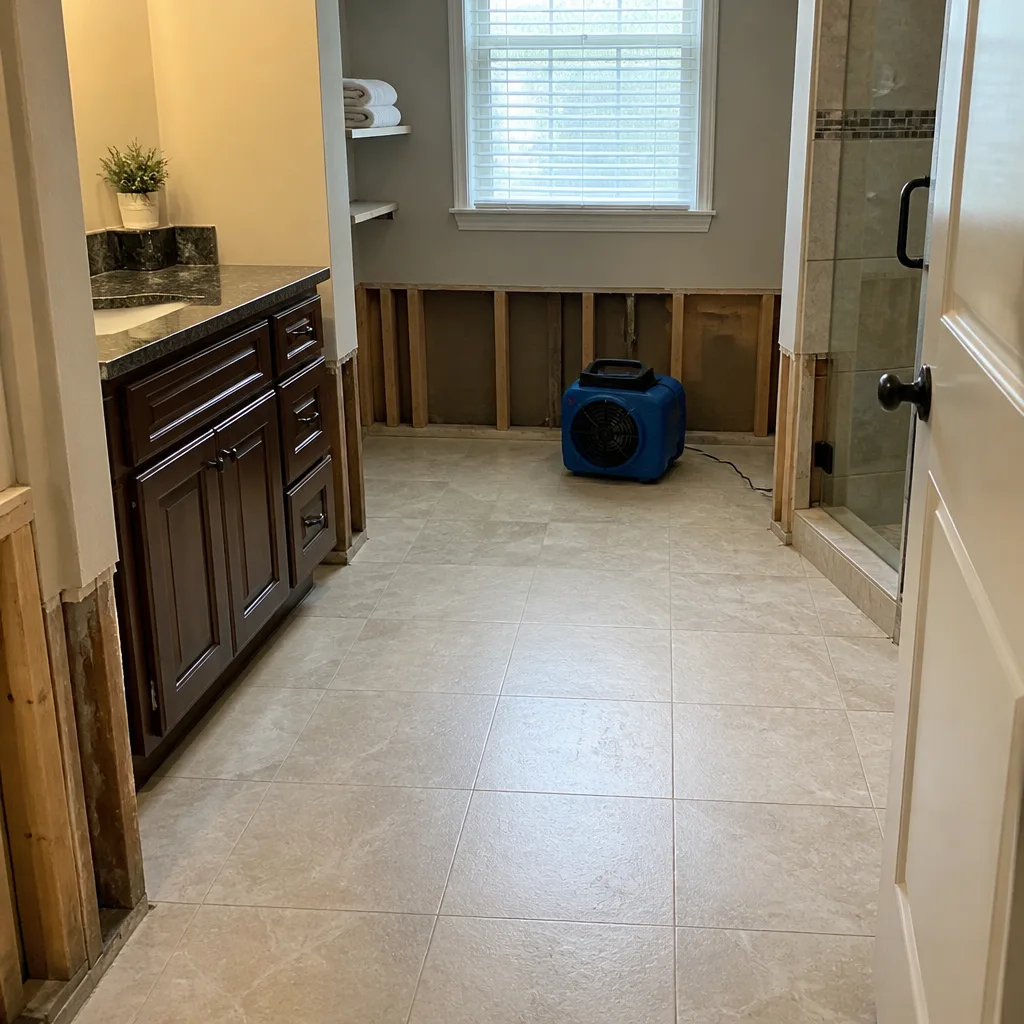
Remediation is the removal of contamination. In water damage, this means cutting out and discarding wet drywall, insulation, and carpet that cannot be dried. In mold work, it means the containment and removal process described above. The word remediation implies that something harmful is being removed from the home. It does not include rebuilding.
Reconstruction is putting the home back together: new drywall, new flooring, new paint, new cabinets, new roofing. This is the work that makes a home look like the loss never happened. Reconstruction is scoped, permitted, and scheduled like a remodel, not an emergency call.
Here’s why this matters practically. A homeowner in Dr. Phillips has a supply line burst. The mitigation company arrives, extracts water, sets up fans. Three days later, the moisture readings are dry. The invoice: $2,800 for mitigation. Then a separate contractor gives a quote for remediation: removing damaged baseboard and drywall, $1,200. Then reconstruction: replacing drywall, baseboard, painting, $3,500. Three line items, three scopes, three invoices. If a contractor quotes you a single number for all of it before seeing the moisture readings, ask them to separate the scopes in writing.
How Insurance Claims Work in Orlando
Florida’s property insurance market is different from any other state’s. Premiums here are the highest in the nation, claims frequency is high, and insurers are quick to deny anything that looks like neglect. Understanding how your restoration work interacts with your policy matters.
Florida Building Code Chapter 69A governs building standards, and here’s the interaction many homeowners miss: if your restoration requires structural work, replacement of load-bearing elements, or certain electrical or plumbing changes, a permit is required. If you skip the permit and have a subsequent claim, the insurer may deny it on the basis that the prior work was not performed to code. This is not a hypothetical, it’s a regular outcome in Orlando claims where a homeowner took a cash settlement and hired an unpermitted contractor.
The claims process generally follows this order:
- Document the damage. Photos and video of everything before anything is moved or removed.
- Call your insurer. Open the claim immediately. Florida has a prompt-notice requirement in most policies, and delay can reduce the payout.
- Get a written mitigation scope. A restoration company assesses the damage, documents moisture readings, and writes a scope of work with pricing before any tools are touched.
- Approval and mitigation. The insurer reviews the scope, typically approves mitigation, and the emergency work proceeds.
- Reconstruction estimate. After mitigation is complete, a separate reconstruction estimate is prepared for the rebuild. This often requires an adjuster’s reinspection.
- Supplemental claims. If hidden damage is found during reconstruction, which is common in water losses, a supplement is filed with the insurer to cover the additional scope.
Direct insurance billing and photo-documented assessments make a measurable difference here. When the restoration company’s documentation matches the adjuster’s findings, the claim moves faster. We coordinate directly with adjusters on every job, because the homeowner should not be the one translating moisture readings into claim language.
What Restoration Costs in Orlando
Here are current market ranges for the Orlando metro area. These are actual working numbers from jobs completed in 2024 and 2025, not national averages.
- Water mitigation (extraction and drying only): $1,200 to $4,500. A small bathroom leak caught within hours may be at the low end. A whole-house supply line failure with saturated carpet and drywall across multiple rooms will be at the high end or above.
- Water remediation (removal of wet materials): $800 to $3,000, depending on how much drywall, insulation, and flooring must be cut out and discarded.
- Mold remediation: $1,500 to $6,000 for a typical contained area. Small surface growth under 10 square feet may be under $1,000. Attic-wide growth with HVAC contamination can run $8,000 to $15,000.
- Fire and smoke restoration: $3,000 to $25,000 plus reconstruction. A kitchen grease fire that causes smoke damage throughout a home often lands between $8,000 and $18,000 for cleaning and deodorizing alone, before any rebuild.
- Storm damage (hurricane or severe thunderstorm): Roof tarping $500 to $1,500 immediate response. Full roof replacement $8,000 to $20,000. Interior water intrusion mitigation follows the water damage ranges above.
- Full reconstruction after any category: $10,000 to $75,000 plus, entirely dependent on the size of the loss and the finishes selected.
Two things control the final number more than anything else in Orlando. The first is time, how quickly the moisture source was stopped and drying began. The second is the materials affected: tile floors dry faster and cost less to restore than hardwood or engineered flooring, which often cannot be saved once saturated in a humid environment.
At Dryden Restoration Orlando, every job starts with a written price before any work begins. The number on that page is the number you pay, and it does not change at the door. That is a specific commitment we make in writing, not a sales phrase.
Common Mistakes to Avoid
- Turning off the drying equipment too soon. In Orlando, visible dryness is not actual dryness. Materials need to reach moisture content below 15 percent, and that requires moisture meter verification, not a touch test. Unplugging fans a day early because the carpet feels dry can leave the subfloor wet enough to feed mold growth.
- Hiring a contractor who skips the permit. If structural work is involved and no permit is pulled, the city of Orlando has no record of the work, and your insurer has a reason to deny a future claim. A legitimate restoration company will tell you when a permit is required and handle it.
- Accepting a cash settlement before the restoration company has opened the walls. Water and smoke hide behind drywall. The insurance adjuster’s initial estimate often does not include what is found after demolition. You want your restoration contractor to document hidden damage and file a supplement, not accept the first number.
- Using bleach to treat visible mold. Bleach kills surface mold but does not penetrate porous materials like drywall and wood, and it does not address the moisture source. In Orlando’s humidity, the mold returns within weeks. Proper remediation removes the contaminated material.
- Ignoring the AC as a water damage source. Air handler leaks and clogged condensate lines are among the most common sources of attic and ceiling water damage in Orlando. Checking the drip pan and flushing the line twice a year costs almost nothing and prevents thousands in restoration work.
- Not documenting before cleaning up. The first instinct after a flood or fire is to start cleaning. That instinct can cost you the claim. Photos and video of the damage before anything is moved are the foundation of your insurance payout.
- Choosing the cheapest quote without comparing scopes. Two restoration quotes can differ by thousands of dollars because one includes drying to IICRC standards with professional-grade equipment and one includes a couple of box fans. In Orlando’s climate, the box fan approach guarantees mold, and you will pay twice.
See the difference
 Before
 After
After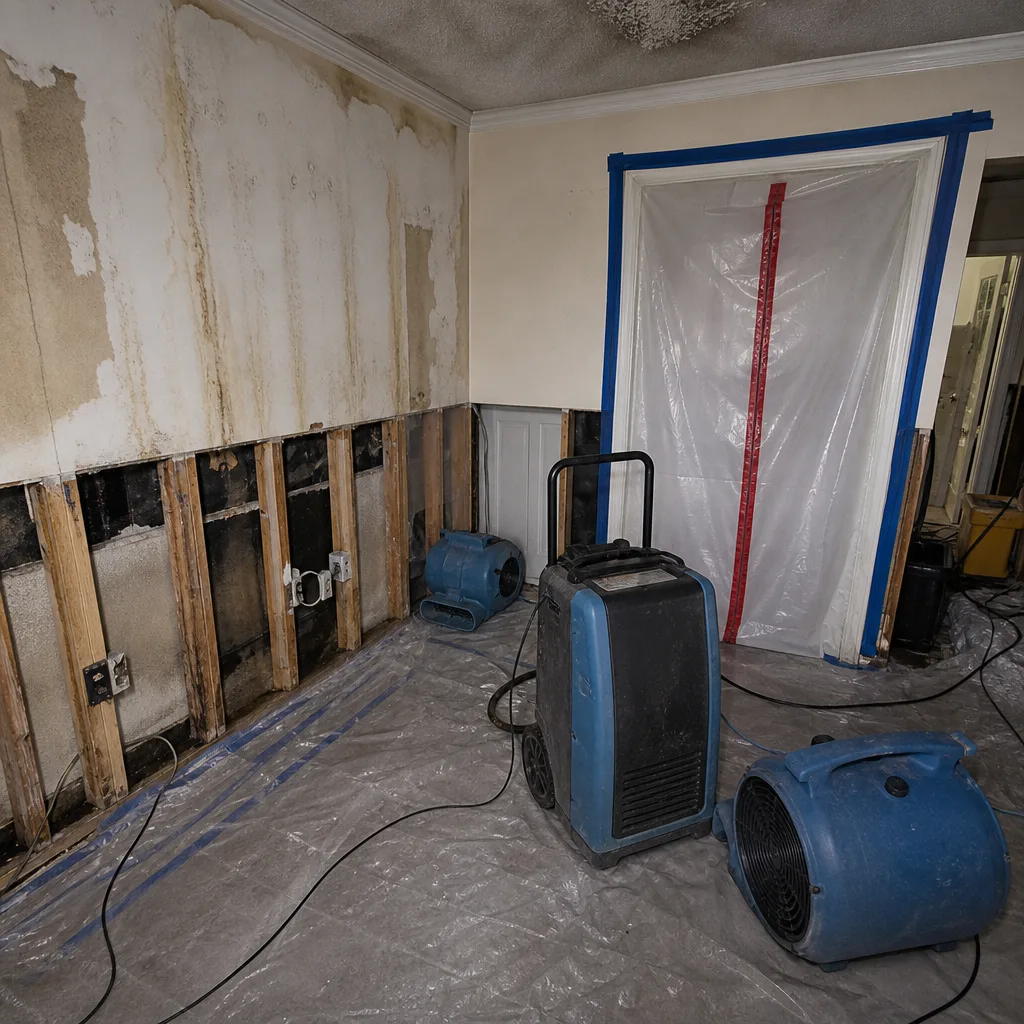 Before
 After
After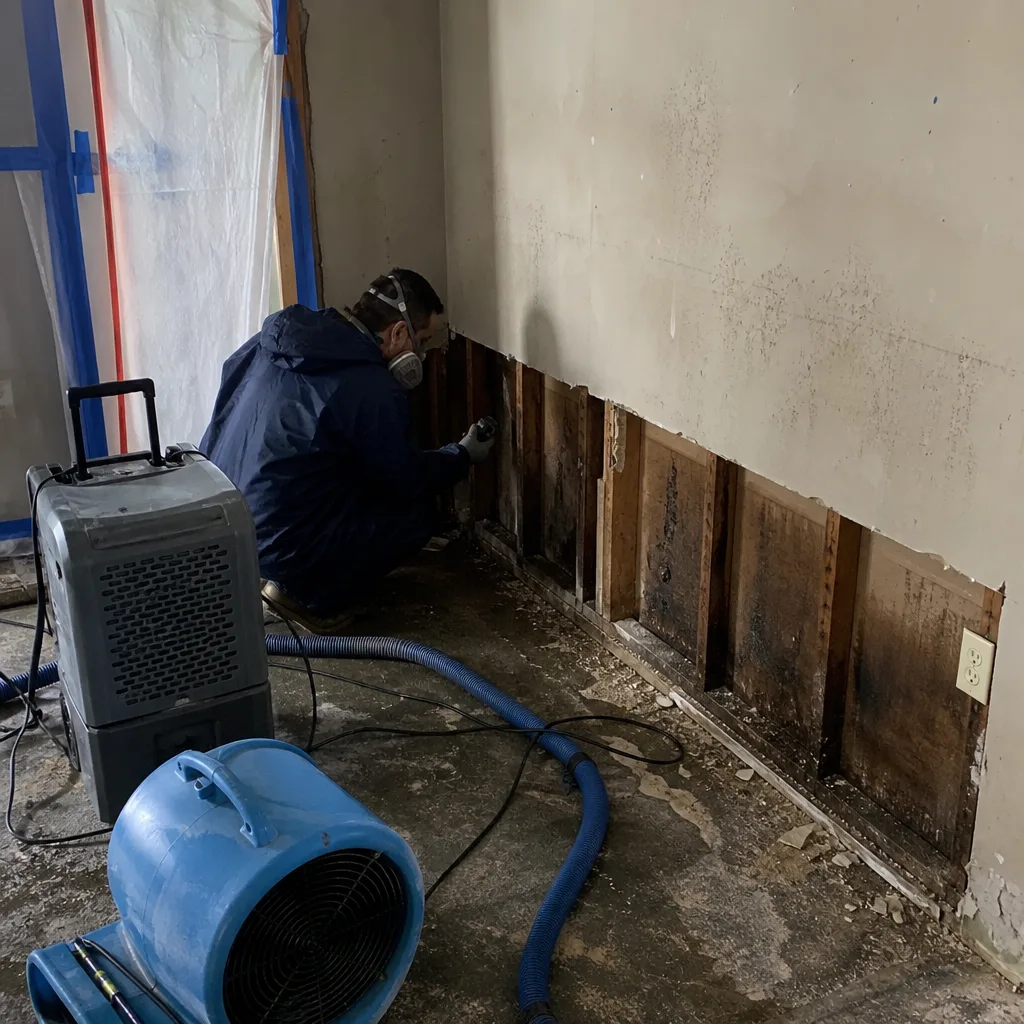 Before
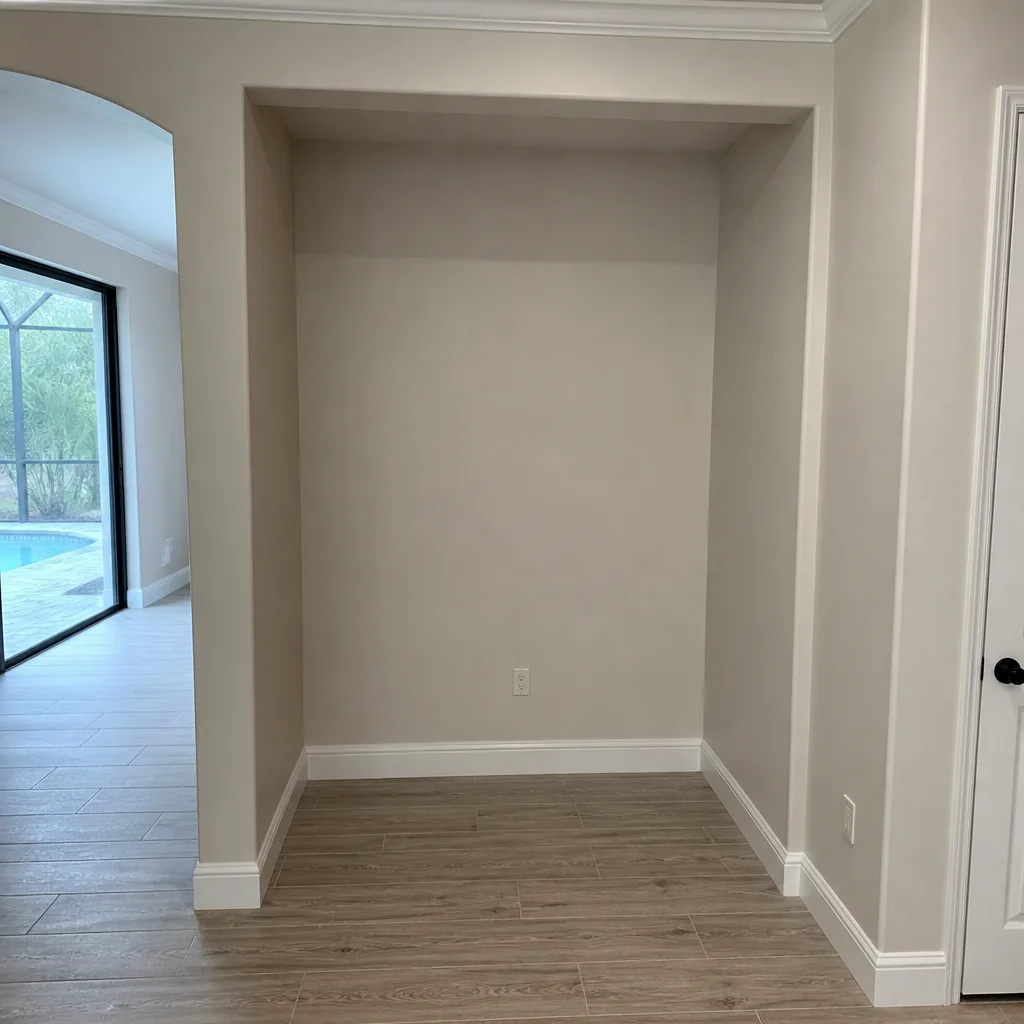 After
AfterWhen to Call a Professional
Some situations are safe to handle with a mop and a fan. A small sink overflow that you catch immediately, on a tile floor, with no drywall contact, is manageable. But if water has saturated carpet, touched drywall, or been standing for more than a few hours in Orlando’s humidity, the clock is running. If you see visible mold growth larger than about 10 square feet, or mold that keeps returning after cleaning, that indicates an active moisture source requiring professional remediation. After any fire, even a small one, professional smoke and soot removal is necessary because smoke residue is corrosive and progressively damages surfaces. After any storm that penetrates the roof or walls, professional moisture testing is the only way to know whether the interior has been compromised.
Dryden Restoration Orlando offers free estimates throughout the Orlando area. Call (850) 786-4472 and a live person answers, 24 hours a day, 7 days a week.
Frequently Asked Questions
Damage Restoration Cost Breakdown: The Orlando Homeowner’s Reference for 2026 shows water mitigation in Orlando typically costs $1,200 to $4,500, with remediation of wet materials adding another $800 to $3,000. The final total depends on how far the moisture has spread through drywall, flooring, and insulation before drying began. Call (850) 786-4472 for an exact written quote, estimates are free.
Dryden Restoration Orlando has live phone support 24 hours a day, 7 days a week, and we dispatch emergency crews to Orlando properties the same day you call, typically within hours. Water damage does not pause overnight, and the difference between a $2,000 mitigation and a $10,000 reconstruction is often the speed of the response.
Insurance coverage for mold depends on the cause of the mold. If the mold results from a covered water loss, such as a burst pipe, the remediation is often covered under the same claim. If the mold results from long-term humidity or lack of maintenance, coverage is usually denied. Your restoration company’s documentation of the moisture source and Damage Restoration Permits, Codes & Inspections in FL: What You Need to Know matter more than anything in determining how the claim is processed.
If mold growth covers more than 10 square feet, or if it has penetrated porous materials like drywall and carpet, surface cleaning will not solve the problem. Mold grows into the material, not just on it, and cutting out and replacing the contaminated material is the only approach that works. Call (850) 786-4472 and we will assess the growth and give you a straight answer.
Dryden Restoration Orlando coordinates directly with insurance adjusters on every job, as covered in our more guides & resources. We provide photo-documented assessments, moisture readings, and written scopes of work that match the insurer’s documentation format, and we file supplement claims when hidden damage is discovered during the work. You do not have to translate between your contractor and your insurer.
Orlando’s humidity means that moisture keeps moving through building materials long after visible water is removed, so drying requires longer equipment run times and more aggressive dehumidification than national standards assume. Damage Restoration Warning Signs: A Orlando Homeowner’s Reference Guide notes that mold can also grow in Orlando homes without any water leak at all, simply from sustained indoor humidity above 60 percent. A restoration company with local experience accounts for both of these factors from the first day of the job.
The Bottom Line
Damage restoration in Orlando is a climate-specific discipline. The 53 inches of annual rainfall, the 70 to 90 percent relative humidity, and the afternoon storm cycle all create conditions that national guides simply do not address. The homes that recover best are the ones where drying starts fast, the contractor documents everything for insurance, and the written scope is clear before any tool is touched. Whether you’re dealing with a burst supply line in College Park, a mold bloom in Conway, or storm damage after an afternoon front, the principles are the same: respond quickly, document thoroughly, and work with a restoration company that puts its price and its guarantee in writing.
Written by Carl Brandt, Owner at Dryden Restoration Orlando, serving Orlando since 2005.