
Last updated October 16, 2026
 Water damage drying
 Fire & smoke cleanup
 Mold remediation
 Storm response
 Sewage cleanup
 Reconstruction
Free visual inspection and a written scope of work before any mitigation begins - photos, moisture readings, and drying logs go in your claim file
The scope we write is the scope we bill. Anything new gets shown to you, in writing, before we touch it.
Get your free estimateDamage Restoration Cost Breakdown: The Orlando Homeowner’s Reference for 2026
Here’s something most Orlando homeowners don’t realize until they’re staring at an invoice: the most inflated line item on Florida water damage estimates isn’t labor. It’s equipment rental. An industrial dehumidifier that costs a restoration contractor roughly $400 a month to own gets billed at $125 to $175 per day. A four-day drying job can show $600 in equipment charges for a machine that cost the contractor about $53 to use over that period. This guide exists because no one else has explained this to you. We’ll walk through every common line item, what it actually means, what it should cost in the Orlando market in 2026, and how to spot charges that don’t belong on your bill.
Restoration work we handle
Quick Answer
Water damage restoration in Orlando typically costs between $500 and $1,500 for extraction-only jobs, $1,200 to $4,500 for full structural drying, $1,500 to $6,000+ for mold remediation depending on affected square footage, and $3,000 to $15,000+ for fire and smoke restoration. Your final number depends on the water category (clean, grey, or black), how many rooms are affected, and whether you’re working through insurance or paying out of pocket. Every estimate you receive should be a written, line-itemed document you can actually read before anyone touches a tool.
Table of Contents
- Cost Ranges by Damage Type in Orlando, 2026
- What IICRC Moisture Categories Mean for Your Invoice
- How to Read a Xactimate Estimate Without a Translator
- Equipment Line Items: What’s Fair and What’s Not
- Insurance vs. Out-of-Pocket: The Numbers Orlando Adjusters Actually Work With
- The Written Estimate Standard: What a Legitimate Price Document Must Include
- The Restoration Process, Step by Step (and Where Your Money Goes)
- Common Mistakes to Avoid
- When to Call a Professional
- Frequently Asked Questions
- The Bottom Line
Cost Ranges by Damage Type in Orlando, 2026
Orlando’s restoration market runs higher than the national average for a few reasons: humidity accelerates mold growth within 24 to 48 hours, meaning faster response times and more aggressive drying protocols are standard here. Contractors also pay higher insurance premiums in Florida, and that gets passed through to pricing. Here are the numbers we’re seeing across the Orlando metro in 2026, from College Park to Winter Park to Dr. Phillips.
Water Extraction Only: $500 – $1,500
This covers standing water removal using truck-mounted or portable extraction units. It does not include drying. In Orlando, this price typically covers up to three rooms, 500 to 800 square feet of affected area, and includes disposal of saturated materials that can’t be saved, like carpet pad. If your water heater burst in a Seminole County garage and you caught it within an hour, this is probably your range.
Full Structural Drying: $1,200 – $4,500
This includes extraction plus the setup of air movers and dehumidifiers, daily monitoring, and moisture mapping to confirm the structure is dry. Orlando jobs in this category often run three to five days because our ambient relative humidity rarely drops below 60 percent, even indoors. The higher end of this range usually means multiple rooms, hardwood flooring that requires specialized drying mats, or drywall removal and replacement in addition to drying.
Mold Remediation by Affected Square Footage: $1,500 – $6,000+
Mold work is priced by the square foot of affected material in Orlando, and the range is wide because the scope depends entirely on where the mold is. A 10-square-foot patch of mold behind a bathroom vanity that can be cut out and replaced in a day lands near the bottom. A 100-square-foot colonization in an attic with HVAC duct contamination runs past $6,000. We’ll break down containment, air scrubbing, and disposal line items later in this guide. For a deeper look at how this works in our market, see our Mold Remediation in Orlando page.
Fire and Smoke Restoration: $3,000 – $15,000+
Fire damage is the most variable category in Orlando because the restoration scope depends on what burned, how hot it burned, and whether water from fire suppression compounded the damage. A contained kitchen fire involving smoke throughout 1,500 square feet might total $4,000 to $7,000 for soot removal, odor treatment, and content cleaning. A structural fire in a two-story home easily exceeds $15,000. Our Fire Damage Restoration in Orlando service area page has more detail on how those jobs get scoped.
What IICRC Moisture Categories Mean for Your Invoice
The IICRC, the body that sets restoration industry standards, classifies water damage into three categories. The category determines labor rates, disposal requirements, and whether materials can be dried or must be removed. Every step up roughly doubles the remediation scope and adds disposal costs. Understanding this is the single fastest way to evaluate whether an estimate is reasonable.
Category 1: Clean Water
Water from a supply line, a broken sink pipe, or an overflowing bathtub full of clean water. This is the cheapest to remediate. Materials like carpet, pad, and drywall can often be dried in place rather than removed. Orlando labor rates for Category 1 work in 2026 run between $4 and $6 per square foot. Little to no disposal cost is involved beyond saturated pad that won’t dry in place.
Category 2: Grey Water
Water with some contamination: washing machine discharge, dishwasher overflow, or clean water that sat for more than 24 hours and began growing bacteria. Grey water doubles the scope because carpet pad is almost always removed and disposed of, and antimicrobial treatments are required on remaining surfaces. Disposal fees become a real line item. Expect $6 to $9 per square foot in Orlando.
Category 3: Black Water
Sewage, flood water from outside, or water that has been sitting long enough to become severely contaminated. This requires full personal protective equipment for workers, complete disposal of all porous materials, and extensive antimicrobial application. In Orlando, Category 3 work involves coordination with local waste rules for contaminated material disposal. Costs run $9 to $14 per square foot, and the demo scope is often double or triple Category 1 for the same square footage.
The takeaway: if your estimate says “water mitigation” without specifying the category, ask. A contractor billing Category 3 prices for Category 1 water is overcharging you, and one billing Category 1 prices for Category 3 water isn’t following safety standards.
How to Read a Xactimate Estimate Without a Translator
Xactimate is the software most insurance carriers and restoration contractors in Florida use to generate estimates. It assigns a line code to every task. When you see a number like $2,847.63 on your estimate, that number came from a pricing database that contractors can adjust. Understanding the prefixes and units of measure helps you see what’s actually being billed.
What the Prefixes Mean
- WTR stands for water. Any line starting with WTR covers water extraction, drying, or mitigation activity. Examples: WTR EXTR (extraction), WTR DRY (drying equipment setup).
- MLD stands for mold. MLD lines cover mold remediation tasks, including containment, removal, and cleaning.
- FRM lines cover fire and smoke. Fires are rare enough that most homeowners only see these codes once in their lives, which is exactly why they’re hard to evaluate.
- CLN lines are cleaning tasks: content cleaning, structural cleaning, and deodorization.
- DMO lines are demolition: removing drywall, flooring, cabinets, and other materials that can’t be saved.
- HMR indicates hazardous material handling, including asbestos or lead considerations during demolition.
Units of Measure: Why SF, LF, and EA Change Everything
SF means square foot. The estimate charges per square foot of affected area. A 200 SF line for drywall removal at $3.50 per SF is $700. If the actual affected drywall is 120 SF, you’re overpaying by $280. The unit matters because Xactimate estimates are based on the contractor’s measurements, and measurements can be wrong.
LF stands for linear foot. Baseboard, crown molding, and pipe replacement are billed this way. A room that’s 12 feet by 14 feet needs 52 LF of baseboard, not the 56 or 60 that sometimes shows up on estimates.
EA means each. This is for discrete items: a toilet reset, a door replacement, a sink reinstallation. EA lines are where “equipment mobilization” and “site preparation” charges hide. If you see an EA line you don’t understand, ask what physical item it refers to.
The most important thing to know about Xactimate is that it’s a starting point, not a fixed price list. Contractors can and do adjust the database pricing. That’s legitimate when local Orlando conditions warrant it, and it’s also where padding happens. A written estimate that shows both the Xactimate base price and the contractor’s adjusted price for each line is the transparent way to present it. If an estimate only shows adjusted totals with no line-item detail, ask for the breakdown.
Equipment Line Items: What’s Fair and What’s Not
Here’s where the rubber meets the road. Equipment billing is the most commonly inflated category on Orlando restoration invoices, and it’s the one most homeowners never question because the line items sound technical. Let’s translate.
Dehumidifiers: The Big One
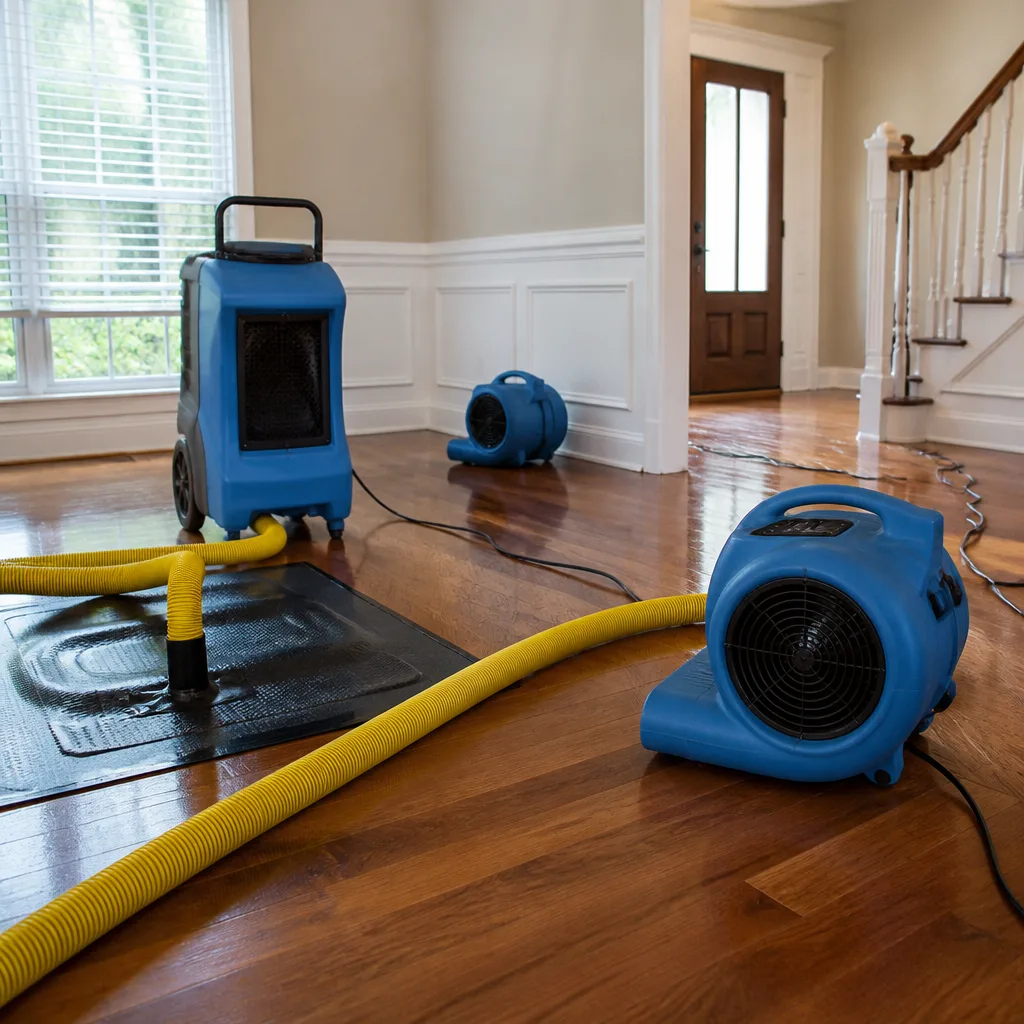
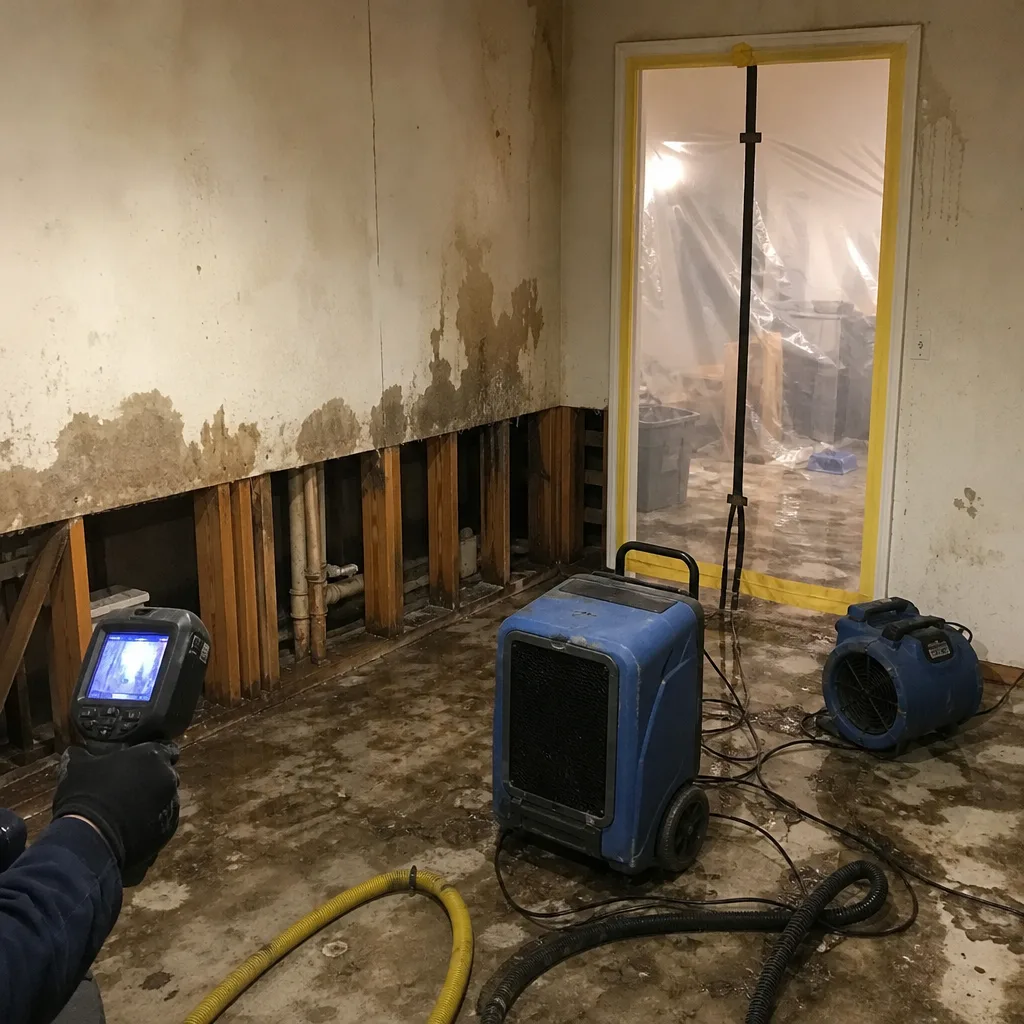
A professional-grade refrigerant dehumidifier, the kind made by Dri-Eaz or Phoenix, draws 70 to 130 pints of water from the air per day. These units cost a restoration company between $3,500 and $5,500 to purchase, or roughly $300 to $500 per month to lease. On a standard Orlando water loss, a contractor sets up one dehumidifier for every 300 to 500 square feet of affected space. The Xactimate database allows a daily equipment rate, and $125 to $175 per day is the typical Orlando range for a large refrigerant dehumidifier in 2026.
Is that fair? For a four-day drying job with two dehumidifiers, $1,000 to $1,400 in equipment charges. The contractor’s monthly lease cost for both units is roughly $600 to $1,000. The markup covers transportation, setup, monitoring, and the reality that equipment sometimes sits idle between jobs. That’s reasonable. What crosses the line is billing equipment for more days than the job actually ran, or billing for more units than a room requires. Ask how many units are on the job and how many days each one runs. A legitimate contractor has that answer instantly.
Air Movers: Usually Fair, Sometimes Padded
Air movers are industrial fans that circulate air across wet surfaces. They cost $200 to $400 each to purchase. Daily billing in Orlando runs $25 to $45 per unit per day in 2026. A standard room needs four to eight air movers. For a typical three-room water loss, you might see 12 to 16 air movers billed at $30 to $40 per day each. Four days of drying: roughly $1,440 to $2,560 in air mover charges alone. This adds up fast, and it’s why “equipment rental” is often the largest line item on a water damage invoice even though labor was the actual work.
Specialty Equipment: Mats and Injectidry
Hardwood floors can’t be dried with fans alone. They require specialized drying mats laid directly on the wood surface, or an Injectidry system that forces air through panel seams. These are legitimate, necessary pieces of equipment for hardwood in Orlando homes, and they’re billed at $50 to $100 per day per system. If your estimate includes hardwood drying and the equipment list doesn’t include mats or an Injectidry unit, ask why. Drying hardwood without these systems is slower and more likely to fail, and a failed hardwood drying job means replacement, which costs more than the equipment charge ever would.
Insurance vs. Out-of-Pocket: The Numbers Orlando Adjusters Actually Work With
Two types of homeowners call us after water damage in Orlando: those filing insurance claims and those paying directly. The math works differently for each, and understanding your position before you sign anything can save you thousands.
Deductibles in the Orlando Market
Most Orlando homeowners carry water damage deductibles between $1,000 and $2,500. That’s the amount you pay before insurance contributes. If your water loss totals $3,200 and your deductible is $1,500, insurance pays $1,700 and you pay $1,500. But here’s the detail most people miss: if your damage total is $2,800 and your deductible is $2,500, insurance is only covering $300. In that case, you’re basically paying out of pocket, and filing a claim can raise your premiums over a small payout. For losses under roughly $5,000 in Orlando, many homeowners decide not to file, because the premium increase over three years often exceeds the claim payout.
What Adjusters Commonly Underpay on First Pass
Insurance adjusters write estimates that assume ideal conditions. Here’s what that means in practice. They underbid drying time, assuming a three-day dry when Orlando humidity means four to five. They leave off demolition in areas that aren’t visibly damaged. They price equipment at the low end of the Xactimate range. None of this is malicious; it’s the adjuster’s job to protect the carrier’s money. But it means the first claim payment is often 20 to 30 percent below what the job actually costs.
The fix is a process called supplementing: the restoration contractor documents the additional work needed, submits a supplement to the adjuster with photos and moisture readings, and gets the difference approved. This is standard practice in Orlando. A good restoration company knows how to write supplements and work directly with your adjuster. Ask whether the contractor handles supplements in-house or expects you to manage the conversation.
Line Items That Get Disputed
Three line items are routinely challenged by Florida adjusters: antimicrobial application (they argue it’s only needed for Category 2 or 3 water), content cleaning (they argue items weren’t affected), and equipment rental days (they argue the job should have dried faster). When a contractor knows these disputes are coming, they can document from day one: photos of affected contents, moisture readings that justify extended drying, and Category classification evidence. The documentation makes the difference between a supplement that gets approved in a week and one that bounces back for months.
The Written Estimate Standard: What a Legitimate Price Document Must Include
Here’s the most important section of this entire guide. The single biggest predictor of whether an Orlando restoration job goes well is what happens before the work starts. Specifically: does the contractor give you a written price before a tool is touched?
A legitimate pre-work price document contains six things. If any of them are missing, that’s a red flag. If the contractor says “we’ll bill based on time and materials after drying” instead of giving you a number, that conversation should end immediately.
The Six Elements of an Enforceable Written Estimate
- A scope of work in plain English. “Extract standing water from kitchen and dining room. Remove and dispose of carpet and pad. Set up drying equipment. Return daily to monitor moisture.” Specific rooms, specific tasks.
- Line-item pricing for every task and piece of equipment. Not a single lump sum. Each extraction charge, each demolition line, each dehumidifier day listed separately.
- The equipment schedule. How many dehumidifiers, how many air movers, how many days each will run, and the daily rate for each. This is where padding happens, so insist on it.
- Material and disposal fees itemized. Dump fees, antimicrobial products, containment materials. Each with a dollar amount.
- A moisture monitoring and completion protocol. How will you know the structure is dry? The answer should involve moisture readings, not “the equipment is running and we’ll check on it.”
- The warranty or guarantee terms in writing. What’s covered, for how long, and what happens if something fails. If the contractor won’t put this in the estimate, it doesn’t exist.
At Dryden Restoration Orlando, we’ve built our entire process around this document. It’s called The Kingswell Guarantee, and it includes a written price before work begins, a committed arrival window, a clean job site, and a 365-Day Done Right Promise: if a covered repair fails within a year, we come back at no charge. That’s in writing, on every job, not described in a handshake.
The Restoration Process, Step by Step (and Where Your Money Goes)
Here’s what a standard water damage restoration job in Orlando looks like from the moment you call to the moment the equipment comes out of your home. We’ll show the steps in order and explain which ones drive the cost.
- Initial assessment and moisture mapping. A technician arrives, documents the affected areas with a moisture meter, and maps the water migration. This normally takes 45 to 90 minutes. Some companies charge a trip or assessment fee; Dryden Restoration offers free estimates for Orlando homeowners. This step determines the Category classification, the equipment count, and the scope of demolition. It’s where the written estimate is produced.
- Water extraction. Standing water is removed with extraction equipment. This is the highest-labor step and should happen immediately. Cost: $500 to $1,500 depending on the affected area size and the water volume.
- Demolition of unsalvageable materials. Carpet pad, saturated drywall, and any Category 3 building materials are cut out and disposed of. In Orlando, disposal fees for construction debris run $80 to $200 per cubic yard depending on the facility. This step adds real cost, but skipping it means mold later, and mold remediation is always more expensive than proper demolition.
- Drying setup and monitoring. Dehumidifiers and air movers are placed and run continuously. A technician returns daily to check moisture readings, rotate equipment, and document progress. This is where the equipment charges accumulate, and it’s why a written equipment schedule matters so much.
- Antimicrobial application and cleaning. After drying reaches target moisture levels, surfaces are treated to prevent mold growth and cleaned. For Category 2 and 3 water, this is required by IICRC standards.
- Moisture verification and equipment removal. Final moisture readings confirm the structure is dry. Equipment comes out. You receive documentation showing the drying curve and the final readings.
- Reconstruction, if needed. If drywall, flooring, or cabinetry were removed, reconstruction happens after drying is complete. This is scoped and priced separately from mitigation, like a small remodel project. Pricing is written, scheduled, and should not be rushed the way emergency mitigation work is.
One thing that surprises Orlando homeowners: the relationship between mitigation cost and reconstruction cost is inverse. A more thorough mitigation phase, with more demolition upfront, reduces the likelihood of future problems and often reduces the total cost of reconstruction. Cutting corners on drying to save $500 now can mean a $6,000 mold remediation later. We see this pattern every year in neighborhoods like Conway and Azalea Park where homes were built before modern vapor barriers were standard.
Common Mistakes to Avoid
- Accepting a verbal estimate. In Florida, verbal estimates are worth the paper they’re printed on. If it’s not in writing, it’s not a commitment. You should get a written price before any work begins.
- Signing a work authorization without reading it. Many Orlando homeowners sign a generic authorization form that includes a clause agreeing to “reasonable and customary charges to be determined later.” That phrase means the contractor gets to decide what’s reasonable after the work is done. Cross out any language like that and get the number in writing first.
- Hiring the first company that appears in a panic search. Water damage feels like an emergency, and it is. But you have time to make one phone call to verify that a company is licensed and insured. A company that won’t wait 10 minutes for you to check is a company that doesn’t want you to check.
- Assuming insurance will cover everything. Orlando policies vary widely. Some exclude gradual water damage, some have separate hurricane deductibles, and some cap mold coverage at $10,000. Read your policy’s water damage section before you need it, not after.
- Overlooking the dump fee line item. Disposal costs in Orange County and Seminole County vary by facility and material type. It’s a legitimate line item, but it should be itemized, not buried in a “disposal and cleanup” lump sum that’s 30 percent higher than the actual dump fees.
- Letting the drying equipment run without monitoring. Some companies set up fans and dehumidifiers and then don’t return for five days. Without daily moisture readings, you’re paying for equipment days that may not be necessary, and the structure may not actually be drying. Daily monitoring with documented readings is the standard.
- Delaying the call. In Orlando’s humidity, mold can begin colonizing within 24 to 48 hours of water intrusion. Every day of delay increases the scope and the cost. The cheapest water damage restoration is the one that starts the same day the water appears.
When to Call a Professional
Some water damage can be handled without professional help: a small supply-line leak caught within the hour, a few wet towels, a surface spill. But the line moves quickly. Call a restoration professional if water has touched drywall, if water has been present for more than 24 hours, if the water source involves any contamination, if you smell musty odors, if your floors feel soft or spongy, or if you see water wicking up walls. In these cases, the cost of professional drying is almost always less than the cost of the mold remediation that follows an under-dried structure. Dryden Restoration Orlando offers free written estimates in Orlando and throughout Orange County. Call (850) 786-4472 and a live person answers 24 hours a day, 7 days a week. We’re an independently owned and operated Kingswell company, and our technicians are background-checked and uniformed. For more detail on the water-side specifics of what we do, see our Water Damage Restoration in Orlando page.
Frequently Asked Questions
Water extraction alone runs $500 to $1,500 for a typical Orlando home, while full structural drying runs $1,200 to $4,500 depending on affected square footage and the water category. The final number depends on how many rooms are affected, whether demolition is required, and how long the drying equipment runs. Call (850) 786-4472 for a free written estimate specific to your home.
Most Orlando homeowners policies cover sudden and accidental water damage, like a burst pipe or an overflowing appliance, subject to your deductible. Gradual water damage from a slow leak is often excluded or limited. Your first step should be calling your carrier, and your second should be getting a written estimate in hand, because adjusters often underbid the first pass by 20 to 30 percent, especially without understanding Damage Restoration Permits, Codes & Inspections in FL: What You Need to Know.
For water damage and mold emergencies in Orlando, same-day response is standard because every day of delay increases scope and cost in our humidity. At Dryden Restoration Orlando, a live person answers the phone 24/7, and we schedule a named arrival window, not a four-hour range. Call (850) 786-4472 and you’ll speak to a person, not a voicemail.
If water has touched drywall, been present more than 24 hours, or involves any contamination, you need professional drying, not just surface cleaning. Under-dried structures in Orlando’s climate breed mold inside walls, and what looked like a $500 cleanup becomes a $5,000 mold remediation. The cost of proper drying upfront is almost always cheaper than the cost of the mold that follows.
Our written guarantee covers any covered repair we perform for a full year. If the repair fails inside that period, we return and correct it at no charge. The specific coverage terms are written on every estimate and every invoice, because a verbal guarantee isn’t worth anything in Florida. That’s part of The Kingswell Guarantee, along with a written price before work starts and a committed arrival window.
In most Orlando restoration jobs, the contractor works directly with your adjuster to document the damage, submit supplements, and get the full scope approved. Look for a company that handles supplement documentation in-house with photos and moisture readings, not one that hands you a stack of papers and expects you to negotiate with the carrier yourself. Ask about this before you sign anything.
Mold remediation in Orlando runs between $15 and $30 per affected square foot in 2026, so a 100-square-foot mold issue typically totals $1,500 to $3,000, while larger colonizations run higher. The per-square-foot price covers containment, removal, antimicrobial treatment, and disposal. See our Mold Remediation in Orlando page for a detailed breakdown of how these jobs get scoped.
The Bottom Line
Damage restoration in Orlando costs between $500 for a simple extraction and $15,000+ for a serious fire loss, with water jobs landing between $1,200 and $4,500 for most single-family homes. The number that matters most isn’t the total on the invoice. It’s whether the estimate was written, itemized, and explained before the work started. An Orlando homeowner who understands Xactimate line codes, knows what a dehumidifier should cost per day, and demands a written price before signing anything is in a better position than one who just accepts the first number they’re shown. If you’re dealing with water, mold, or fire damage in Orlando, start with a free estimate or browse our more guides & resources to keep learning. Call Dryden Restoration Orlando at (850) 786-4472. You’ll get a person on the line, a written price before work starts, and a 365-day guarantee on every repair. That’s how restoration should work in Orlando, and it’s how we’ve done it since 2005.
Written by Carl Brandt, Owner at Dryden Restoration Orlando, serving Orlando since 2005.
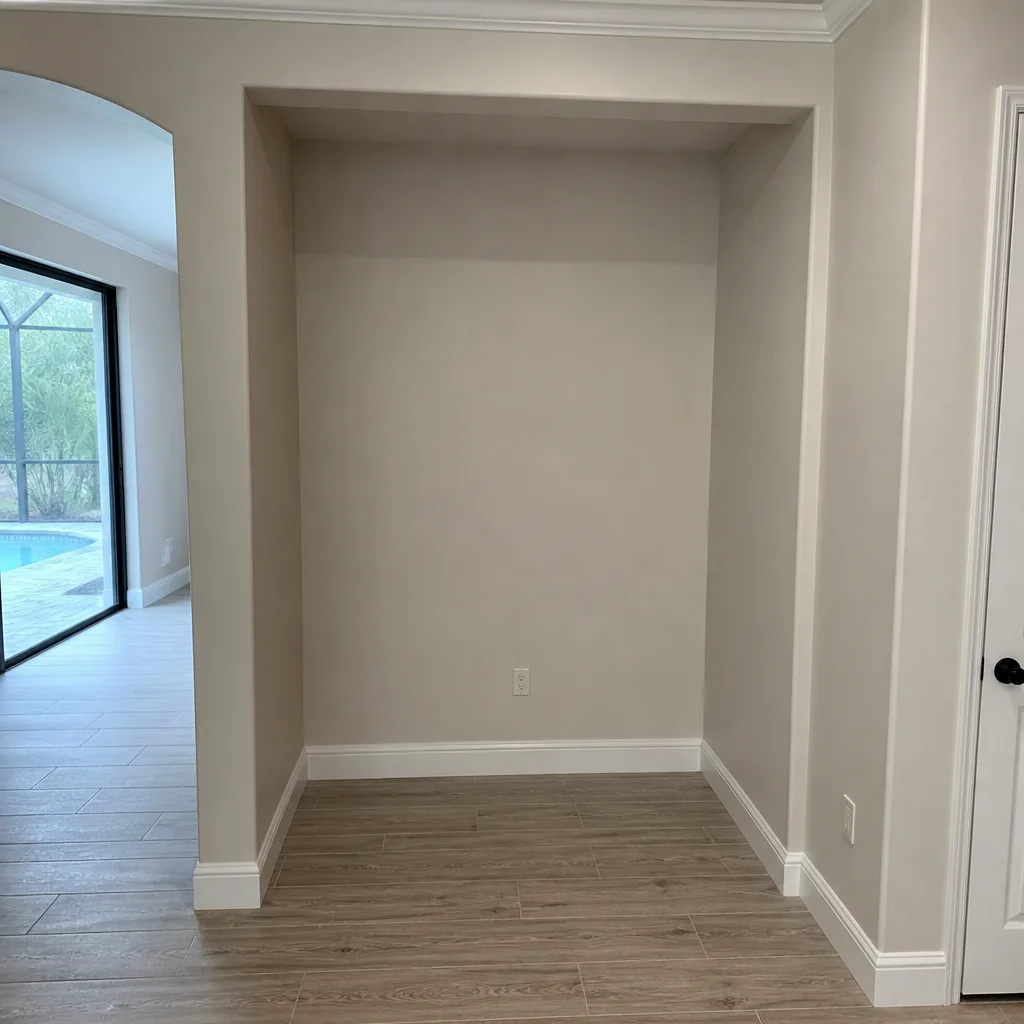
See the difference
 Before
 After
After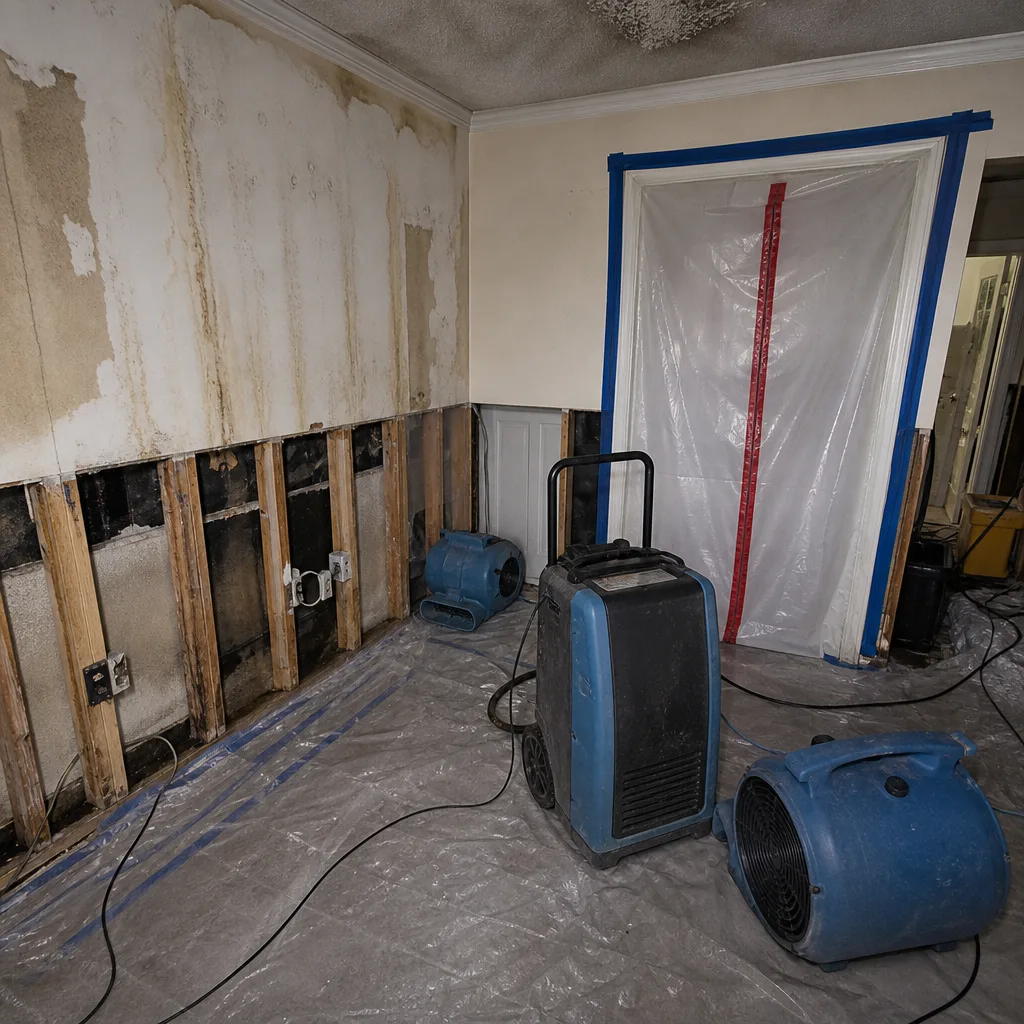 Before
 After
After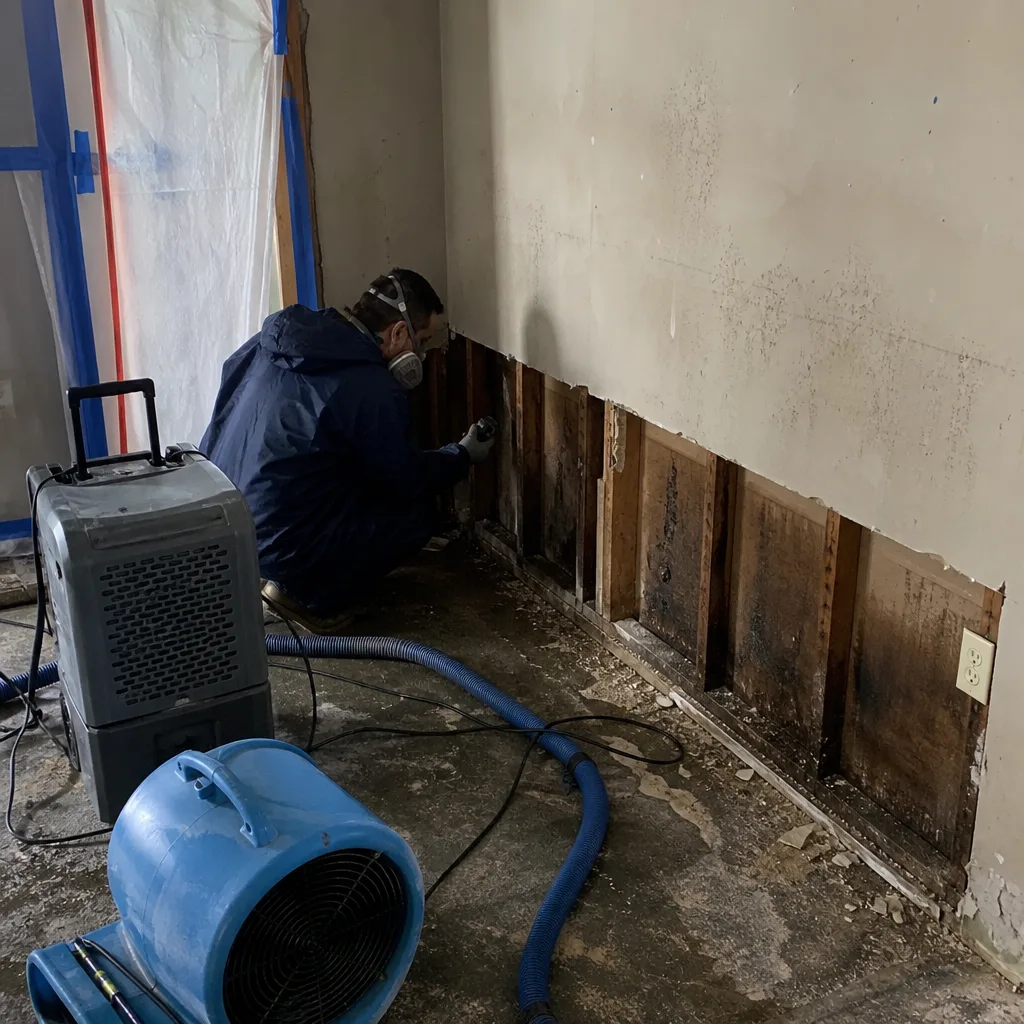 Before
 After
After